Guide · September 2026
Accident Inspection Guide for Houston Drivers
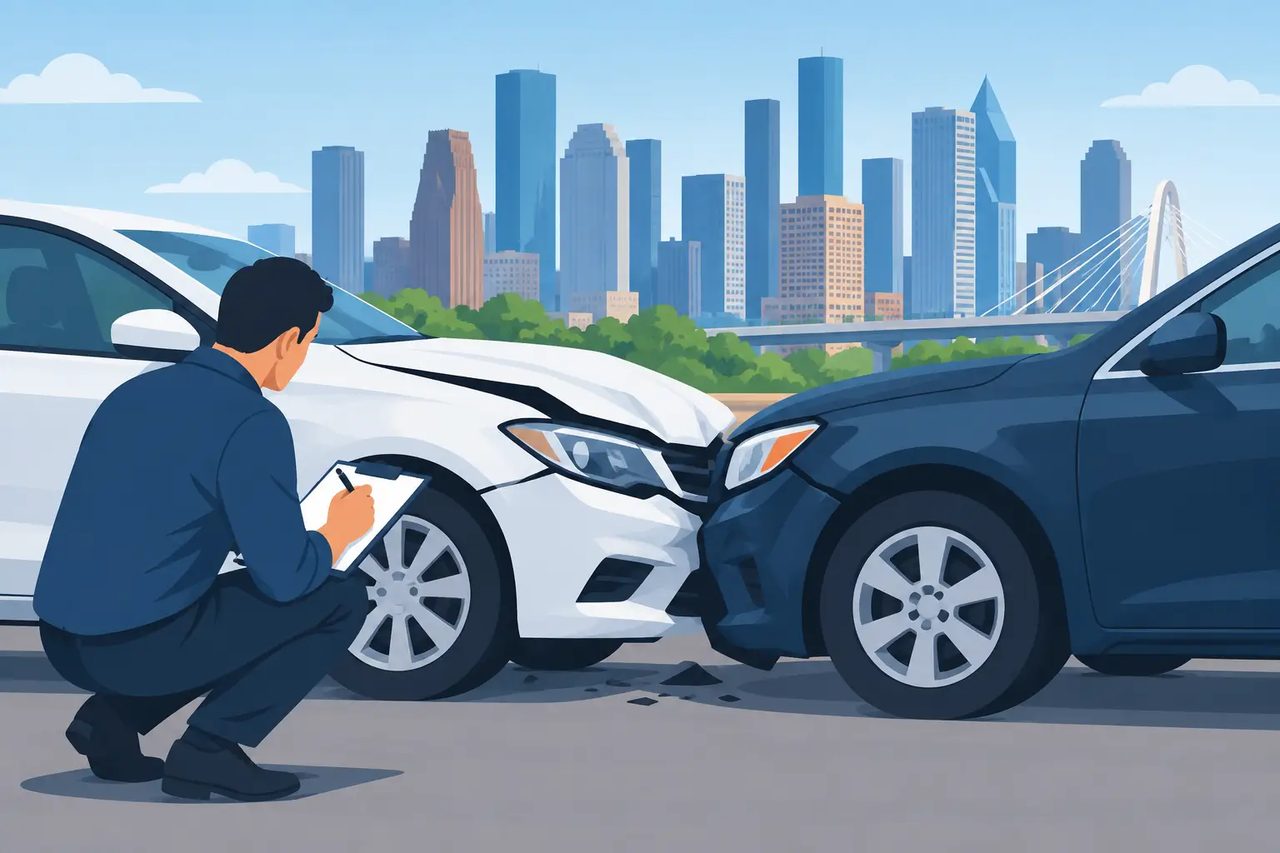
A fender may look like the only thing damaged after a parking-lot bump, but the impact can travel much farther. A cracked bumper cover can hide broken mounting points, a shifted radiator support, damaged parking sensors, or an alignment problem that shows up weeks later. This accident inspection guide helps Houston drivers make smart decisions before getting back behind the wheel.
The first priority after any collision is safety, not appearance. If the vehicle has fluid leaks, smoke, a burning smell, warning lights, loose body panels, steering trouble, or a tire rubbing against the body, do not drive it. Arrange for a tow and have the vehicle inspected. Even a low-speed accident can affect systems that keep your car stable, able to stop, and safe in another impact.
Start With a Safe Walk-Around
Once everyone is safe and the vehicle is in a secure location, take clear photos before parts are moved or repairs begin. Photograph all sides of the vehicle, the license plate, visible damage, the other vehicle if applicable, the roadway, and any debris. Keep your accident information, tow receipt, and repair paperwork together.
Then look for obvious signs that the vehicle should stay parked. Fresh puddles under the car may be oil, coolant, transmission fluid, brake fluid, or windshield washer fluid. Coolant can be green, orange, pink, or yellow depending on the vehicle, so color alone is not a reliable answer. A steady leak after an impact needs professional attention.
Check whether the hood, trunk, doors, or liftgate open and latch normally. Do not force a panel that is binding. A door that will not close securely, a hood that sits unevenly, or a trunk that pops open can point to damage beyond the outer panel.
Before driving, also look at the tires and wheels. A bent wheel, sidewall cut, bulge, low tire, or tire sitting at an odd angle is a clear reason to call for a tow. Houston potholes and rough road edges can add to the damage after a collision, especially when a wheel or suspension component was already hit.
What a Professional Accident Inspection Should Check
A proper post-collision inspection goes beyond a quick look at dents and paint. The goal is to find visible damage, hidden damage, and safety concerns that could affect how the vehicle drives. What gets checked depends on the location and force of the impact, but several areas deserve close attention.
Body, frame, and mounting points
Modern vehicles are built with designed crumple zones that absorb impact energy. That is good for occupant protection, but it also means damage may sit behind a bumper cover or inside a quarter panel where it cannot be seen from the outside. A technician checks panel gaps, brackets, reinforcements, radiator supports, frame rails, and mounting points for distortion.
Not every accident causes frame damage. A minor cosmetic scrape may require bodywork and paint only. But guessing based on the size of the dent can lead to missed repairs. Measuring and inspecting the structure is the safer approach.
Steering, suspension, tires, and alignment
If the accident involved a curb, wheel, front corner, or rear corner, have the suspension checked. Bent control arms, damaged tie rods, struts, wheel bearings, and steering components can make the vehicle pull, vibrate, wander, or wear out tires quickly.
Pay attention to a steering wheel that is no longer centered while driving straight. Uneven tire wear, a vibration at highway speeds, or a new clunk over bumps also deserves inspection. An alignment can correct adjustment angles, but it cannot fix a bent or loose part. The damaged component must be found and repaired first.
Brakes and underbody parts
A collision can damage brake lines, brake hoses, wheel-speed sensors, backing plates, or the components around them. If the brake pedal feels soft, the vehicle pulls while braking, or the ABS or brake warning light comes on, stop driving and have it checked.
Technicians should also inspect underneath the vehicle for exhaust damage, loose heat shields, damaged splash guards, cracked engine mounts, and leaks. A low front impact can affect parts behind the bumper. A hard rear impact can shift the exhaust or damage components near the fuel tank.
Cooling system, engine, and transmission
Front-end damage deserves careful cooling-system inspection. A cracked radiator, damaged condenser, bent cooling fan, or leaking hose may not create a problem until the engine gets hot in traffic. In Houston heat, an overheating issue can become serious quickly.
If the check engine light comes on, the engine runs rough, the transmission shifts differently, or the car has a new whining or grinding noise after the accident, report it during the inspection. Those symptoms may be related to impact damage, but they need diagnosis rather than assumptions.
Airbags, seat belts, and safety technology
An airbag deployment is an automatic reason for a thorough collision inspection. Airbags, seat belt pretensioners, impact sensors, restraint control modules, and related wiring may all need attention. Do not treat an illuminated airbag light as a minor electrical issue. The supplemental restraint system may not work as intended in another crash.
Many newer vehicles also use cameras, radar sensors, parking sensors, blind-spot monitoring, lane assistance, and automatic emergency braking. A bumper repair, windshield replacement, suspension change, or sensor replacement can require calibration. If a dashboard message says a driver-assistance system is unavailable, or the system behaves differently after a collision, it needs professional inspection and repair.
Symptoms That Can Show Up Days Later
Some accident damage is immediate. Other problems develop after a few drives, when vibration, heat, and normal road movement reveal a loose bracket, leak, or misaligned part. Stay alert for warning lights, a burning smell, reduced A/C performance, coolant temperature changes, fluid spots, rattles, tire noise, or a vehicle that pulls to one side.
Do not ignore a change simply because the vehicle still runs. A car can be drivable and still be unsafe. For example, a small coolant leak may become overheating, and a slightly bent suspension part may turn into severe tire wear or poor handling during a heavy rainstorm.
Write down when each symptom occurs. Note whether it happens while braking, turning, accelerating, driving over bumps, or using the A/C. Specific information helps the technician diagnose the concern faster and can prevent unnecessary repairs.
Choosing the Right Repair Plan
An accident inspection should give you a clear picture of what must be repaired now, what may be cosmetic, and what should be monitored. Safety-related concerns such as brakes, tires, steering, suspension, leaks, restraint-system faults, and loose panels should come first. Cosmetic repair matters too, especially when damaged paint leaves metal exposed to moisture or a broken panel affects visibility or latching.
Ask for an explanation in plain language. A dependable repair shop should be able to show you the damaged area when possible, explain why a part needs replacement or repair, and distinguish collision damage from unrelated maintenance needs. It is reasonable to discuss repair options, but parts and procedures should never be reduced in a way that compromises safety or proper fit.
A one-stop shop can be especially helpful when an accident creates both body and mechanical concerns. Sam Auto Repair & Collision can inspect collision damage alongside brakes, alignment, suspension, A/C, cooling, and drivability concerns, so you are not left coordinating separate shops while your vehicle is out of service.
Before You Pick Up the Vehicle
After repairs, take a few minutes for a final walk-around. Look at paint color and panel alignment in daylight if possible. Open and close repaired doors, the trunk, or liftgate. Confirm that lights, turn signals, backup camera, parking sensors, windows, locks, and A/C are working as expected.
On the drive home, notice the steering wheel position, braking feel, ride quality, and any unusual noise. You should not hear rubbing, rattling, or scraping from the repaired area. If something does not feel right, call the shop promptly. A reputable repair facility wants the chance to inspect the concern and make it right.
When to Schedule an Inspection
Schedule an inspection after any collision that leaves visible damage, even if the vehicle seems normal. It is also wise after striking a curb, deep pothole, parking barrier, or road debris, particularly if the impact involved a tire, wheel, bumper, or underside of the vehicle.
Small accidents are easy to minimize when life is busy and the car still starts. But your vehicle carries you through Houston traffic, school drop-offs, commutes, and long highway drives. Getting the right inspection now is often the most practical way to avoid a bigger repair, a roadside breakdown, or a safety issue later.