Guide · September 2026
When Does Your Car Need Brake Fluid Replacement?
A brake pedal that suddenly feels soft or sinks farther than usual is not something to put off until next week. Brake fluid replacement is routine preventive maintenance, but it directly affects how quickly and confidently your vehicle can stop. For Houston drivers dealing with heat, humidity, traffic, school runs, and long commutes, fresh brake fluid is one more way to keep a dependable vehicle ready for the road.
What Brake Fluid Does for Your Vehicle
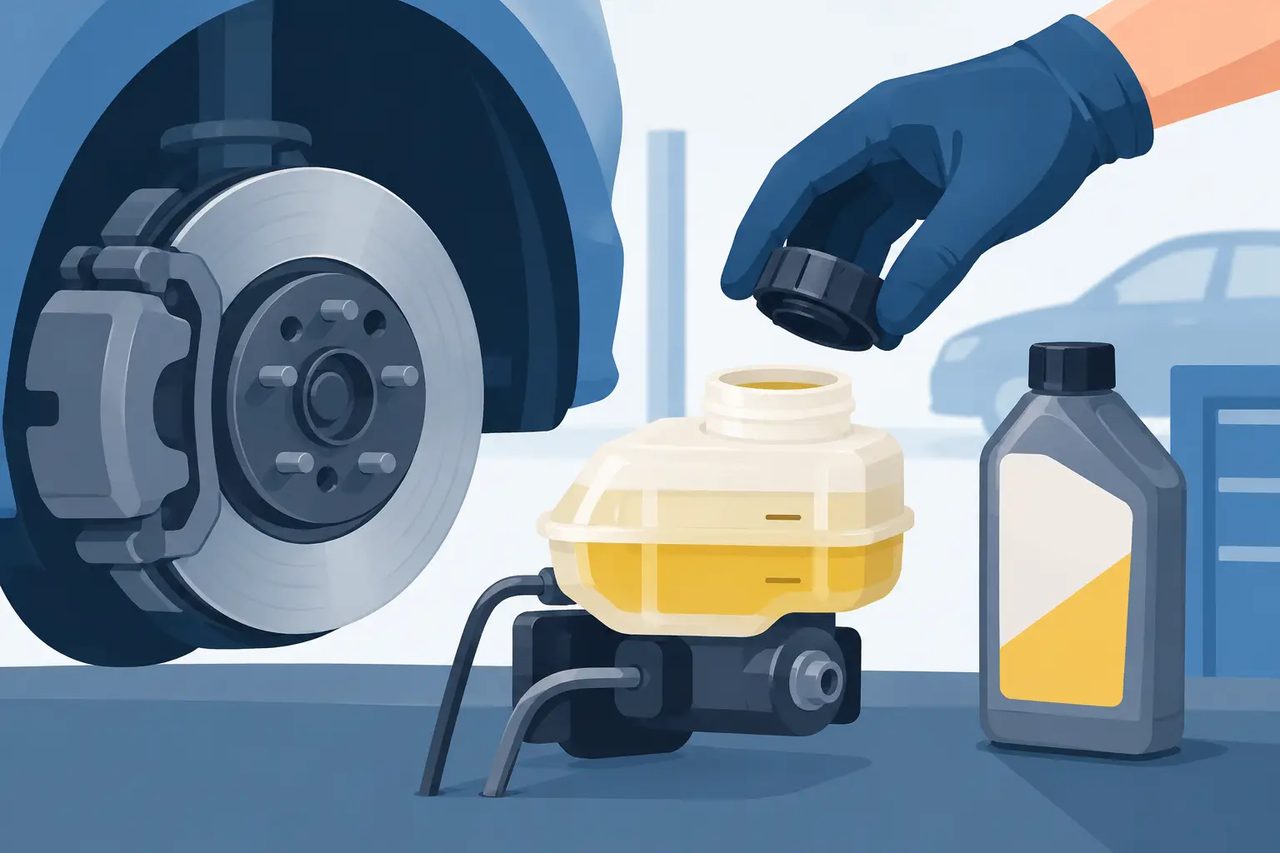
Your brake system relies on hydraulic pressure. When you press the pedal, brake fluid transfers that force through brake lines to the calipers or wheel cylinders, where the brake pads or shoes create friction and slow the vehicle.
The fluid works under extreme conditions. It has to move reliably through small passages, tolerate high temperatures near the brakes, and protect internal metal parts from corrosion. Unlike engine oil, brake fluid is not designed to lubricate a moving engine. Its job is to deliver consistent braking pressure every time you need it.
Most vehicles use DOT 3, DOT 4, or DOT 5.1 brake fluid. These fluids are generally glycol-based and absorb moisture over time. DOT 5 is silicone-based and is not interchangeable with the other types in most vehicles. Using the wrong fluid can damage seals, cause poor brake performance, or create expensive repair problems, so the fluid specification in your owner’s manual matters.
Why Brake Fluid Replacement Matters in Houston
Brake fluid absorbs moisture from the air, even in a closed brake system. Houston’s humid climate can speed up that process. Moisture lowers the fluid’s boiling point and can contribute to internal corrosion in brake lines, calipers, master cylinders, and ABS components.
When brake fluid gets hot during heavy traffic, hard stops, towing, or repeated highway braking, contaminated fluid is more likely to boil. That can create vapor in the system. Vapor compresses more easily than brake fluid, which can leave you with a spongy pedal and reduced braking response.
There is also a long-term cost issue. Replacing fluid on schedule is usually far less expensive than replacing corroded hydraulic components or diagnosing an ABS system problem caused by neglected maintenance. A small service can help protect some of the most important safety equipment on your vehicle.
Signs You May Need Brake Fluid Service
Brake fluid does not always give a clear warning when it is overdue. A vehicle can still stop normally while moisture and contamination are building in the system. That is why following the manufacturer’s maintenance interval is the best approach.
Still, certain symptoms deserve quick attention. A soft, spongy, or low brake pedal can point to old fluid, air in the lines, a hydraulic leak, worn brake parts, or another brake issue. A brake warning light, an ABS light, fluid leaking near a wheel or beneath the master cylinder, or a burning smell after braking also calls for a professional inspection.
Dark brake fluid can be another clue. New fluid is usually clear to light amber, depending on the type. Fluid that looks dark brown or nearly black may be old or contaminated. However, appearance alone is not a complete test. A technician can inspect the system, check fluid condition, and look for leaks or component wear before recommending the right repair.
Do not assume a soft pedal just needs fluid added. Brake fluid normally does not get used up like engine oil. A low level may mean your brake pads are worn, but it can also mean there is a leak. Adding fluid without finding the cause can hide a serious problem.
How Often Should Brake Fluid Be Replaced?
The right interval depends on your vehicle, the type of fluid it uses, and how it is driven. Many manufacturers recommend brake fluid replacement every two to three years, while others specify a mileage interval or call for fluid testing during inspections. Some vehicles have longer intervals, particularly when they use a higher-performance fluid.
Your owner’s manual is the first place to check. If you cannot find the recommendation, a qualified repair shop can look it up based on your vehicle’s year, make, model, and engine or trim level.
Driving conditions matter, too. Vehicles that spend a lot of time in Houston stop-and-go traffic, carry heavy loads, tow trailers, make frequent rideshare trips, or sit unused for long periods may benefit from closer attention. The same goes for older vehicles with original brake hoses, calipers, or master cylinder components.
Brake Fluid Replacement vs. Topping Off Fluid
Topping off the reservoir and replacing brake fluid are not the same service. Topping off simply brings the reservoir level back up. It does not remove moisture, debris, or old fluid from the lines and brake components.
A proper brake fluid replacement, often called a brake fluid flush, removes the old fluid from the system and replaces it with the correct new fluid. The technician typically bleeds each brake circuit in the proper sequence, ensuring contaminated fluid and trapped air are removed. The system is then checked for leaks, pedal feel, and proper operation.
The exact process depends on the vehicle. Many modern cars, trucks, SUVs, and European vehicles have ABS systems that may require specific procedures or scan-tool functions during brake work. This is one reason brake fluid service is best handled by trained technicians with the right equipment.
What Happens During Professional Brake Fluid Service?
A complete service starts with an inspection. The technician checks the fluid level and condition, looks for external leaks, and evaluates visible brake components where possible. If the vehicle is due for fluid replacement, the old fluid is removed and the system is refilled with the manufacturer-approved type.
Each wheel’s brakes are bled so fresh fluid moves through the brake lines. The technician monitors the reservoir closely to prevent air from entering the system. Afterward, the brake pedal is checked, warning lights are reviewed, and the vehicle is road-tested when appropriate.
This is also a good time to inspect brake pads, rotors, calipers, hoses, and hardware. Brake fluid maintenance will not correct worn pads, warped rotors, seized calipers, or a leaking wheel cylinder. An honest inspection separates routine maintenance from repairs that are actually needed, helping you make a clear decision about your vehicle and budget.
Can You Replace Brake Fluid Yourself?
Some experienced DIY vehicle owners can perform this service, but it is less forgiving than it may look. The correct fluid must be used, the proper bleeding order must be followed, and the reservoir cannot run dry. Spilled brake fluid can also damage painted surfaces.
Modern brake systems add another layer of complexity. Electronic parking brakes, ABS modules, stability control systems, and certain vehicle designs may require specialized tools or procedures. If air enters the system, the pedal stays soft, or a warning light appears afterward, the vehicle may need professional diagnostics before it is safe to drive.
For most drivers, professional service provides peace of mind. You get the correct fluid, proper disposal of old fluid, a brake-system inspection, and confirmation that the pedal feels right before heading back into traffic.
Keep Small Brake Issues From Becoming Big Repairs
At Sam Auto Repair & Collision, brake service is approached as a safety concern first, not a one-size-fits-all upsell. Whether your vehicle needs scheduled fluid service, a brake inspection, new pads and rotors, or diagnosis of a warning light, the goal is to explain what is happening and recommend the repair that makes sense.
If your pedal feels different, your brake warning light is on, or you cannot remember when the fluid was last changed, schedule an inspection before your next long commute. Brakes rarely choose a convenient time to show a problem, and a quick check now can help you drive away with more confidence.