Guide · September 2026
Brake Rotor Resurfacing Versus Replacement
A steering wheel that shakes when you brake on I-45, a pedal that pulses in Houston traffic, or a scraping sound at a stoplight should not be ignored. Brake rotor resurfacing versus replacement is a decision that affects stopping power, repair cost, and how confidently your vehicle handles the next commute. The right answer is not always the cheapest option up front. It depends on the condition, thickness, and overall performance of your brake system.
What Brake Rotors Do When You Stop
Brake rotors are the round metal discs behind your wheels. When you press the brake pedal, the calipers squeeze the brake pads against those discs. That friction slows the wheels and brings the vehicle to a stop.
Every stop creates heat. Over time, normal friction wears the rotor surface and reduces its thickness. Houston heat, stop-and-go traffic, heavy loads, long commutes, and hard braking can speed up that wear. Rotors can also develop grooves, hot spots, uneven surfaces, corrosion around the edges, or excessive runout, which is side-to-side movement as the rotor turns.
A brake inspection looks beyond the pads. A technician should check pad thickness, rotor thickness, surface condition, caliper operation, brake fluid condition, brake hoses, and signs of uneven wear. Replacing pads without addressing a damaged rotor can lead to noise, vibration, reduced pad life, and less consistent braking.
Brake Rotor Resurfacing Versus Replacement: The Difference
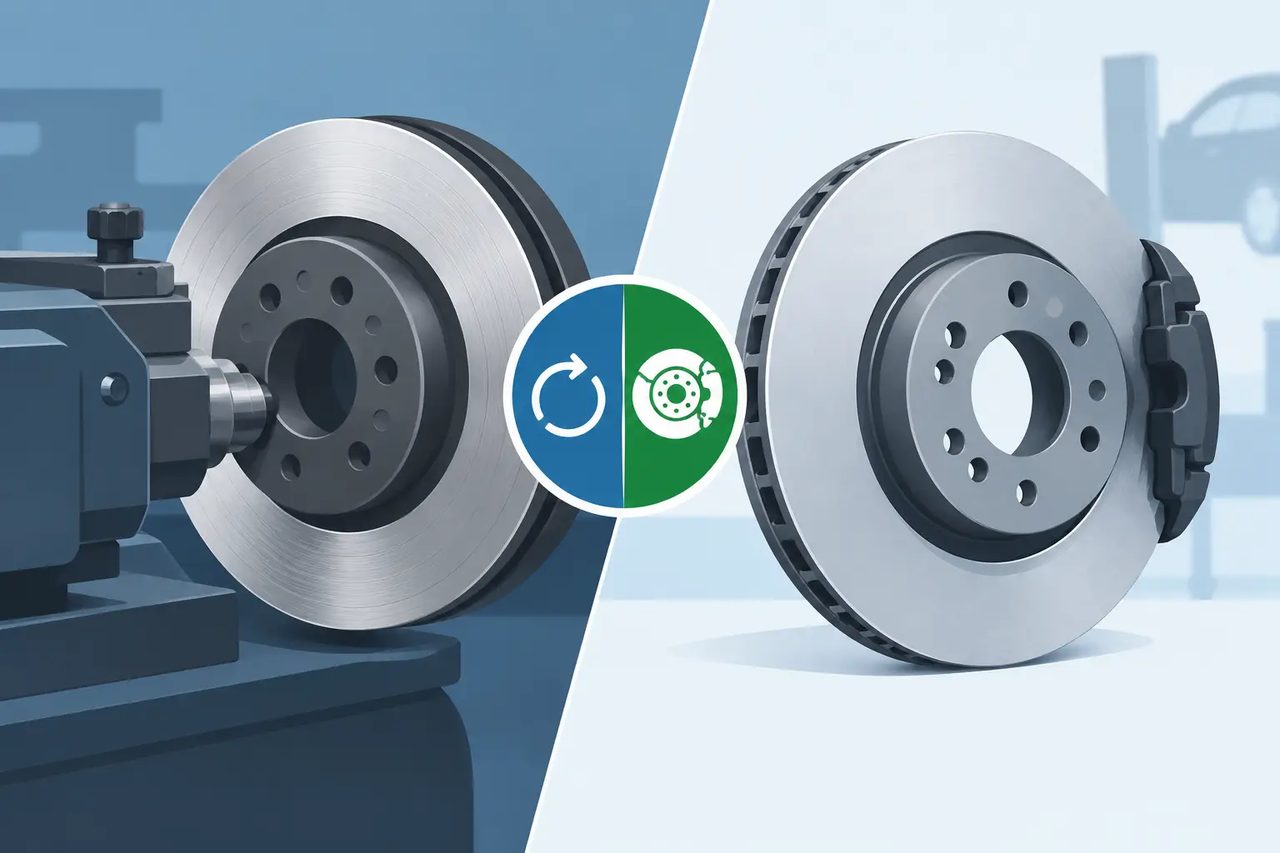
Resurfacing, sometimes called machining or turning the rotors, removes a thin layer of metal from the rotor’s braking surface. The goal is to create a smooth, even surface for new brake pads. It can remove light grooves, minor surface imperfections, and certain types of uneven wear.
Replacement means installing new rotors. This is often the better choice when the old rotors are too thin, deeply damaged, heat-checked, badly warped, or no longer cost-effective to machine. New rotors provide a fresh braking surface at the manufacturer’s intended thickness.
Neither service should be selected by appearance alone. A rotor may look acceptable but measure below its minimum discard thickness. Another may have visible grooves yet still be within specifications and suitable for resurfacing. Accurate measurement is what separates a proper brake recommendation from a guess.
When Resurfacing May Be a Good Option
Resurfacing can make sense when the rotors have enough material remaining after machining and the damage is minor. If your pads are worn but the rotors are only lightly grooved or have a small amount of surface rust, machining may restore a smooth contact surface and help the new pads bed in correctly.
It may also be a practical budget-conscious choice on certain vehicles when quality replacement rotors are more expensive and the existing parts still meet specifications. The key phrase is still meet specifications. A shop should measure the rotor before machining and again after the work is complete.
Resurfacing is not a way to stretch unsafe parts. The rotor must remain above the minimum thickness stamped on the part or listed in the vehicle’s service information. A rotor that is too thin cannot absorb and shed heat as designed. That can increase the chance of brake fade, vibration, cracking, or uneven braking under demanding conditions.
When Rotor Replacement Is the Better Repair
Replacement is usually recommended when a rotor cannot be machined and remain safely above its minimum thickness. It is also the right move for deep grooves, significant rust damage, cracks, heat spots, severe scoring, or repeated brake pulsation caused by an out-of-spec rotor.
Many late-model vehicles use thinner rotors than older vehicles. By the time the first set of brake pads wears out, there may not be enough material left for a proper resurfacing. In those cases, replacing the rotors with the pads is often the safer and more economical long-term repair.
Rotor replacement can also save time. Depending on the vehicle and the cost of machining, quality new rotors may be competitively priced. That does not mean every vehicle needs new rotors at every pad change. It means the decision should be based on measurements, condition, and the parts available for your specific make and model.
Symptoms That Point to Rotor Trouble
Brake rotors do not always announce a problem with a loud noise. Pay attention to changes in how your vehicle feels when stopping. A pulsating pedal, shaking steering wheel, vibration through the seat, squealing, scraping, grinding, or a vehicle that pulls during braking all deserve an inspection.
A vibration felt mainly through the steering wheel often points to a front brake concern, while a vibration felt more through the seat can involve the rear brakes. Still, these are only clues. Tire problems, suspension wear, wheel bearing issues, and improper wheel installation can create similar symptoms.
Grinding is especially urgent. It may mean the brake pad material is gone and metal is contacting the rotor. Continued driving can quickly damage the rotors, reduce stopping ability, and turn a routine pad service into a larger brake repair. If the brake warning light comes on, the pedal feels soft, or stopping distance increases, have the vehicle checked right away.
What Affects the Cost of Your Brake Repair
The price difference between resurfacing and replacement varies by vehicle. Rotor size, rotor design, vehicle weight, parts availability, brake pad type, and whether the vehicle has performance or luxury brake components all matter. European, import, truck, SUV, and high-end vehicle brake systems may require specific parts and procedures.
Labor also depends on the condition of the system. Sticking calipers, seized hardware, damaged brake hoses, contaminated brake fluid, or uneven pad wear need to be addressed. Installing new pads and rotors without correcting the cause of uneven wear can leave you right back at the shop with premature brake problems.
The lowest estimate is not always the best value if it skips inspection steps or uses parts that do not fit the vehicle’s braking needs. Ask what the technician measured, why resurfacing or replacement was recommended, and whether the estimate includes pads, rotors, hardware, and any related repairs. Clear answers help you make a decision that fits both your budget and your safety.
Why New Pads Need the Right Rotor Surface
New brake pads need a clean, even rotor surface to perform their best. During the break-in period, pad material transfers evenly onto the rotor face. This process helps create smooth, predictable braking.
Putting new pads on a deeply grooved, uneven, or overheated rotor can cause noise, pedal pulsation, and reduced pad life. Reusing rotors is sometimes appropriate, but only when they are in good condition, measure within specification, and have a surface suitable for the pads being installed. Skipping that evaluation is where brake jobs can go wrong.
Proper installation matters too. The rotor mounting surface must be clean, wheel lug nuts must be tightened evenly to the correct specification, and brake hardware must move freely. Even a good new rotor can develop a vibration complaint if it is installed incorrectly or if the caliper is not releasing properly.
Get a Brake Recommendation Based on Facts
For drivers who rely on their vehicle every day, brake service should never be based on a one-size-fits-all rule. Sam Auto Repair & Collision can inspect the complete braking system, measure rotor condition, explain the findings in plain language, and recommend resurfacing or replacement only when it makes sense for your vehicle.
Whether you drive a family SUV, work truck, commuter sedan, rideshare vehicle, or European import, dependable brakes are worth protecting. If you feel vibration, hear grinding, or simply know your pads are due for service, schedule an inspection before a small brake concern becomes a bigger repair. A clear diagnosis today can help keep your next stop smooth, safe, and predictable.