
Guide · October 2026
Bumper Dent Repair for Houston Area Drivers
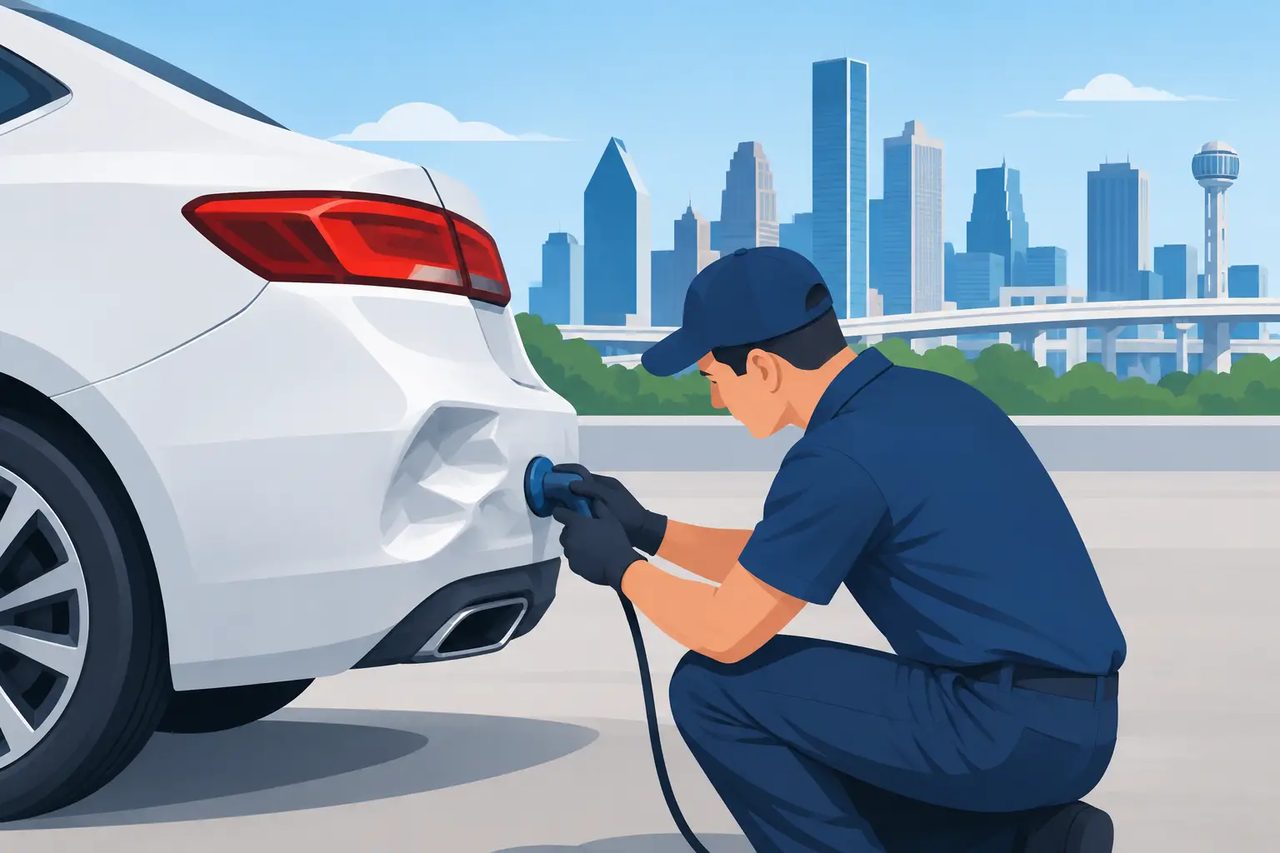
A bumper dent can happen in a parking lot, a tight driveway, or slow Houston traffic. Even when your vehicle still drives normally, bumper dent repair should not always be put off. What looks like a small cosmetic issue may include cracked plastic, damaged paint, loose mounting points, or trouble behind the bumper cover.
For many drivers, the first question is simple: can this be fixed without replacing the whole bumper? Often, the answer is yes. The right repair depends on the bumper material, the depth and location of the dent, paint damage, and whether the impact affected sensors, lights, brackets, or safety components.
What Determines the Right Bumper Dent Repair?
Most modern vehicles use plastic bumper covers over a reinforcement bar and other components. Plastic can flex during a minor impact, which is good news for repairability. A shallow dent without cracks may be reshaped and refinished, allowing you to keep the original bumper cover rather than pay for replacement.
However, a dent is rarely judged by appearance alone. A technician needs to check whether the bumper is stretched, torn, split near an edge, or pushed out of alignment. Damage around a corner, body line, grille opening, or wheel opening can take more work than a dent in the flat center section.
Paint condition matters just as much. If the paint has not cracked or chipped, repair may be more straightforward. If the impact broke through the paint, the exposed area needs attention before moisture, dirt, and road debris create a larger problem. On metal body panels, paintless dent repair may sometimes be an option. On most plastic bumper covers, professional reshaping, surface repair, and color-matched paint are usually the more reliable solution.
When a Dent Can Be Repaired Instead of Replaced
Repair is often the sensible choice when the bumper cover has one localized dent, light scuffing, minor paint damage, and no major cracks. A skilled body technician can remove the bumper if needed, reshape the affected area, repair surface imperfections, prepare it properly, and refinish it to match the vehicle.
Keeping the original bumper can help control costs and reduce repair time. It also preserves the factory fit when the bumper cover itself remains structurally sound. That said, the lowest upfront price is not always the best value. A quick cosmetic patch that leaves a cracked area, poor panel fit, or mismatched color may cost more to correct later.
Replacement may be the better answer when the plastic is badly torn, the dent has stretched the material beyond a clean repair, mounting tabs are broken, or damage affects the bumper’s shape across a large area. It can also be necessary when the bumper has damage around sensor openings or other integrated equipment that cannot be securely restored.
Watch for Damage Behind the Bumper Cover
A low-speed impact can damage more than the visible cover. Depending on the vehicle, the area behind the bumper may contain impact absorbers, a reinforcement bar, splash shields, parking sensors, radar equipment, wiring, brackets, and lights. On some newer vehicles, a small hit can affect driver-assistance features even though the bumper only shows a dent.
Warning signs include a bumper that sits unevenly, new dashboard warnings, parking sensors that beep continuously or do not work, a loose grille, rubbing near a tire, or a trunk or hood that no longer lines up correctly. These concerns call for an inspection, not a guess. Safe repairs start with finding the full extent of the damage.
Why DIY Bumper Fixes Can Create Bigger Problems
Online videos make bumper repair look easy: apply heat, push the dent out, and move on. That approach can occasionally improve a very minor dent, but it carries real risks. Too much heat can warp the plastic, damage paint, or leave a wavy surface that becomes more obvious in sunlight. Pushing in the wrong place can break tabs or create a crease that is harder to repair professionally.
Spray paint and touch-up products also have limits. Modern factory finishes contain specific color formulas, metallic flakes, pearl effects, clear coats, and blend requirements. A bumper can look close in a garage and noticeably different outdoors. Houston sun is especially unforgiving when a paint match or surface preparation is poor.
DIY work is most likely to disappoint when the bumper has cracked paint, sensors, severe scuffs, multiple dents, or damage near an edge. If you want your vehicle to look right and retain its value, a professional repair is usually the more practical route.
The Professional Repair Process
A proper bumper repair begins with an inspection of the damaged area and related components. The technician checks panel alignment, mounting points, paint damage, nearby lights, sensors, and the condition of the bumper cover itself. This step helps separate a simple cosmetic repair from a repair that requires additional mechanical or safety-related work.
If the cover can be saved, the damaged section is carefully reshaped. Cracks or gouges may be repaired with materials designed for automotive plastic. The surface is then prepared, primed as needed, and refinished using the correct color process. Depending on the location and paint condition, the repair may require blending into adjacent areas for a consistent appearance.
After refinishing, the bumper is reinstalled and checked for fit. If your vehicle has parking sensors, cameras, or driver-assistance equipment, those systems may need testing or calibration after the repair. This is one reason a full-service facility can be valuable: body repairs and related mechanical checks can be handled in one place rather than sending you from shop to shop.
How Long Does Bumper Dent Repair Take?
The timeline depends on parts availability, paint cure time, the extent of hidden damage, and whether calibration is needed. A minor dent repair may take a day or two once the vehicle is in the shop. More involved repairs can take longer, especially if a replacement bumper cover must be ordered, painted, and fitted.
Be cautious with any shop that promises a timeline without seeing the vehicle. An honest estimate should explain what is visible, what needs inspection, and what could affect the final repair plan. Clear communication matters when you rely on your vehicle for commuting, school drop-offs, work calls, or rideshare driving.
What Affects Bumper Repair Cost?
Bumper dent repair costs vary because no two impacts are exactly alike. A small dent with intact paint is very different from a cracked bumper with broken brackets and malfunctioning sensors. Vehicle make and model also matter. Luxury, European, and newer vehicles may have more complex bumper assemblies, specialized paint finishes, or integrated technology.
The main cost factors are the size and location of the dent, whether the plastic is cracked, the amount of paintwork required, the condition of clips and brackets, and any sensor or calibration needs. A written estimate should help you understand whether repair or replacement offers the better long-term value.
At Sam Auto Repair & Collision, the goal is to explain the condition of your bumper in plain language and recommend the repair that makes sense for your vehicle and budget. Whether you drive a domestic truck, a family SUV, an import, or a high-end vehicle, the work should address both appearance and road readiness.
Do Not Ignore a Bumper That Is Loose or Misaligned
A dent may be cosmetic, but a loose bumper is different. If the cover is hanging, rubbing a tire, blocking a light, or pulling away from the body, have it inspected promptly. Loose parts can worsen while driving, and an improperly mounted bumper may not protect surrounding components as intended in another impact.
Take a few photos after the incident, especially before washing away scuffs or debris. Then schedule an inspection while the damage is easy to evaluate. A timely repair can protect your vehicle’s appearance, help preserve resale value, and give you confidence that the damage did not go deeper than the surface.