Guide · October 2026
Can Collision Damage Suspension? What to Check
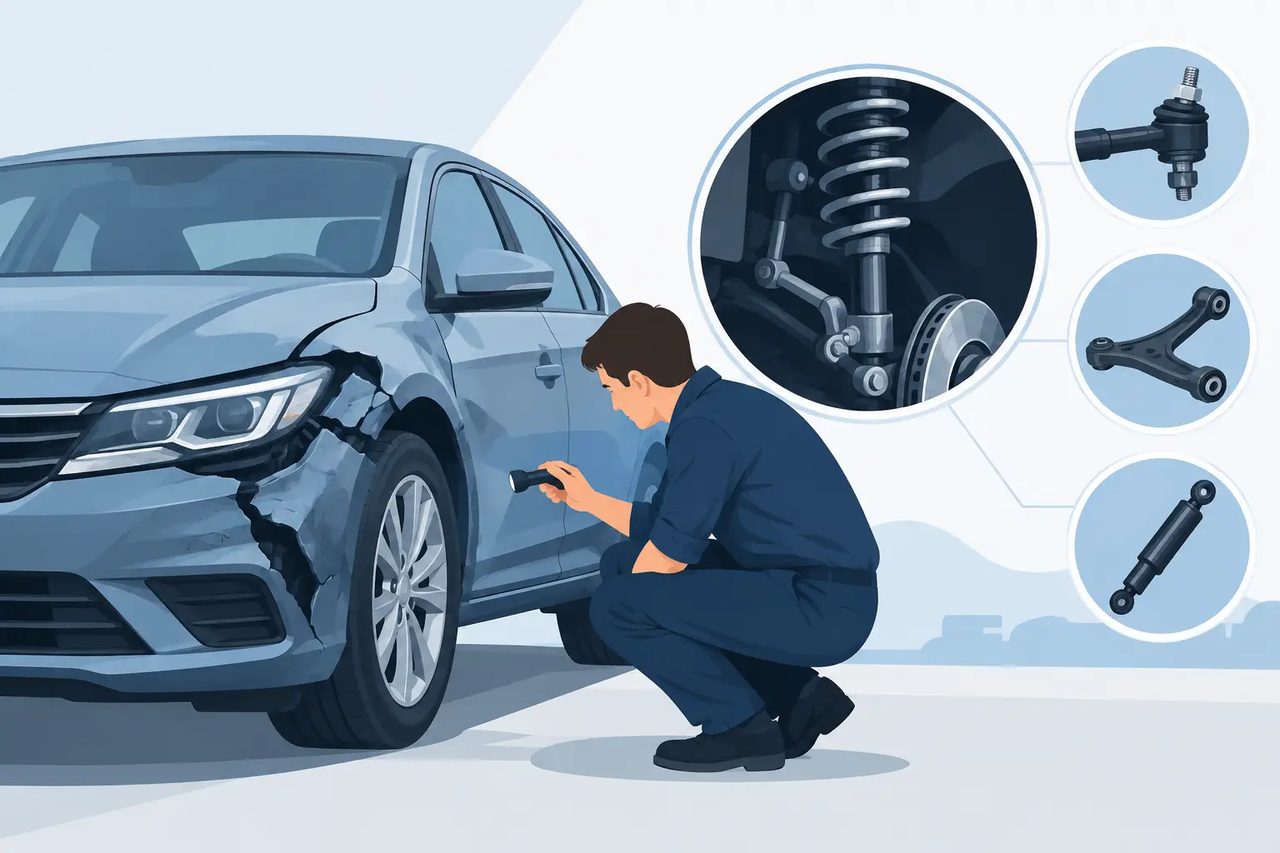
A low-speed parking-lot hit can leave a bumper with only a few scuffs, while a pothole-sized impact to the wheel can bend parts you cannot see. So, can collision damage suspension? Absolutely. Even when a vehicle still starts, stops, and drives away after an accident, the force of the impact may affect the wheels, tires, steering, alignment, and suspension components that keep it stable on Houston roads.
That is why a post-accident inspection should look beyond the body panels. A repaired fender or freshly painted bumper does not confirm that the vehicle is safe to drive. If the impact reached a wheel, curb, axle area, or undercarriage, it is worth having a qualified technician inspect the mechanical side of the damage before small issues become expensive tire wear or a handling concern.
How a Collision Can Damage Suspension
Your suspension is a connected system. It includes components such as shocks or struts, springs, control arms, ball joints, bushings, wheel hubs, steering linkage, and mounting points. These parts work together to keep the tires firmly on the pavement, absorb bumps, and allow the vehicle to steer predictably.
A front-end collision can push force into the steering and suspension through the bumper, frame area, or wheel. A side impact can damage a wheel, control arm, hub, or rear suspension parts. Sliding into a curb, hitting a median, or landing hard in a ditch can also cause collision-type suspension damage, even if another vehicle was not involved.
The amount of damage depends on where the vehicle was hit, the speed, the angle of impact, the vehicle’s design, and whether the tire or wheel took the force directly. A minor tap may only require an alignment check. A harder impact may bend a control arm, damage a strut, crack a wheel, or shift structural mounting points. This is not something that can be judged accurately from a quick look in the driveway.
Signs of Suspension Damage After a Crash
Some suspension problems show up immediately. Others become more noticeable over the next few days of commuting, especially when turning, braking, or driving over uneven pavement. Pay attention to changes in how your vehicle feels rather than assuming it is normal because the car is still moving.
Common warning signs include:
- The vehicle pulls, drifts, or wanders to one side on a straight road.
- The steering wheel sits off-center after the wheels are pointed straight.
- The car shakes through the steering wheel or seat at certain speeds.
- You hear clunking, knocking, scraping, or creaking when turning or going over bumps.
- One corner of the vehicle sits lower than the others, or the ride feels unusually bouncy.
- Tires show fresh uneven wear, a sidewall bulge, or visible damage to the wheel.
- The vehicle feels unstable during braking, lane changes, or turns.
A pulling condition is not always caused by suspension damage. Tire pressure, a damaged tire, brake drag, and wheel alignment can create similar symptoms. That is exactly why accurate diagnosis matters. Replacing parts based on a guess can cost more and still leave the real problem unresolved.
Do Not Ignore Tire and Wheel Damage
The tire and wheel are often the first pieces to absorb an impact. A bent wheel may cause vibration, lose air slowly, or keep a tire from sealing correctly. A tire with a cut, bubble, or sidewall bulge should be addressed right away, because internal tire damage can lead to a sudden failure.
If the wheel was struck, the alignment may be off even when the wheel looks normal. Driving on poor alignment can wear out a set of tires far earlier than expected. For Houston drivers who spend long stretches on I-45, Beltway 8, or neighborhood streets with rough patches, that wear can build quickly.
Why an Alignment Alone May Not Fix the Problem
Wheel alignment is an essential part of many collision repairs, but it is not a cure-all. Alignment adjusts wheel angles to manufacturer specifications. If a bent control arm, damaged strut, worn ball joint, shifted subframe, or compromised steering component is present, an alignment may not hold or may not be possible within specification.
A proper inspection comes first. The technician checks the tires and wheels, measures alignment angles, examines suspension and steering components, and looks for bent, loose, leaking, or damaged parts. Depending on the accident, they may also inspect the underbody and mounting locations for signs of impact.
Once damaged parts are repaired or replaced, the vehicle can receive a final alignment. That sequence helps ensure the vehicle tracks straight, handles correctly, and avoids unnecessary tire wear. It also prevents the frustrating situation of paying for an alignment, only to discover later that a hidden bent part was the actual cause.
Can a Vehicle Be Driven With Collision Suspension Damage?
It depends on the type and severity of the damage, but it is usually better to limit driving until the vehicle has been checked. A car that pulls slightly may be able to reach a repair shop carefully. A car with a badly tilted wheel, severe vibration, fluid leaking from a damaged strut, grinding noises, loose steering, or a tire rubbing the body should not be driven. Call for a tow instead.
Suspension damage can affect more than ride comfort. It can increase stopping distance, reduce control during an emergency maneuver, and make the vehicle less predictable in rain. It can also put additional stress on tires, wheel bearings, and steering parts. Waiting may turn one repair into several.
If the accident involved airbag deployment, a hard wheel impact, major body damage, or a hit underneath the vehicle, a full collision and mechanical inspection is the smart move. Even if there are no obvious symptoms, the inspection provides a clear picture of what needs attention and what is still in good condition.
What a Post-Collision Inspection Should Cover
A thorough evaluation should connect the visible damage with the way the vehicle drives. That means looking at more than paint and panels. The repair process should include the body damage, but also the systems that support safe steering, braking, and handling.
At minimum, the inspection should evaluate the tire condition, wheel condition, steering response, suspension components, brake-area damage, wheel alignment measurements, and any undercarriage contact. Modern vehicles may also need attention to sensors or driver-assistance equipment affected by the impact. Depending on the model, a camera, radar sensor, or steering-angle sensor may require calibration after repairs or alignment work.
For owners of European, domestic, Asian, import, and high-end vehicles, using a shop that understands both collision restoration and mechanical repair can save time. Instead of moving the vehicle between separate body and repair facilities, the same team can identify how cosmetic damage and drivability concerns relate to each other.
Protect Your Vehicle and Your Repair Budget
Take photos at the scene when it is safe to do so, including the wheel and tire closest to the impact. Keep an eye on new noises, warning lights, pulling, and vibration after the accident. If you notice a change, do not wait for the next oil change to mention it.
Ask for a clear explanation of the findings, including which parts are damaged, which repairs are necessary for safety, and whether alignment or calibration is needed after the work. Honest answers help you prioritize the repair without paying for work that does not address the problem.
Sam Auto Repair & Collision helps Houston-area drivers handle both collision damage and the mechanical issues that can follow it. If your vehicle was hit, clipped a curb, or simply does not feel right after an accident, bring it in for a careful inspection. Getting the suspension, steering, tires, and alignment checked now can help you return to the road with confidence instead of wondering what was missed.