
Guide · August 2026
Car Overheating Repair for Houston Drivers
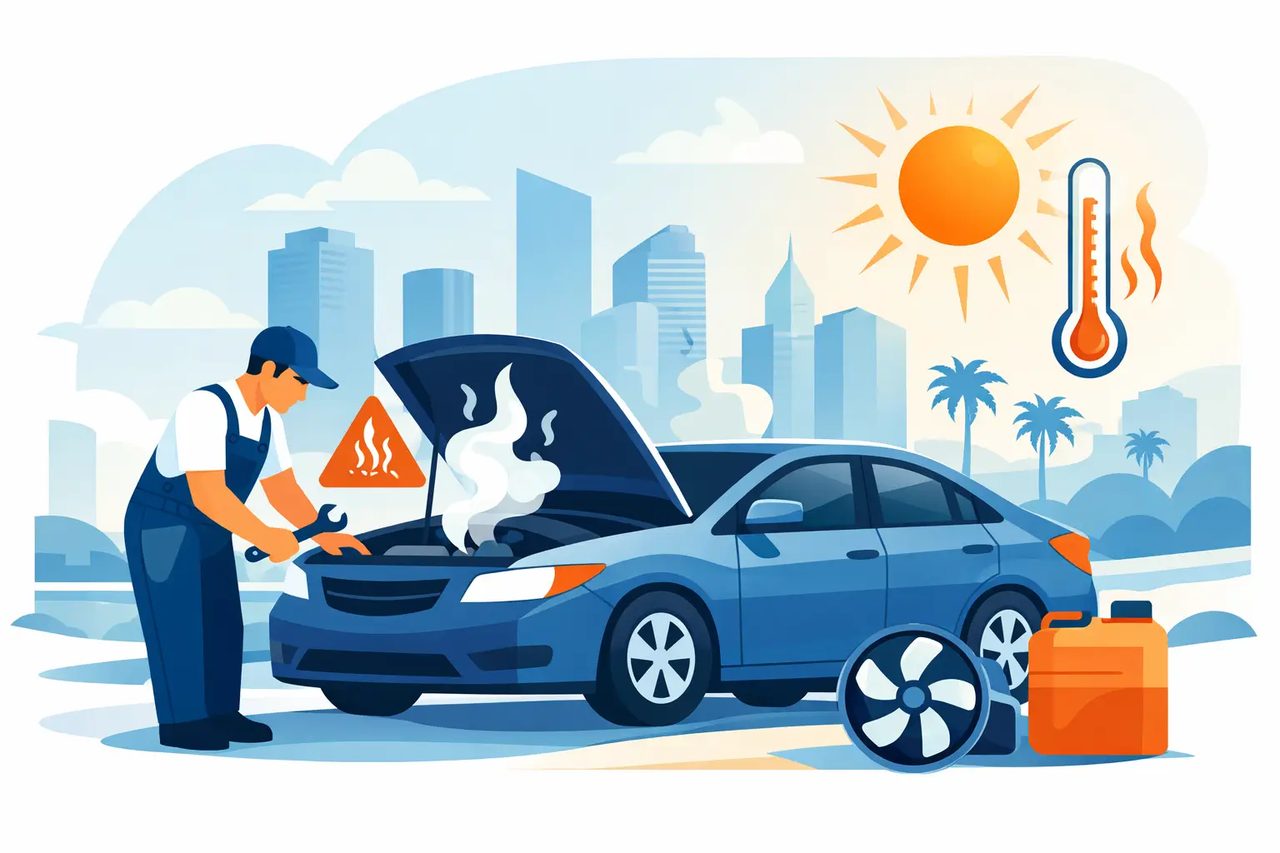
A temperature gauge moving into the red is not a warning to ignore until you reach home. In Houston traffic and summer heat, a cooling problem can turn into engine damage quickly. Prompt car overheating repair protects your engine, helps prevent a breakdown, and gets you back to dependable transportation.
If steam is coming from under the hood, the warning light is on, or you smell something sweet and hot, pull over safely as soon as possible. Turn off the A/C, shut down the engine when you are safely stopped, and let the vehicle cool completely. Do not remove the radiator cap while the engine is hot. Pressurized coolant can cause serious burns.
What Causes a Car to Overheat?
Your vehicle’s cooling system is designed to move heat away from the engine. Coolant circulates through the engine, radiator, hoses, thermostat, water pump, and heater core. When one part cannot do its job, heat builds up where it should not.
A low coolant level is one of the most common causes. Coolant may be low because of a leak at a hose, radiator, water pump, thermostat housing, reservoir, or head gasket. Sometimes the leak is visible as a puddle under the vehicle. Other times, it only appears when the system is hot and pressurized.
A thermostat that is stuck closed can also cause fast overheating because it prevents coolant from flowing through the radiator. A failing water pump may not circulate coolant properly. A damaged radiator, clogged cooling passages, weak radiator cap, or broken cooling fan can all produce the same stressful result: a rising temperature gauge.
Houston heat can expose a borderline cooling-system issue faster than mild weather. Stop-and-go traffic puts extra demand on the radiator fan, while long commutes and A/C use add heat under the hood. The heat is not always the root cause, but it can make a small problem impossible to overlook.
Signs You Need Car Overheating Repair
The temperature gauge is the clearest signal, but it is not the only one. Pay attention if your gauge climbs higher than normal, especially when idling, running the A/C, or sitting in traffic. A dashboard temperature warning light deserves immediate attention as well.
Steam from the hood, a sweet coolant smell, visible coolant leaks, and frequent low-coolant warnings are all signs that the cooling system needs inspection. You may also notice the heater blowing cold air when it should be warm. That can happen when coolant is low or air is trapped in the system.
Do not assume an engine that cools back down after a few minutes is fixed. Intermittent overheating can point to a fan problem, sticking thermostat, restricted radiator, or a leak that develops only under pressure. Continuing to drive can warp cylinder heads, damage head gaskets, contaminate engine oil, and create a repair bill far larger than the original cooling-system service.
What to Do When Your Engine Starts Overheating
Your first priority is getting off the road safely. If the gauge is climbing but has not reached the red zone, turn off the A/C and turn the heater to its highest setting. This can move some heat away from the engine while you find a safe place to stop. It is uncomfortable in Houston, but it may buy you a few minutes.
Once parked, turn the engine off and open the hood only if it is safe to do so. Opening the hood can help heat escape, but keep your hands away from the radiator cap, coolant reservoir cap, and any area releasing steam. Let the engine cool completely before checking anything.
Never pour cold water into a hot engine or radiator. Sudden temperature changes can damage hot metal components. Do not keep driving simply because the steam stopped. If the vehicle overheated severely, arrange for it to be inspected rather than risking additional engine damage on the way to a shop.
How a Shop Diagnoses the Real Problem
Good car overheating repair starts with finding the source, not just adding coolant and sending you back out. A technician should inspect the cooling system for external leaks, check the coolant level and condition, and pressure-test the system when appropriate. A pressure test can reveal leaks that are hard to spot during a quick visual inspection.
The diagnostic process may also include checking radiator fan operation, testing the thermostat, inspecting hoses and belts, confirming water-pump performance, and looking for restricted airflow through the radiator and condenser. On newer vehicles, the cooling system can involve electronic sensors, control modules, electric fans, and active grille shutters. Accurate diagnostics matter because a failed sensor or fan relay can look similar to a mechanical cooling problem.
If there are signs of internal engine trouble, further testing may be needed. Combustion gases in the coolant, milky engine oil, repeated coolant loss with no visible leak, or white exhaust smoke can indicate a head gasket concern. This does not mean every overheating vehicle has major engine damage. It means the shop should be thorough before recommending repairs.
Common Cooling-System Repairs
The right repair depends on what failed and how long the engine was driven hot. A simple repair may involve replacing a worn hose, radiator cap, thermostat, fan relay, or coolant reservoir. A leaking radiator, failing water pump, damaged fan assembly, or cracked hose connection may require more involved work.
After any repair, the system needs the correct coolant mixture and proper bleeding to remove trapped air. Skipping this step can leave air pockets in the cooling system and cause continued temperature problems. The correct coolant type also matters. Domestic, Asian, European, luxury, and import vehicles may have different coolant specifications, and mixing incompatible formulas can create corrosion or cooling-system issues over time.
There is a practical trade-off when several cooling components are aging at once. Replacing only the failed part may cost less today, but replacing related worn parts during the same service can help avoid another breakdown and repeat labor later. A trusted shop should explain both options clearly, including what is urgent and what can reasonably wait.
Can You Prevent Future Overheating?
Preventive maintenance is less expensive than recovering from an overheated engine. Check your coolant level periodically when the engine is cold, and have any unexplained coolant loss inspected. Watch for damp spots, crusty residue around hose connections, or a sweet smell after parking.
Follow your vehicle manufacturer’s maintenance schedule for coolant service, but do not treat a coolant flush as a cure for every issue. If the thermostat, water pump, radiator, or fan is failing, fresh coolant alone will not solve the problem. Your technician should inspect the full cooling system and recommend service based on the vehicle’s age, mileage, condition, and actual test results.
Before a long road trip or another Houston summer commute, a cooling-system inspection can provide valuable peace of mind. This is especially smart for older vehicles, vehicles with a history of coolant leaks, and work vehicles that spend long hours idling or driving in traffic.
Get Clear Answers Before Engine Damage Gets Worse
An overheating vehicle does not always need a major engine repair, but it always needs prompt attention. At Sam Auto Repair & Collision, our team can inspect the cooling system, explain what is causing the temperature problem, and recommend a repair plan that fits your vehicle and budget.
If your temperature gauge is rising, coolant is leaking, or steam has appeared from under the hood, do not wait for the next commute to find out how serious it is. Bring your vehicle in for a professional inspection and give your engine the care it needs before a manageable repair becomes a major interruption.