Guide · August 2026
Car Painting That Looks Right and Lasts in Houston
A faded hood, peeling clear coat, dent repair, or collision damage can make an otherwise dependable vehicle look neglected. Professional car painting does more than improve curb appeal. It protects exposed body panels from moisture and corrosion, supports resale value, and helps your vehicle look cared for when you pull into work, school, or your driveway.
For Houston drivers, paint damage can build quickly. Strong sun, heat, humidity, road debris, parking lot scrapes, and storm-related damage all take a toll. The right repair depends on the condition of the panel, the age of the existing finish, and whether the damage is cosmetic or tied to a collision that may have affected parts underneath.
What Professional Car Painting Actually Includes
A quality paint job starts long before any color is sprayed. The visible finish is only as good as the bodywork and preparation below it. If a panel has dents, scratches, rust, cracked paint, or old repair material, those concerns need to be corrected first. Painting over damage may look acceptable for a short time, but imperfections can reappear as the finish settles and ages.
The repair process usually begins with an inspection of the damaged area and surrounding panels. A technician determines whether the vehicle needs minor surface repair, dent and bodywork, a single-panel refinish, color blending into adjacent panels, or more extensive collision restoration. This matters because repainting only the damaged spot is not always the best way to achieve a consistent color match.
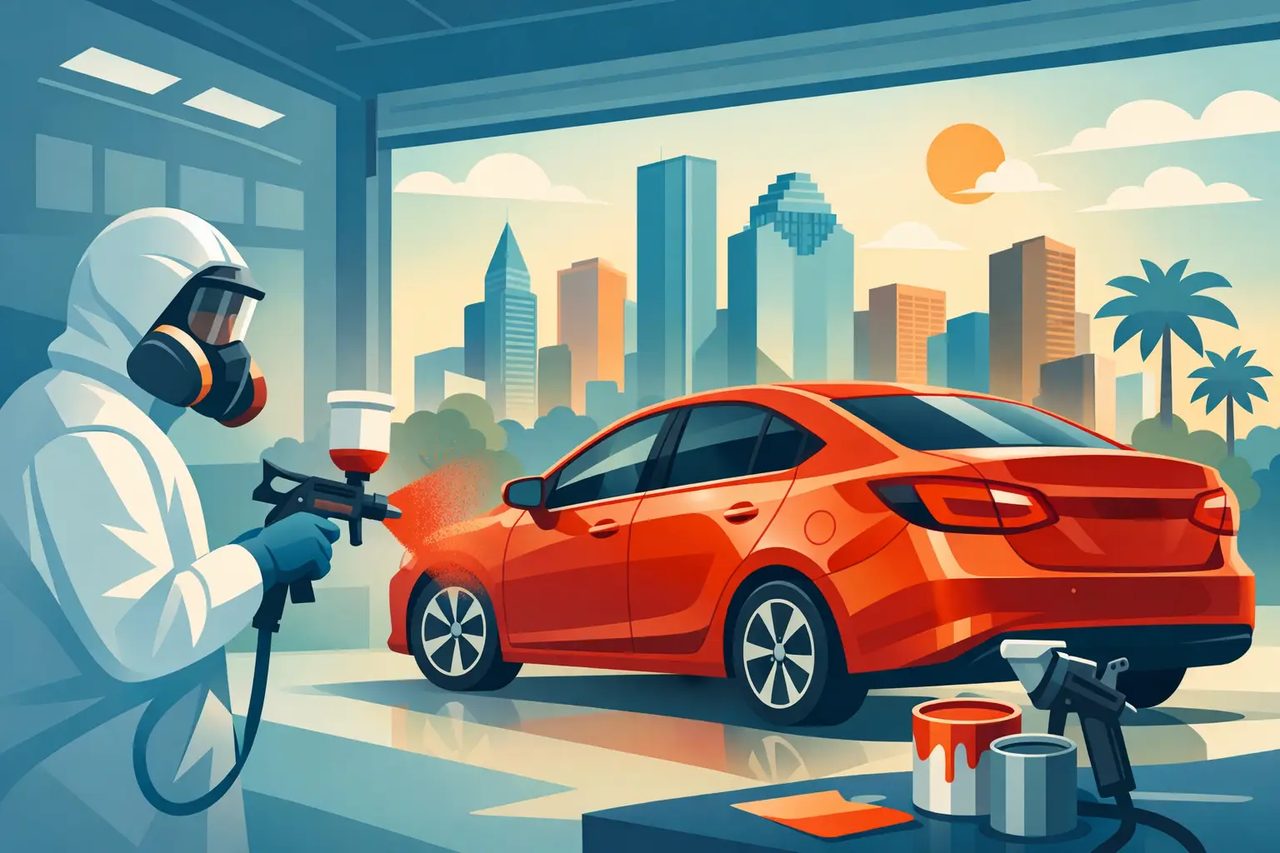
After body repairs are complete, the surface is cleaned, sanded, and prepared for primer where needed. Primer helps create a stable foundation and seals repaired areas before color is applied. The color coat is then matched to the vehicle’s existing finish, followed by clear coat for gloss and protection. Once cured, the panel may be polished to bring out an even, clean shine.
Why Paint Matching Matters More Than Most Drivers Expect
Your vehicle’s paint code gives a shop a starting point, not a guaranteed perfect match. Factory paint changes over time because of sunlight, weather, washing habits, and everyday exposure. A white, silver, gray, black, red, or pearl finish can all show differences when a freshly painted panel sits beside older paint.
That is why professional car painting often involves blending color into the neighboring panel rather than painting one isolated area with a hard edge. Blending helps the repair transition naturally across the vehicle. It takes more labor and materials than a quick spot repair, but it can make a major difference in how the finished vehicle looks in daylight.
Metallic and pearl colors deserve extra attention. Their appearance depends on how the paint particles lay during application, so the angle of light can make a slight mismatch more noticeable. A capable auto body shop will evaluate the color in different lighting conditions and choose the repair approach that gives your vehicle the most natural result.
When a Small Paint Repair Is Enough
Not every scratch requires repainting an entire panel. Light clear-coat scratches, paint transfer from another vehicle, and minor scuffs may be corrected through polishing or targeted refinishing. If the scratch has not cut through the color layer, paint correction can sometimes improve the appearance without full panel paint.
A deeper scratch that reaches primer, metal, or plastic is different. Exposed metal can begin to corrode, especially after repeated rain and humidity. On bumpers, exposed areas can spread, peel, or collect grime. Addressing these issues early is often less expensive than waiting until the damaged area grows.
The best option depends on the location and severity of the damage. A small chip on a lower panel may be a practical candidate for touch-up, while a scrape across a door or bumper often calls for a more complete refinish. An honest inspection should explain the difference between a budget-minded cosmetic improvement and a repair designed for the best long-term appearance.
Collision Repairs Need More Than Fresh Paint
Paint is often the final stage of collision repair, not the first. A bumper that looks scratched may also have broken brackets, loose clips, damaged absorbers, or alignment issues behind it. A dented fender can affect panel gaps, headlight fitment, or the way a door opens. Covering the visible damage without checking these areas can leave the vehicle looking better while still needing attention.
At Sam Auto Repair & Collision, body and paint work can be evaluated alongside mechanical concerns when an accident has affected more than the exterior. That one-stop approach is helpful when a collision has led to steering pull, suspension damage, warning lights, A/C problems, or other issues that should be inspected before the vehicle goes back on the road.
If another driver caused the accident, insurance may cover approved bodywork and paint repairs. If you are paying out of pocket, ask for a clear explanation of the recommended repair options. In some cases, repairing a panel is more cost-effective. In others, replacement is the better choice for fit, safety, and finish quality.
What Affects the Cost of Car Painting?
There is no one price for paint work because the visible damage does not tell the whole story. A small bumper scuff and a roof with widespread clear-coat failure require very different levels of labor. The vehicle’s make, paint type, panel material, color complexity, prior repairs, and necessary bodywork all affect the final estimate.
A straightforward panel refinish may be a sensible solution for a localized scrape. More extensive work can cost more because it includes disassembly, dent repair, sanding, priming, masking, color blending, clear coat application, and final finishing. Luxury, European, and specialty vehicles may also require additional care because replacement parts, sensors, paint formulas, and panel construction can be more complex.
The lowest quote is not always the best value. A rushed job can leave overspray, uneven texture, visible tape lines, poor color matching, or peeling clear coat. Ask what preparation is included, whether adjacent panels may need blending, and how the shop plans to address dents, rust, or old failing paint. Clear answers help you compare estimates fairly.
How Long Does Auto Painting Take?
Timing depends on the scope of the work and the condition of the vehicle. A minor repair may move faster than a collision restoration involving parts ordering, insurance approval, structural checks, or multiple damaged panels. Paint also needs proper curing time. Rushing a vehicle out before the finish has had time to set can compromise the result.
Weather can affect scheduling, but a professional paint environment is designed to control the conditions that matter during application and curing. Houston humidity is another reason to avoid quick, improvised outdoor paint work. A controlled process helps reduce contamination, uneven drying, and finish problems that can shorten the life of the repair.
A good shop should give you a realistic timeline rather than promising an unrealistic same-day result. If you rely on your vehicle for commuting, family transportation, or rideshare work, let the service advisor know. Clear communication makes it easier to plan around the repair and get you back on the road as quickly as the work allows.
Protecting a New Paint Finish
Once your vehicle has been refinished, simple care helps preserve the results. Follow the shop’s recommendations about washing and waxing, especially during the first few weeks. Avoid harsh brushes, abrasive cleaners, and automatic car washes if the finish has not fully cured.
Parking in shade or using covered parking when possible can reduce sun exposure. Washing off bird droppings, tree sap, bugs, and road grime promptly also protects the clear coat. These contaminants can stain or etch the finish when they sit too long in Houston heat.
If you notice peeling clear coat, spreading rust, a deep scratch, or collision damage, do not wait for the appearance to get worse. Bring your vehicle in for an inspection and get a straightforward answer on the repair options. A well-prepared paint repair can protect your vehicle, restore its appearance, and help you feel confident every time you get behind the wheel.