
Guide · July 2026
Car Suspension Clunking Noise: Causes to Check
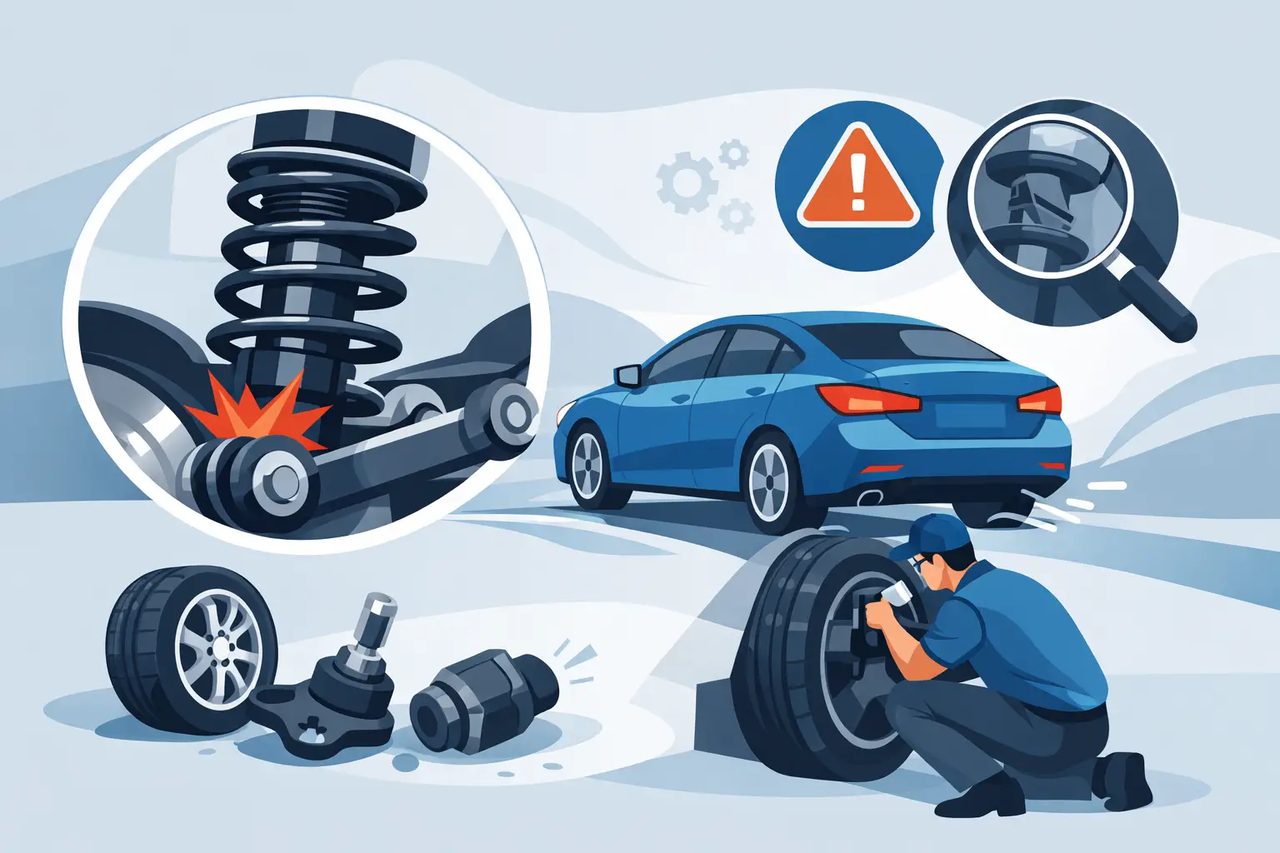
A sharp clunk when you pull into your driveway, cross a Houston pothole, or brake at a light is not a sound to ignore. A car suspension clunking noise often means a component has developed extra movement where it should be held firmly in place. Sometimes the repair is straightforward, such as a worn sway bar link. Other times, the noise points to a steering or suspension issue that can affect tire wear, handling, and safety.
The good news is that a clunk can usually be diagnosed before it turns into a larger repair. Paying attention to when the sound occurs gives a technician a valuable starting point.
What Causes a Car Suspension Clunking Noise?
Your suspension is made up of many connected parts that support the vehicle, absorb road impacts, keep the tires planted, and help you maintain control through turns. Rubber bushings, ball joints, shocks or struts, springs, control arms, and stabilizer components all work together. When one part wears out, loosens, or breaks, metal components may move farther than they should and create a clunking sound.
One of the most common causes is a worn sway bar link. This small part connects the sway bar to the suspension and helps reduce body roll during turns. When its joints wear out, you may hear a repetitive clunk over bumps, especially at lower speeds or when entering a driveway at an angle.
Worn control arm bushings are another frequent problem. These rubber or hydraulic bushings cushion the connection between the control arm and the vehicle frame. Over time, Houston heat, rough pavement, age, and normal driving can cause them to crack, soften, or separate. The result may be a dull thud when accelerating, braking, or driving over uneven pavement.
Ball joints deserve prompt attention. They connect suspension components while allowing the wheels to move up and down and turn side to side. A loose ball joint can clunk over bumps and may also cause wandering steering, uneven tire wear, or a steering wheel that no longer feels precise. Severe ball joint wear can become dangerous because it affects how securely the wheel assembly is held in position.
Struts and shocks can also create noise, although the sound is not always caused by the shock absorber itself. A failed strut mount, damaged spring seat, broken coil spring, or loose mounting hardware may clunk as the suspension travels. If the vehicle also bounces excessively after bumps, dips heavily when braking, or feels unstable on the freeway, the suspension needs inspection soon.
Other possibilities include loose brake calipers or hardware, worn tie rod ends, a damaged engine or transmission mount, or cargo and spare-tire tools moving in the trunk. That is why accurate diagnosis matters. A noise that seems to come from the suspension can occasionally come from another system nearby.
When Does the Clunk Happen?
The timing of the noise helps narrow down the cause. A clunk only over speed bumps or broken pavement often points toward sway bar links, strut mounts, bushings, or ball joints. A clunk that occurs when turning the wheel can indicate a steering component, upper strut mount, or suspension joint.
If you hear a single thud when you brake or accelerate, control arm bushings, engine mounts, or loose brake components may be involved. A clunk during a tight turn in a parking lot can also be related to a worn CV axle joint, particularly on front-wheel-drive vehicles. That sound is more commonly a clicking or popping noise, but drivers may describe it as a clunk.
Try to notice whether the sound comes from the front or rear, whether it happens on one side, and whether it changes with vehicle speed. You do not need to diagnose the vehicle yourself. Those details simply help the repair process move faster and give the technician a clearer picture of what your vehicle is doing.
Is It Safe to Keep Driving?
It depends on the cause and the severity of the wear. A minor clunk from a worn sway bar link may not immediately prevent the vehicle from driving, but it still should be checked. The longer a loose component is left alone, the more stress it can place on surrounding parts.
Do not continue normal driving if the clunk is loud, suddenly getting worse, or paired with steering changes. Pull over and arrange an inspection if you notice the vehicle pulling to one side, loose or wandering steering, vibration through the wheel, a tilted ride height, a visible broken spring, grinding noises, or severe uneven tire wear. These signs can indicate a safety-related suspension or steering issue.
A vehicle that feels unstable during lane changes or braking should not be treated as a minor inconvenience. Your suspension is not just there for comfort. It helps your tires maintain proper contact with the road, particularly during emergency stops, hard turns, and wet-weather driving.
Why Potholes and Curbs Make the Problem Worse
A single hard pothole strike or curb impact can bend, crack, or loosen suspension and steering parts. It can also knock the wheel alignment out of specification. Even if the vehicle seems to drive normally afterward, a new clunk, off-center steering wheel, or fresh tire wear is worth checking.
Repeated impacts are just as hard on a vehicle. Rough roads gradually wear bushings, joints, and mounts. Larger wheels with lower-profile tires can make the ride feel more responsive, but they provide less cushion against potholes. Trucks and SUVs that regularly haul equipment, tow, or travel on uneven surfaces may also wear suspension parts differently than a lightly used commuter car.
There is no one mileage point when every suspension part fails. Driving habits, vehicle weight, road conditions, climate, and part quality all make a difference. The right approach is to inspect the vehicle based on symptoms rather than replacing parts just because they have reached a certain age.
How a Proper Suspension Inspection Finds the Real Issue
A quality inspection should go beyond a quick look under the vehicle. A technician will road-test the car when appropriate, listen for the noise under the conditions you describe, inspect visible bushings and joints, check for looseness, and examine shocks, struts, springs, mounting points, steering parts, brakes, and tire condition.
The wheels may be checked for play to help identify worn ball joints, tie rods, or wheel bearings. The technician should also look for leaking struts, cracked bushings, broken spring coils, loose hardware, and signs that a component is contacting another part. If an impact is suspected, an alignment check may be recommended after the damaged parts are repaired.
This process matters because replacing parts based only on the sound can waste money. For example, installing new struts will not solve a clunk caused by a loose sway bar link. Replacing a sway bar link will not correct a bad ball joint or a failed control arm bushing. Honest diagnostics identify the part that has failed and any related wear that should be addressed at the same visit.
Repairs That May Be Recommended
The repair depends on what the inspection finds. Sway bar links and bushings are often relatively simple repairs. A worn ball joint may require replacement of the joint itself or, on some vehicles, replacement of the complete control arm. If a control arm bushing has failed, replacing the full arm can sometimes be the more durable and cost-effective option, depending on the vehicle design.
Struts and shocks are commonly replaced in pairs on the same axle to preserve balanced handling. If a strut mount or coil spring is damaged, it makes sense to inspect related parts while the assembly is apart. After steering or suspension repairs, wheel alignment is often necessary to protect the tires and restore stable handling.
Budget matters, and so does repair priority. A good repair shop should explain what is unsafe now, what is worn but can be monitored, and what work may help prevent repeat labor later. That gives you a clear decision without guessing about what your vehicle actually needs.
Do Not Mask the Noise and Hope It Goes Away
Turning up the radio will not make a loose suspension part safer. Avoid spraying lubricants onto suspension joints as a permanent fix, and do not assume the problem is harmless because the vehicle still drives. Some worn components make little noise until they become severely loose.
If you recently had suspension, tire, brake, or collision work completed and the noise started afterward, bring the vehicle back for a recheck. A loose fastener, settling component, missed related issue, or alignment concern should be addressed early.
For drivers in Houston, Spring, Aldine, North Houston, and Cypress, Sam Auto Repair & Collision can inspect a clunking suspension, explain the findings in plain language, and recommend the repair that fits the condition of your vehicle. A timely inspection can protect your tires, improve ride quality, and help you feel confident every time the road gets rough.