
Guide · July 2026
Check Engine Light Diagnosis: What Comes Next
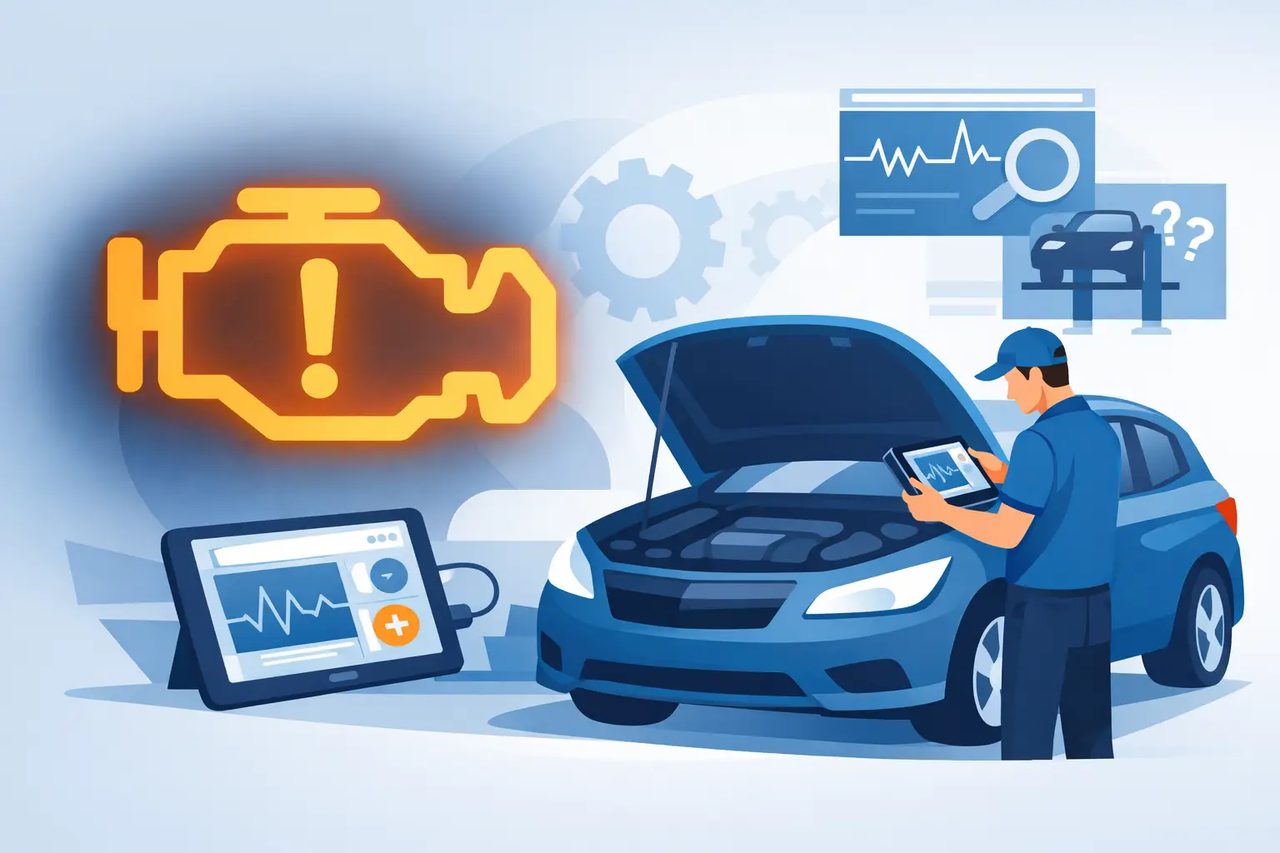
A check engine light can appear on the way to work, while picking up the kids, or just after you filled the tank. That small amber symbol does not name the failed part, but it does mean your vehicle’s computer has detected a problem worth recording. A proper check engine light diagnosis identifies the actual cause before anyone starts replacing parts.
For Houston drivers, waiting too long can turn a manageable repair into poor fuel economy, a no-start condition, catalytic converter damage, or an emissions-test problem. The right next step depends on whether the light is steady or flashing, how the vehicle is running, and what the diagnostic testing shows.
What the Check Engine Light Is Telling You
The check engine light, also called the malfunction indicator light, monitors systems that affect engine operation and emissions. Modern vehicles use sensors, wiring, computer modules, fuel delivery components, ignition parts, and emissions equipment to keep the engine running efficiently. When readings fall outside the expected range, the computer stores a diagnostic trouble code and switches on the light.
A code is a starting point, not a repair answer. For example, a code related to an oxygen sensor may be caused by the sensor itself, but it can also point to damaged wiring, an exhaust leak, a fuel mixture issue, or another engine condition affecting that sensor’s reading. Replacing the part named in a code without testing is how drivers end up paying twice.
The vehicle may still feel normal, especially in the early stages of a problem. Other times, the light arrives with rough idling, hesitation, reduced power, hard starting, fuel smell, stalling, or a noticeable drop in gas mileage. Those details help a technician narrow the diagnosis.
Steady vs. Flashing: When You Should Stop Driving
A steady check engine light usually means the vehicle needs attention soon, but it may be safe to drive a short distance if it is running normally. You should still schedule service promptly. Continuing to drive for weeks or months can allow a small emissions or engine-management issue to become more expensive.
A flashing check engine light is different. It often indicates an active engine misfire that can send unburned fuel into the exhaust system. That fuel can overheat and damage the catalytic converter, a costly component. If the light is flashing, reduce speed, avoid hard acceleration, and pull over safely if the engine is shaking, losing power, or running poorly. Have the vehicle inspected rather than trying to drive through it.
You should also stop driving and arrange service if the check engine light appears with overheating, low oil pressure, smoke, a strong fuel odor, severe knocking, or a major loss of power. The check engine light is not the only warning that matters. Red warning lights and serious drivability symptoms deserve immediate attention.
Start With the Simple Things, But Do Not Guess
A loose or damaged fuel cap is one common reason for a check engine light. After refueling, make sure the cap is present, tight, and free from cracked seals. If the cap was loose, the light may not turn off immediately. The computer often needs to complete several driving cycles before it confirms the issue is gone.
Beyond that quick check, avoid the temptation to clear the light and forget it. Disconnecting the battery or using a basic scanner may erase the code temporarily, but it does not repair the fault. It can also erase useful information that helps identify when and under what conditions the problem occurred.
If the vehicle has a flashing light, runs rough, or has additional warnings, skip the do-it-yourself steps and bring it in. The goal is not just to turn off the dashboard light. It is to correct the condition that caused it.
How Professional Check Engine Light Diagnosis Works
Accurate diagnosis combines scan-tool information with hands-on testing. A technician first confirms the customer concern and checks for obvious issues, such as damaged connectors, vacuum hoses, fluid leaks, worn ignition components, or a loose intake tube. Then the vehicle is scanned for stored, pending, and history codes.
The technician also reviews freeze-frame data. This is a snapshot of vehicle conditions when the computer detected the fault, including engine speed, temperature, load, and fuel-trim readings. That information can show whether a problem happens at idle, during acceleration, after warm-up, or under another specific condition.
From there, testing depends on the code and symptoms. A complete diagnosis may include checking live sensor data, measuring electrical circuits, performing a smoke test for vacuum or evaporative-emissions leaks, testing fuel pressure, inspecting spark plugs and ignition coils, or checking exhaust-system operation. On newer vehicles, software communication and module data may need evaluation as well.
This process takes more than plugging in a code reader. Some faults are intermittent, meaning they only show up in certain weather, traffic, temperature, or driving conditions. Houston heat can add stress to batteries, wiring, cooling systems, and air-conditioning-related engine loads. A careful technician looks for evidence instead of assuming the first code tells the full story.
Common Problems Behind the Light
Check engine light causes range from simple repairs to issues that need deeper testing. Common examples include a loose fuel cap, leaking EVAP system, worn spark plugs, failing ignition coils, oxygen sensor concerns, mass airflow sensor contamination, vacuum leaks, fuel injector problems, catalytic converter efficiency faults, and thermostat or coolant-temperature sensor issues.
A misfire deserves special attention because it may come from several sources. A worn spark plug could be the answer, but a weak coil, injector issue, low compression, vacuum leak, or fuel-delivery problem can create similar symptoms. The same is true for lean- or rich-mixture codes. The code describes what the computer sees, while testing reveals why it is happening.
European, domestic, Asian, luxury, and import vehicles all use diagnostic systems, but their procedures and common failure patterns vary by make and model. A shop that works across vehicle types can evaluate the warning in the context of the specific vehicle rather than treating every code the same.
What Repair Costs Depend On
There is no honest flat price for every check engine light repair because the cause can be as minor as a fuel-cap seal or as involved as a fuel-system, wiring, or emissions-system repair. The diagnostic process helps prevent unnecessary spending by separating a confirmed failure from a possibility.
When reviewing repair recommendations, ask what testing confirmed the problem, what happens if you delay the repair, and whether related maintenance is due. For instance, replacing worn spark plugs at the recommended interval can protect new ignition components and improve engine performance. In other cases, a repair may be urgent because it affects safety, reliability, or the risk of catalytic converter damage.
A good repair shop should explain the findings in plain language, provide options when options are appropriate, and tell you which repairs need immediate action. Budget-conscious service does not mean cutting corners on diagnosis. It means fixing the right problem first.
Why Clearing the Light Is Not a Fix
Some drivers clear the light before an inspection or after borrowing a scanner. The dashboard may look normal for a while, but the vehicle’s readiness monitors can show that testing has not completed. If the underlying issue remains, the light will often return once the computer sees the fault again.
Clearing codes can also mask an intermittent problem long enough to make diagnosis harder. If you have access to a scanner, write down the exact code numbers and note any symptoms before clearing anything. Better yet, leave the information intact for the technician.
Get Answers Before a Small Warning Grows
If your check engine light is on, do not let uncertainty turn into a bigger repair. Bring your vehicle to Sam Auto Repair & Collision for a clear, professional evaluation of the warning, the symptoms, and the repair options. Whether you drive a family SUV, a commuter sedan, a work truck, or a high-end import, the focus should be the same: accurate answers, dependable repairs, and a vehicle you can trust on Houston roads.
A dashboard light is your vehicle asking for attention. Address it early, ask questions, and choose a diagnosis based on testing instead of guesses.