
Guide · October 2026
Coolant Leak Repair and When to Stop Driving
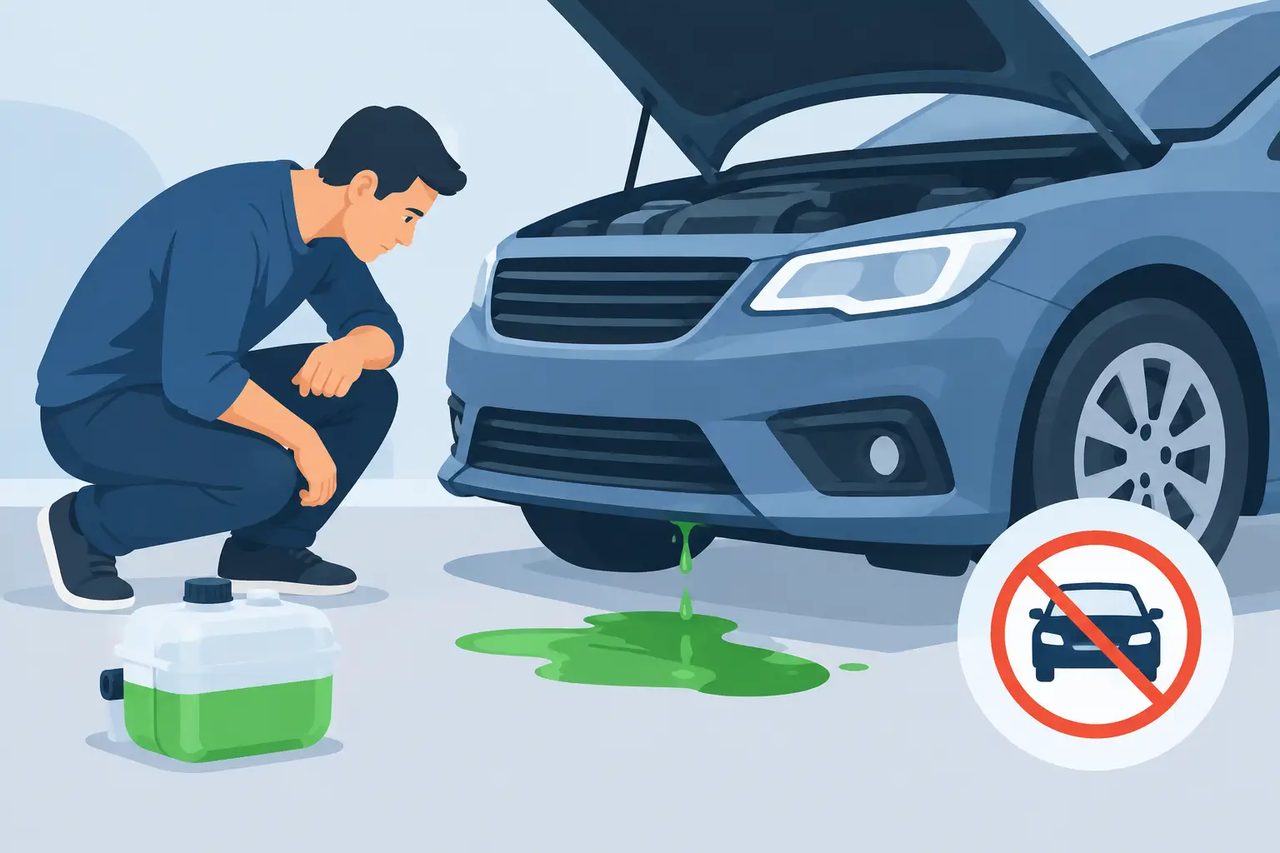
A sweet smell under the hood, a growing puddle in the driveway, or a temperature gauge creeping higher than normal can turn an ordinary Houston commute into an engine-threatening problem. Coolant leak repair is not a service to put off until your next oil change. Your cooling system protects the engine from extreme heat, and even a small leak can become a major repair if the vehicle overheats.
Houston traffic, high summer temperatures, long idling periods, and heavy A/C use all put extra demand on a vehicle’s cooling system. If you notice coolant loss or an overheating warning, getting an accurate diagnosis quickly can save you from a blown head gasket, warped cylinder head, or complete engine failure.
Signs You May Need Coolant Leak Repair
Coolant is usually bright green, orange, pink, yellow, blue, or purple, depending on the type your vehicle uses. A colored puddle beneath the front of the vehicle is a clear warning sign, but leaks are not always easy to spot. Coolant can evaporate on a hot engine before it reaches the ground, or it may collect behind a component where it cannot be seen from above.
Watch for a dashboard temperature gauge that runs hotter than usual, a low-coolant message, steam from under the hood, or a sweet odor through the vents. You may also notice that the heater blows cold air even after the engine warms up. That can happen when the coolant level is too low for hot coolant to circulate through the heater core.
Do not confuse a clear puddle under your vehicle with coolant right away. Water dripping near the passenger side after using the A/C is often normal condensation. Coolant usually has color and a slick feel, but avoid touching any unknown automotive fluid. Keep children and pets away from it as well. Antifreeze is toxic, even in small amounts.
If the temperature warning light comes on, the gauge moves into the red, or steam is coming from the engine bay, pull over safely and shut the engine off. Do not keep driving to see if it cools down. Continuing to drive an overheating vehicle can turn a manageable leak into thousands of dollars in engine damage.
Where Coolant Leaks Usually Come From
The cooling system is made up of several connected parts, so the leak may not be coming from the first wet area you see. Coolant can travel along a hose or drip from one component onto another. A proper inspection matters because replacing the wrong part does not fix the problem.
Common leak sources include aging radiator hoses, loose clamps, a cracked radiator, a leaking water pump, a failing thermostat housing, worn seals, or a damaged coolant reservoir. On some vehicles, the radiator cap no longer holds the pressure the system needs. That can allow coolant to escape or boil at a lower temperature.
Internal leaks require especially careful diagnosis. Coolant that enters the combustion chamber or mixes with engine oil may point to a head gasket issue, a cracked cylinder head, or another serious engine concern. Thick, milky-looking oil, persistent white exhaust smoke, unexplained coolant loss, or repeated overheating are reasons to have the vehicle inspected without delay. Those symptoms do not automatically mean the engine needs replacement, but they should never be ignored.
Collision damage can also create cooling-system problems. A minor front-end impact may crack a radiator support, damage the condenser area, shift a hose connection, or create a small radiator leak that appears weeks later. If your vehicle has been in an accident and begins losing coolant afterward, have both the mechanical and visible damage checked.
How a Shop Finds the Actual Leak
A trustworthy coolant leak repair starts with diagnosis, not guesswork. The technician will inspect the radiator, hoses, clamps, reservoir, water pump area, thermostat housing, cooling fans, and visible engine connections. They will also check coolant level and condition.
A cooling-system pressure test is often the fastest way to find a leak. The system is pressurized while the engine is cool, helping reveal drips or seepage that may not show up during a quick visual inspection. In harder-to-find cases, a UV dye test can trace the coolant’s path. If there are signs of an internal leak, additional testing may be needed to check for combustion gases in the cooling system or coolant contamination in the oil.
This process matters because a coolant leak can have more than one cause. For example, a failed radiator cap may allow coolant loss, while an old upper radiator hose is also beginning to crack. An honest repair recommendation should explain what failed now, what should be monitored, and what work is necessary to make the vehicle dependable again.
What Coolant Leak Repairs Can Involve
The right repair depends on the source of the leak and the condition of the rest of the cooling system. A worn hose or clamp may be a straightforward repair. A leaking radiator, water pump, thermostat housing, or reservoir will require replacement of that failed part. Some water pumps are easier to access than others, so labor time can vary widely by vehicle.
After repairs, the system should be refilled with the correct coolant specification and properly bled of air. This is more important than many drivers realize. Air trapped in the cooling system can cause poor heat, temperature spikes, and repeat overheating even after a new part has been installed.
Using the correct coolant is also important. Different makes and models require different formulas, and mixing incompatible coolants can reduce corrosion protection or create deposits in the system. If you have topped off coolant in the past and are not sure what was used, tell the technician. Clear information helps prevent a repeat problem.
Be cautious with pour-in stop-leak products. They may seem like a low-cost answer to a small leak, but they can clog radiator passages, heater cores, or other narrow sections of the cooling system. In an emergency, a product may be used only as a short-term measure under professional guidance. It is not a dependable substitute for repairing the failed component.
Can You Drive With a Coolant Leak?
It depends on the size and location of the leak, but the safest answer is usually no. A very slow leak may allow the vehicle to run normally for a short time, yet coolant level can drop faster than expected in Houston heat or stop-and-go traffic. Once the engine overheats, the risk rises quickly.
If you must move the vehicle a very short distance, check the coolant level only after the engine has fully cooled. Never remove a radiator cap from a hot engine. Pressurized coolant can spray out and cause serious burns. If the gauge rises, a warning light comes on, or you see steam, shut the vehicle off and arrange for service or towing.
Do not rely on adding water repeatedly as a long-term fix. Water may help in a true emergency, but it does not provide the freeze protection, boiling protection, and corrosion resistance of the proper coolant mixture. It also does nothing to stop the leak.
Protect Your Engine Before a Small Leak Gets Expensive
The cost of coolant leak repair depends on the vehicle, the leaking part, and how quickly the problem is addressed. Replacing a hose is typically far less involved than repairing damage after an overheated engine. That is why a temperature warning, coolant puddle, or repeated need to add coolant deserves prompt attention.
At Sam Auto Repair & Collision, our technicians inspect the cooling system carefully, explain what is causing the problem, and help Houston-area drivers choose a practical repair that protects their vehicle and budget. Whether you drive a family SUV, work truck, import, luxury vehicle, or rideshare car, the goal is the same: get the leak fixed correctly and get you back on the road with confidence.
If your vehicle is losing coolant, do not wait for the gauge to hit red. A timely inspection today can help keep tomorrow’s drive safe, dependable, and far less expensive.