
Guide · September 2026
Electrical Fault Diagnosis for Houston Drivers
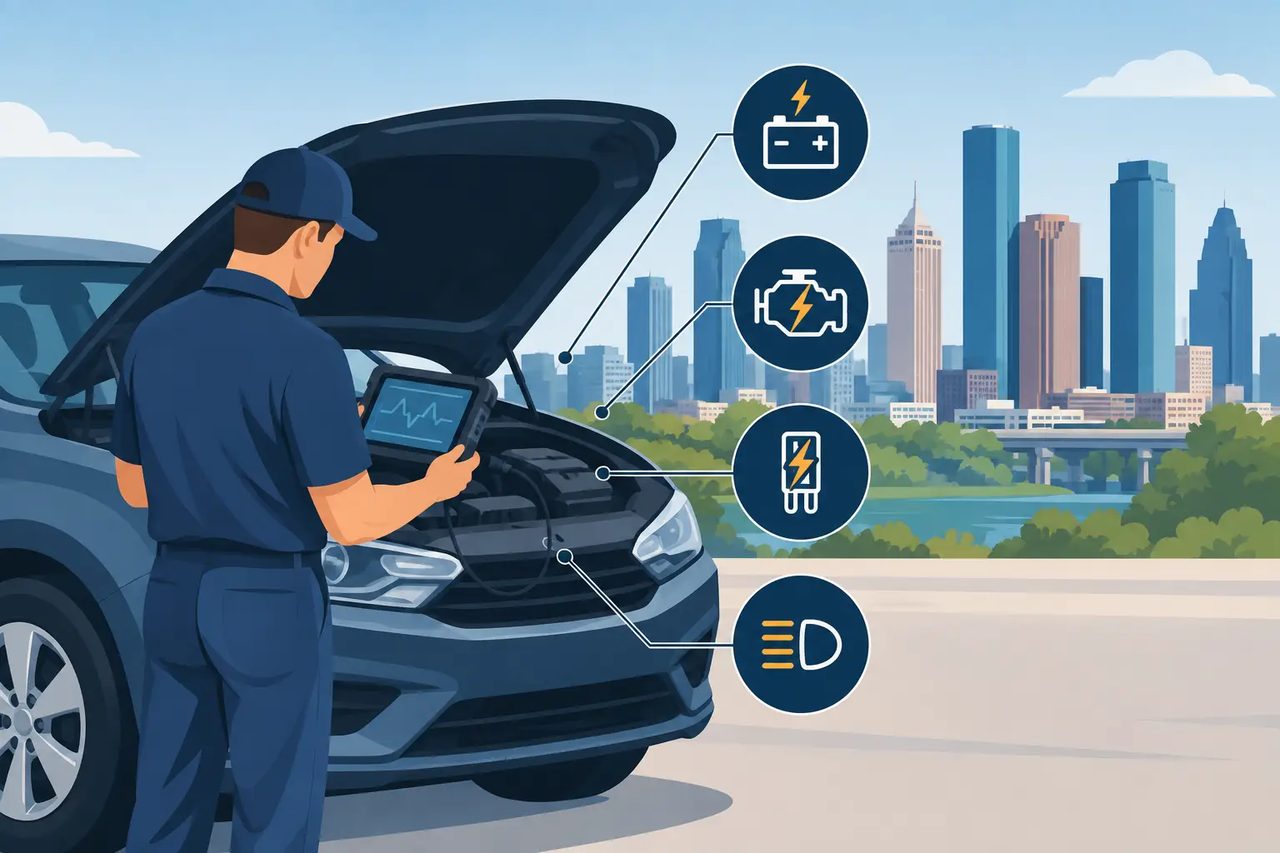
A vehicle that will not start at the grocery store, a battery that dies overnight, or a warning light that keeps returning can turn a normal Houston day into a major interruption. Accurate electrical fault diagnosis finds the actual cause of the problem instead of replacing parts based on a guess. That means a safer repair, less wasted money, and a better chance of getting back on the road without a repeat visit.
Modern vehicles depend on electrical systems for much more than headlights and the radio. The battery, alternator, starter, wiring, sensors, modules, fuses, switches, and computer network all need to work together. When one part loses power, develops resistance, or sends the wrong signal, the symptoms can look like several different problems.
What Electrical Problems Can Look Like
Some electrical faults are obvious. The engine does not crank, the interior lights are dim, or the battery warning light comes on. Others are less clear. Your A/C may stop blowing, power windows may work only sometimes, the check engine light may appear with no noticeable drivability issue, or the dash may display several warnings at once.
Pay attention when you notice recurring trouble such as slow starts, flickering headlights, a burning electrical smell, blown fuses, erratic gauges, or accessories that shut off unexpectedly. A single dead battery may simply be an old battery. A battery that repeatedly goes dead, however, could point to a charging-system problem, a parasitic draw, damaged wiring, or an electronic module that is staying awake after the vehicle is parked.
Houston heat can make these concerns show up faster. High temperatures place extra strain on batteries and can expose weak connections, worn insulation, and aging electrical components. Water intrusion after heavy rain or flooding can also corrode connectors and create problems that appear days or weeks later.
Why Electrical Fault Diagnosis Takes More Than a Code Scan
A diagnostic trouble code is a useful starting point, but it is not a repair instruction. For example, a code related to low voltage may result from a weak battery, failing alternator, loose terminal, corroded ground, damaged cable, or an issue in another circuit. Replacing the component named in a code without testing can leave the original problem in place.
Professional testing starts with the vehicle’s complaint and history. When does the problem happen? Is it worse after the vehicle sits overnight, during rain, while braking, or when the A/C is running? Does it affect one system or several? Those details help narrow the search before any repair is recommended.
A technician may then inspect battery terminals, grounds, fuses, relays, wiring harnesses, and connectors for corrosion, heat damage, loose fitment, or previous repair issues. Battery and charging output are tested under the right conditions. The starter circuit may be checked for voltage drop. Scan tools can read fault codes and live data from the vehicle’s computer systems, while meter testing verifies whether power, ground, and signals are actually reaching the affected component.
The difference matters. A weak alternator may test adequately at idle but fail under electrical load. A damaged wire may look fine from the outside yet lose connection when the engine moves. An intermittent fault can require a road test, wiggle test, or extended monitoring to reproduce safely. Good diagnosis is methodical because electrical issues do not always fail on command.
Common Electrical Issues and Their Real Causes
No-Start and Hard-Start Conditions
If you turn the key or press the start button and hear clicking, nothing at all, or a slow crank, the battery is only one possibility. Loose terminals, poor grounds, a failing starter, worn cables, ignition switch trouble, or a security-system issue can all create a no-start condition.
Jump-starting a vehicle may get you moving once, but it does not explain why the battery lost charge. If the vehicle starts after a jump and the battery light comes on, have the charging system checked promptly. Driving with a failing alternator can leave you stranded once the battery is drained.
Battery Drain While Parked
A parasitic draw occurs when an electrical circuit continues using too much power after the vehicle is shut off. Common causes include a glove box or trunk light that stays on, an aftermarket alarm or audio system, a stuck relay, a faulty module, or wiring damage.
Finding a draw requires patience. Technicians measure key-off current draw, allow vehicle modules time to power down, and isolate circuits without creating new faults. It is not a job for randomly pulling fuses or disconnecting components, especially on newer vehicles with multiple computer modules.
Warning Lights and Sensor Faults
The check engine light, ABS light, airbag light, traction control light, and battery light should never be ignored simply because the vehicle still drives. Some warnings point to issues that affect safety systems, emissions performance, charging, braking assistance, or engine operation.
Sensor codes can be especially misleading. The sensor may be failing, but so can its wiring, connector, reference voltage, ground circuit, or the system it is measuring. The right repair depends on test results, not just the code description.
Lighting, Power Accessory, and Comfort Problems
Headlights that flicker, brake lights that fail, power locks that stop responding, windows that move slowly, and blower motors that work only on certain speeds often involve electrical testing. Depending on the symptom, the cause may be a fuse, relay, switch, motor, resistor, control module, ground connection, or wiring issue.
These problems may seem minor, but they can become safety concerns. Exterior lights help other drivers see your vehicle. A failed blower motor can make defrosting difficult. Power window and door-lock issues can also affect security and emergency exit access.
What You Can Check Before Bringing Your Vehicle In
You do not need to troubleshoot electrical circuits at home, but a few safe observations can help speed up the visit. Note which warning lights are on, whether the issue occurs only when the engine is hot or cold, and whether any recent work was performed. If the battery died, think about how long the vehicle was parked and whether any lights or accessories were left on.
Avoid repeatedly jump-starting a vehicle, installing a larger fuse, or using temporary wiring fixes. A fuse is designed to protect the circuit. Replacing it with a higher-rated fuse can allow wiring to overheat and create a much more expensive repair. If you smell burning plastic, see smoke, notice hot wiring, or have repeated fuse failures, stop driving when it is safe to do so and arrange for service.
When Fast Diagnosis Saves Money
Electrical problems tend to spread when they are left alone. Low alternator output can damage a battery. Corrosion at a battery terminal can create starting and charging issues. A small wiring short can lead to repeated blown fuses, damaged modules, or loss of a safety-related feature.
Early testing also helps prevent unnecessary parts replacement. A clear diagnosis lets you decide what needs immediate attention, what can be monitored, and what repair option fits your budget. For working drivers, families, and commuters, that clarity matters as much as the repair itself.
At Sam Auto Repair & Collision, technicians diagnose electrical concerns across domestic, Asian, European, luxury, and import vehicles, from basic battery and alternator issues to complex warning-light and wiring concerns. You will get a straightforward explanation of the findings and repair options focused on restoring safe, dependable operation.
If your vehicle is showing warning lights, struggling to start, losing battery charge, or acting unpredictably, do not wait for a complete breakdown. Bring it in for electrical testing so the problem can be identified before your next commute, school run, or weekend drive is affected.