
Guide · August 2026
How to Diagnose Brake Vibration Before It Worsens
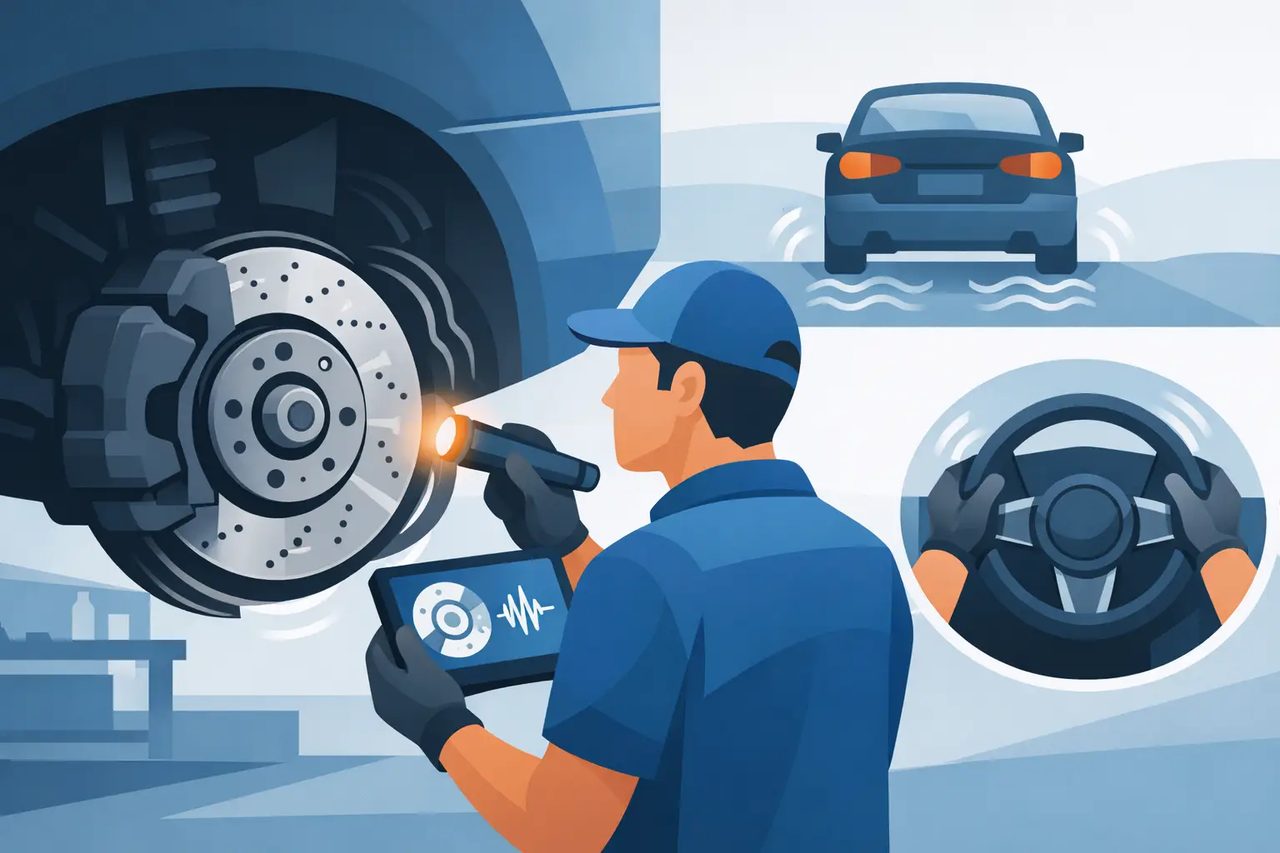
A steering wheel that shakes as you slow for a Houston stoplight is more than an annoyance. It is your vehicle telling you that something needs attention. Knowing how to diagnose brake vibration starts with noticing exactly when the shake happens, where you feel it, and whether it changes with speed or braking pressure.
Brake vibration can come from worn brake parts, uneven rotor surfaces, sticking calipers, suspension wear, tire problems, or damage left after a pothole or collision. The symptom may feel similar from the driver’s seat, but the repair can be very different. Paying attention to the details helps avoid replacing the wrong parts and protects your vehicle’s stopping ability.
Start With When the Vibration Happens
The most useful clue is whether the vibration appears only while applying the brakes. Find a safe, open stretch of road and drive normally. Do not test hard braking in traffic, on wet roads, or where you could put others at risk.
If the vehicle drives smoothly at highway speed but shakes only when you press the brake pedal, the brake system is the likely starting point. Brake rotors, pads, calipers, and mounting hardware should be inspected. A vibration that gets stronger during harder braking can point to a rotor condition, but it can also happen when a caliper is not applying or releasing pressure evenly.
If the vibration is present even when you are not braking, look beyond the brakes. Tire balance, uneven tire wear, a bent wheel, a loose suspension component, or an alignment concern may be involved. Braking may make an existing problem feel more noticeable because weight shifts toward the front of the vehicle.
A vibration that starts after a tire change, wheel repair, curb strike, pothole impact, or accident deserves prompt attention. Loose lug nuts, a wheel that is not seated correctly, or damage to a tire or wheel can create safety concerns that should not wait.
Where You Feel the Shake Matters
The location of the vibration gives a technician useful direction, although it does not prove the cause by itself.
Steering wheel vibration
A shake or pulsing through the steering wheel during braking often suggests that the front brake or front suspension area needs inspection. Front rotors with excessive runout or uneven thickness are common causes. Worn tie rods, ball joints, control arm bushings, and wheel bearings can also allow movement that becomes more noticeable under braking.
Do not assume steering wheel vibration automatically means front rotors need replacement. A professional inspection should also check wheel condition, tire condition, suspension hardware, and the way the brake calipers are mounted.
Brake pedal pulsation
A pedal that rises and falls under your foot, especially during a gradual stop, is a classic sign of uneven contact between the brake pads and rotors. Many drivers call this warped rotors. In practice, the issue may be rotor runout, uneven rotor thickness, corrosion, brake pad material deposits, or a problem with the rotor mounting surface.
The distinction matters. Replacing rotors without correcting a sticking caliper, seized slide pin, or rust on the hub can allow the vibration to return.
Vibration in the seat or floor
A shake felt mostly in the seat, floorboard, or body of the vehicle may lead a technician to inspect the rear brakes, rear tires, and rear suspension. Rear rotor or drum brake problems can be felt through the vehicle rather than the steering wheel. On some vehicles, a rear tire issue can feel almost identical to a brake-related vibration.
Pay attention to whether the vibration is accompanied by a pulling sensation. If the vehicle pulls left or right during braking, uneven braking force, a sticking caliper, contaminated pads, or suspension alignment issues may be involved.
Check for Warning Signs You Can See, Hear, or Smell
You do not need to remove wheels or take apart brakes to gather useful information. A quick walk-around and careful observation can help explain the concern clearly when you bring the vehicle in.
Look through the wheel openings, if possible, for a rotor that appears deeply grooved, heavily rusted, blue from overheating, or coated with unusual debris. Do not touch brake parts after driving. Rotors and wheels can become extremely hot.
Listen for squealing, grinding, scraping, or a repeated thumping sound. Squealing can be caused by worn pads, moisture, dust, or hardware movement. Grinding is more urgent because it can mean the brake pad material is gone and metal is contacting the rotor. Continuing to drive in that condition can damage the rotors and increase repair cost.
A burning smell after normal driving, one wheel that feels much hotter than the others, reduced fuel economy, or a vehicle that seems to drag can point to a sticking brake caliper. This is not a wait-and-see issue. A caliper that does not release properly can overheat the rotor, damage pads, and affect control of the vehicle.
Also note any dashboard warnings. An ABS, brake, or traction-control light may not directly cause vibration, but it can indicate a related sensor, hydraulic, or stability-system issue that needs diagnosis.
Common Causes of Brake Vibration
Brake vibration is often blamed on rotors, and rotors are frequently part of the problem. Still, accurate diagnosis means checking the whole system.
Rotor runout means the rotor does not turn perfectly true. Even a small amount of side-to-side movement can create pedal pulsation over time. Rotor thickness variation means the rotor surface is not uniform around its circumference, causing the pads to grip differently as the wheel turns. Heat, wear, improper wheel installation, corrosion between the rotor and hub, or repeated hard braking can contribute.
Brake pads can also cause trouble. Low-quality or incorrect pads, glazed pad surfaces, uneven pad wear, and pad material transferred to the rotor can create noise, vibration, and inconsistent braking. Pads should always be checked with the rotors, not treated as an afterthought.
Calipers and slide pins must move freely. A seized slide pin can force one pad to do more work than the other. A sticking caliper piston can keep pressure on a rotor after you release the brake pedal. Both conditions create heat and uneven wear.
Finally, suspension and tire concerns can imitate brake vibration. Worn bushings, loose steering components, wheel bearing play, bent wheels, separated tire belts, and uneven tire wear can all become more obvious during braking. That is why a brake job based on a quick guess can leave the original symptom behind.
How a Professional Brake Inspection Finds the Actual Cause
A proper diagnosis begins with a road test when conditions allow. The technician confirms the speed range, braking pressure, noise, pull, and location of the vibration. Then the vehicle is inspected with the wheels removed.
Brake pad thickness and wear patterns are checked, along with rotor condition, caliper operation, flexible brake hoses, hardware, and slide pins. Rotor runout and thickness can be measured rather than judged by appearance alone. The technician also checks the hub mounting surface, because rust or debris behind a rotor can create runout even with new parts.
The inspection should extend to tires, wheels, wheel bearings, steering, and suspension. On vehicles with recent collision damage, a bent component or alignment concern can be part of the complaint. This complete approach matters for domestic, import, European, and luxury vehicles alike because brake designs and electronic systems vary, but safe stopping always depends on correct mechanical operation.
Depending on the findings, the right repair may be pads and rotors, caliper service or replacement, brake hardware, a wheel repair, tire replacement, suspension work, or an alignment. Sometimes resurfacing a rotor is appropriate, but only if it remains above the manufacturer’s minimum thickness and the underlying cause has been corrected. New rotors may be the safer value when the old ones are too thin, overheated, or badly worn.
When to Stop Driving and Schedule Service
Do not delay service if brake vibration is severe, the vehicle pulls hard while stopping, you hear grinding, the brake pedal feels soft, a warning light is on, or you smell burning. If braking distance has increased or the vehicle feels unstable, arrange for a safe inspection rather than continuing your normal commute.
For mild vibration with normal stopping power, schedule brake service soon. Waiting can turn a manageable pad, rotor, or hardware repair into caliper, wheel, tire, or suspension damage. At Sam Auto Repair & Collision, technicians can inspect the brake system and related steering and suspension components so you receive a clear explanation of what is causing the shake and what repair makes sense for your vehicle and budget.
Your brakes should feel predictable every time you press the pedal. If they do not, trust the symptom, avoid risky test drives, and have the vehicle checked before the next routine trip becomes the one where you need every foot of stopping distance.