
Guide · September 2026
How to Spot Oil Leaks Before Engine Damage
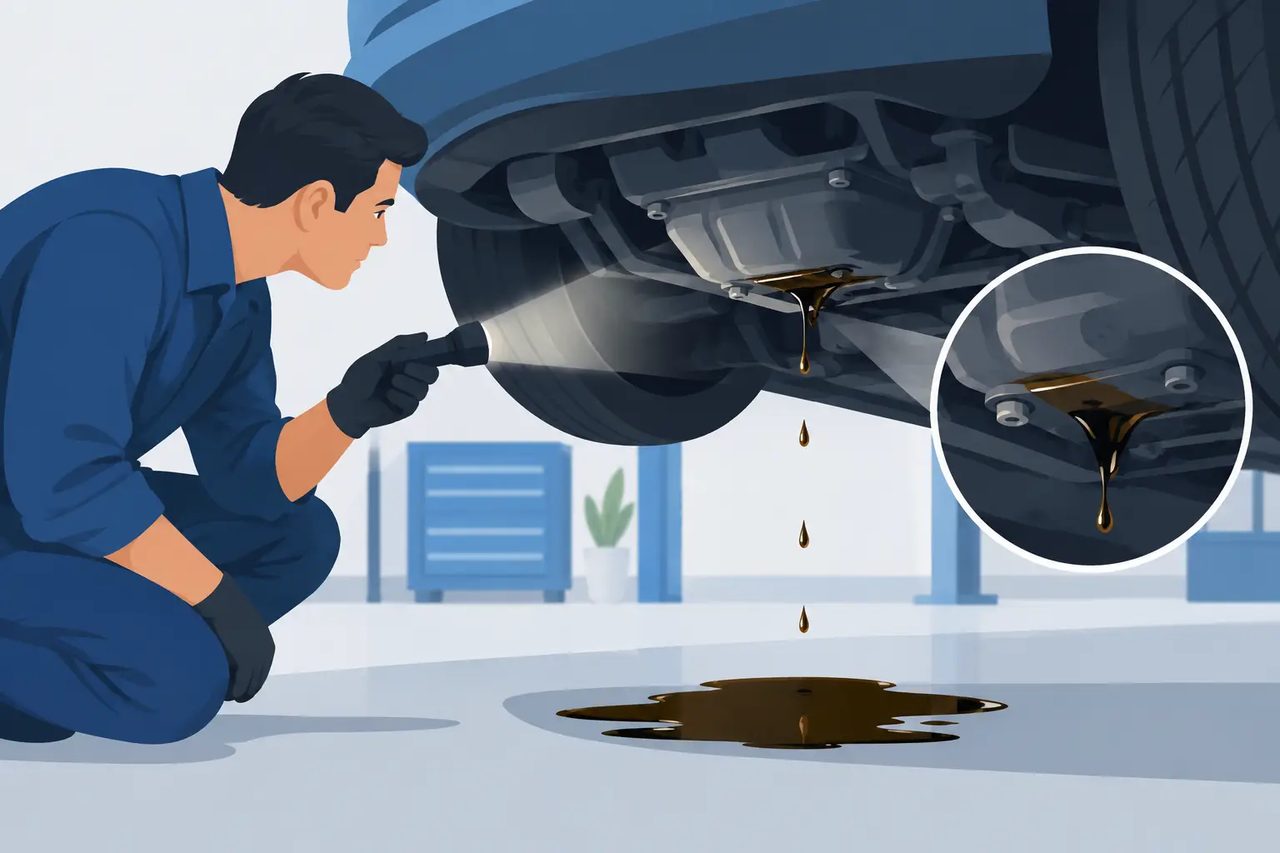
A fresh dark spot under your car may look minor, but oil does not belong on your driveway, garage floor, or parking space. Knowing how to spot oil leaks early can help Houston drivers avoid low oil levels, engine wear, smoke, and an unexpected breakdown on the way to work, school, or an important appointment.
Oil leaks range from a slow seep around an aging gasket to a fast leak that can put your engine at risk. The source is not always obvious from above, especially on newer vehicles with engine covers and underbody panels. A careful visual check can tell you when it is time to schedule a professional inspection.
How to Spot Oil Leaks Under Your Vehicle
The easiest first clue is often the ground where you park. Move your vehicle after it has been sitting for several hours and look at the pavement beneath the engine area. Fresh engine oil is usually slick and ranges from amber or light brown to dark brown or black, depending on how recently the oil was changed.
Oil spots commonly appear near the front or center of the vehicle, but the location alone does not confirm the source. Oil can travel along engine parts, splash while driving, or collect on an underbody shield before dripping somewhere farther back. That is why a spot on the ground is a warning sign, not a complete diagnosis.
A small spot that appears once may be residue from a recent oil change. Wipe the area clean, place a piece of clean cardboard under the vehicle overnight, and check again the next morning. If new drops appear, or the spot gets larger after driving, have it checked.
Not every fluid leak is engine oil. Transmission fluid is often red or reddish-brown, coolant may be green, orange, pink, or yellow, and water from the A/C system is clear and normal in hot Texas weather. Brake fluid is usually clear to light brown and needs prompt attention. When in doubt, avoid touching the fluid and let a technician identify it.
Check Your Oil Level and Warning Lights
An oil leak can lower the engine oil level before you see a large puddle. Park on level ground, shut the engine off, wait a few minutes, and use the dipstick if your vehicle has one. Wipe it clean, insert it fully, then remove it again to check whether the oil sits between the low and full marks.
If the level is below the safe range, add only the oil type and amount recommended for your vehicle, then arrange an inspection. Topping it off may protect the engine temporarily, but it does not stop the leak.
Take the red oil pressure warning light seriously. This light can mean the engine does not have adequate oil pressure, which may be caused by very low oil, a failing oil pump, or another serious internal issue. Pull over safely as soon as possible, turn the engine off, and do not continue driving just to see if the light goes away. Running an engine with low oil pressure can cause major damage in minutes.
A check engine light is less specific, but it can appear alongside oil-related issues in some vehicles. Any warning light combined with a visible leak, rough running, burning smell, or unusual engine noise deserves a prompt diagnosis.
Look and Smell for Oil Around the Engine
With the engine cool and the hood open, look for wet, shiny buildup around the valve cover, oil cap, oil filter area, and the front and lower portions of the engine. Fresh oil has a slick appearance. Older leaks often attract dirt and create a thick, greasy black coating on engine parts.
Do not reach around hot exhaust components, belts, fans, or moving parts. A flashlight can help you inspect visible areas without touching anything.
The smell of burning oil is another common warning. When oil drips onto a hot exhaust manifold or other exhaust component, it can create a sharp, acrid odor that may come through the vents or become noticeable after parking. You may also see light smoke rising from under the hood after a drive.
Burning oil should not be ignored. The leak may be small, but oil on hot exhaust parts can create smoke and, in some cases, a fire risk. Stop driving and seek help right away if smoke is heavy, the smell becomes strong, or you see flames.
Notice Changes in How Your Car Drives
Oil leaks do not always cause immediate drivability problems, but low oil can eventually lead to ticking, tapping, knocking, or louder-than-normal engine operation. These sounds may be more noticeable at startup or during acceleration. Do not assume a noisy engine just needs an oil change. The correct next step is to check the oil level and have the vehicle inspected.
You may also notice oil collecting on a driveway after longer trips, a burning smell when sitting in traffic, or smoke after highway driving. Houston heat can make existing seals and gaskets more likely to show their age, particularly on high-mileage vehicles. Still, the cause depends on the vehicle and the leak location. A minor valve cover seep and a leak near the oil pan, oil filter housing, timing cover, or crankshaft seal can require very different repairs.
Common Places Oil Leaks Start
Seals and gaskets keep oil inside the engine as it moves through different components. Heat cycles, mileage, vibration, and age can cause these parts to harden, shrink, or crack. Some of the more common sources include the valve cover gasket, oil pan gasket, oil filter or filter housing, drain plug washer, timing cover gasket, camshaft seals, and crankshaft seals.
A leak after an oil change may come from a loose drain plug, a damaged washer, an incorrectly installed filter, or oil spilled during service. That does not mean every post-service drip is serious, but it should be addressed instead of allowed to continue.
It is also possible to mistake oil consumption for an external leak. If your oil level keeps dropping but there are no spots on the ground, the engine may be burning oil internally. Blue-gray exhaust smoke, especially during startup or acceleration, can be a clue. This also needs professional attention.
When to Stop Driving and Call for Help
Some oil leaks allow enough time to book an appointment within a day or two. Others call for immediate action. Do not keep driving if the oil pressure light comes on, the dipstick shows little or no oil, oil is pouring from the vehicle, the engine is knocking, or smoke is coming from the engine bay.
If the leak is small and the oil level remains safe, avoid long trips and check the level before driving until it can be inspected. Parking on clean cardboard can help track how quickly the leak is progressing, but it is not a substitute for repair.
Get the Actual Source Diagnosed
Oil can spread across the engine and undercarriage, so replacing a visible gasket without confirming the source can waste time and money. A proper inspection may include cleaning the affected area, checking the oil level and pressure, inspecting seals and fasteners, and tracing fresh oil after the engine runs.
At Sam Auto Repair & Collision, technicians can inspect oil leaks on domestic, Asian, European, import, and high-end vehicles, explain what is causing the problem, and recommend the repair that fits the condition of your vehicle. The goal is not to sell unnecessary work. It is to stop the leak, protect your engine, and get you back on the road with confidence.
If you find a new oil spot tonight, check the level before your next drive and make the call before a small leak becomes an engine repair.