Guide · July 2026
7 Post Accident Vehicle Inspection Safety Checks
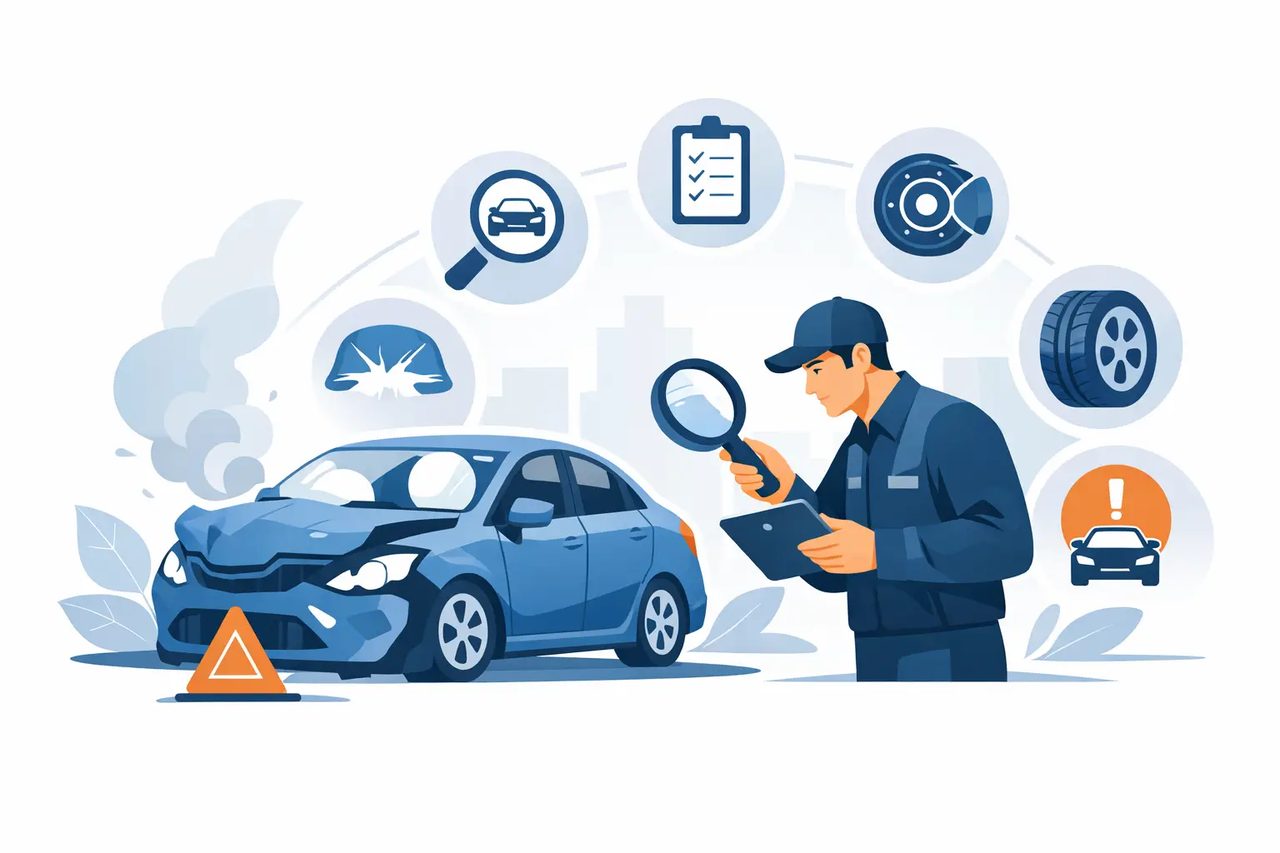
A fender bender can leave a vehicle looking almost normal while a wheel points slightly off center, a sensor warning light waits to appear, or a damaged bumper support is no longer protecting you as designed. A thorough post accident vehicle inspection looks beyond paint scratches and dented panels to identify the mechanical and safety issues that can affect your next drive.
For Houston-area drivers who depend on their car for work, school, family errands, or rideshare trips, waiting to see if a problem gets worse is rarely a good plan. Getting the vehicle checked promptly gives you a clear picture of what needs attention, what can wait, and whether it is safe to keep driving.
Why a Post Accident Vehicle Inspection Matters
Collision force travels through more than the spot that was hit. A low-speed impact in a parking lot can push a bumper reinforcement out of position, crack mounting points, disturb parking sensors, or affect wheel alignment. A harder collision may damage suspension components, steering parts, brakes, cooling systems, electrical wiring, or the vehicle structure.
Some problems are easy to spot. A door that will not latch, a leaking fluid, a broken headlight, or a steering wheel that suddenly sits crooked all need attention. Others are not obvious until the vehicle is driven. Pulling to one side, vibration at highway speed, uneven tire wear, delayed braking response, and warning lights can all point to accident-related damage.
A proper inspection helps prevent a cosmetic repair from masking a mechanical concern. It also creates a documented repair plan that makes it easier to discuss damage with an insurance company and make informed decisions about your vehicle.
1. Check for Immediate Safety Concerns
Before driving far from the accident scene, look for conditions that make the vehicle unsafe to operate. These include active fluid leaks, a loose bumper or underbody panel, rubbing tires, smoke, an overheating engine, deployed airbags, broken glass in the driver’s view, or a wheel that appears bent or tilted.
Pay attention to how the vehicle feels in the first few minutes after an impact. If the steering is difficult, the brakes feel soft, the car shakes, or it will not track straight, stop driving when it is safe to do so. A tow is often less expensive than risking tire failure, additional suspension damage, or a second accident.
Do not assume that a vehicle is safe simply because it starts and moves. Modern cars can continue to run with damaged safety equipment, disrupted sensors, or a compromised cooling system.
2. Inspect Tires, Wheels, Steering, and Suspension
A hit near a corner of the vehicle deserves close attention. Curbs, potholes, and impacts to the bumper or side of a vehicle can bend a wheel, damage a tire sidewall, shift alignment angles, or stress steering and suspension parts.
Technicians should inspect the tires for cuts, bulges, exposed cords, and unusual wear. They should also check wheel condition, tire pressure sensors, tie rods, control arms, struts, shocks, ball joints, wheel bearings, and axle components when applicable. Even a small change in suspension geometry can cause rapid tire wear and make the vehicle less predictable in rain or during an emergency stop.
Wheel alignment is not a guess based on whether the steering wheel looks straight. A measurement on alignment equipment shows whether the vehicle meets manufacturer specifications. Sometimes an alignment corrects the issue. Other times, an alignment cannot be completed until a bent or damaged part is replaced.
3. Make Sure the Brakes Have Not Been Affected
Brake damage is especially important after a front-end, rear-end, or wheel-area collision. A collision can damage brake hoses, calipers, rotors, backing plates, wheel speed sensors, and mounting hardware. It may also affect the anti-lock braking system or electronic stability control.
Watch for a brake warning light, ABS light, scraping noise, pulsation through the pedal, pulling during braking, or a longer-than-normal stopping distance. These symptoms should not be put off for a later service visit. Brakes are a safety system, and the cause needs to be diagnosed before the vehicle returns to regular traffic.
A visual look through the wheel is not enough to clear the brake system. A shop should inspect the components closely and road-test the vehicle when it is safe to do so.
4. Look Past the Bumper and Body Panels
Bumpers are designed to absorb and distribute energy, but their visible cover is only one part of the system. Behind it may be reinforcement bars, energy absorbers, brackets, sensors, wiring, radiator supports, and active grille shutters. A bumper cover can look repairable while components behind it are cracked, bent, or loose.
The same applies to doors, fenders, hoods, trunks, and quarter panels. Proper body repair involves checking panel gaps, latches, hinges, weather seals, and mounting points. A hood that does not align or latch correctly is more than an appearance issue. Water leaks, wind noise, and doors that require extra force to close can also signal damage that needs correction.
For vehicles with frame or unibody damage, measuring the structure is essential. Repairs should restore the vehicle to manufacturer specifications, not simply make the outside look presentable.
5. Test Lights, Cameras, Sensors, and Airbag Systems
Today’s vehicles rely on electronics for far more than radio and navigation. A post accident vehicle inspection should include headlights, taillights, turn signals, brake lights, backup cameras, parking sensors, blind-spot monitoring, lane-assist systems, and warning indicators on the dash.
An airbag or seat belt warning light requires prompt professional diagnosis. After airbags deploy, several related parts may need replacement or inspection, including seat belt pretensioners, impact sensors, modules, trim pieces, and steering wheel or dashboard components. Airbag repairs are not a place for shortcuts or used parts of uncertain history.
Advanced driver-assistance features may require calibration after collision repair, windshield replacement, alignment work, or changes to a bumper, grille, mirror, or suspension component. The exact need depends on the vehicle and the area of impact. A camera that appears to work can still need calibration to provide accurate safety alerts.
6. Check for Leaks, Cooling Problems, and Drivability Changes
After any impact, look under the vehicle for fresh puddles and pay attention to new smells. Green, orange, pink, or yellow fluid may indicate coolant. Red or brown fluid can point to transmission or power steering concerns, while dark fluid may be engine oil. Clear water from the air conditioning system is usually normal, but it is still wise to have a new leak identified.
Front-end damage can affect the radiator, condenser, cooling fans, hoses, and transmission cooler. A small crack may not cause trouble immediately, then become a serious overheating problem in Houston traffic. If the temperature gauge rises, the A/C suddenly stops cooling after the accident, or you smell coolant, have the vehicle inspected before continued driving.
Changes in shifting, engine response, exhaust sound, or fuel economy are also worth reporting. Clear details help the technician narrow down the damage faster.
7. Get a Complete Estimate Before Approving Repairs
Insurance estimates are a starting point, not always the full repair story. Hidden damage is commonly found after a bumper cover, wheel, or body panel is removed. That does not automatically mean a repair shop is adding unnecessary work. It means the initial visible estimate could not show everything behind the damaged area.
Ask for a clear explanation of recommended repairs, parts options, safety priorities, and expected timing. In some cases, original equipment parts are required or preferred for fit, function, and sensor performance. In other situations, quality alternative parts can be a practical budget-conscious option. The right choice depends on the vehicle, the repair area, insurance coverage, and your long-term plans for the car.
At Sam Auto Repair & Collision, bodywork and mechanical diagnostics can be handled under one roof, so a collision repair does not end with unanswered questions about alignment, brakes, suspension, A/C, or drivability.
When You Should Schedule an Inspection
Arrange an inspection as soon as possible after any collision, even if the damage seems minor. Do not wait if you notice warning lights, fluid leaks, tire damage, steering pull, vibration, brake changes, overheating, unusual noises, or a bumper or panel that is loose.
If the vehicle drives normally and has only visible cosmetic damage, an inspection is still worthwhile before closing an insurance claim or committing to repairs. Finding hidden damage early protects your safety and helps avoid paying for a problem that becomes more expensive later.
Your vehicle gets you through Houston traffic, long commutes, and everyday responsibilities. Give it the same practical attention you would give a brake warning light or a flat tire: have it checked, get straight answers, and get back on the road with confidence.