Guide · July 2026
7 Signs of Worn Brake Pads You Shouldn’t Ignore
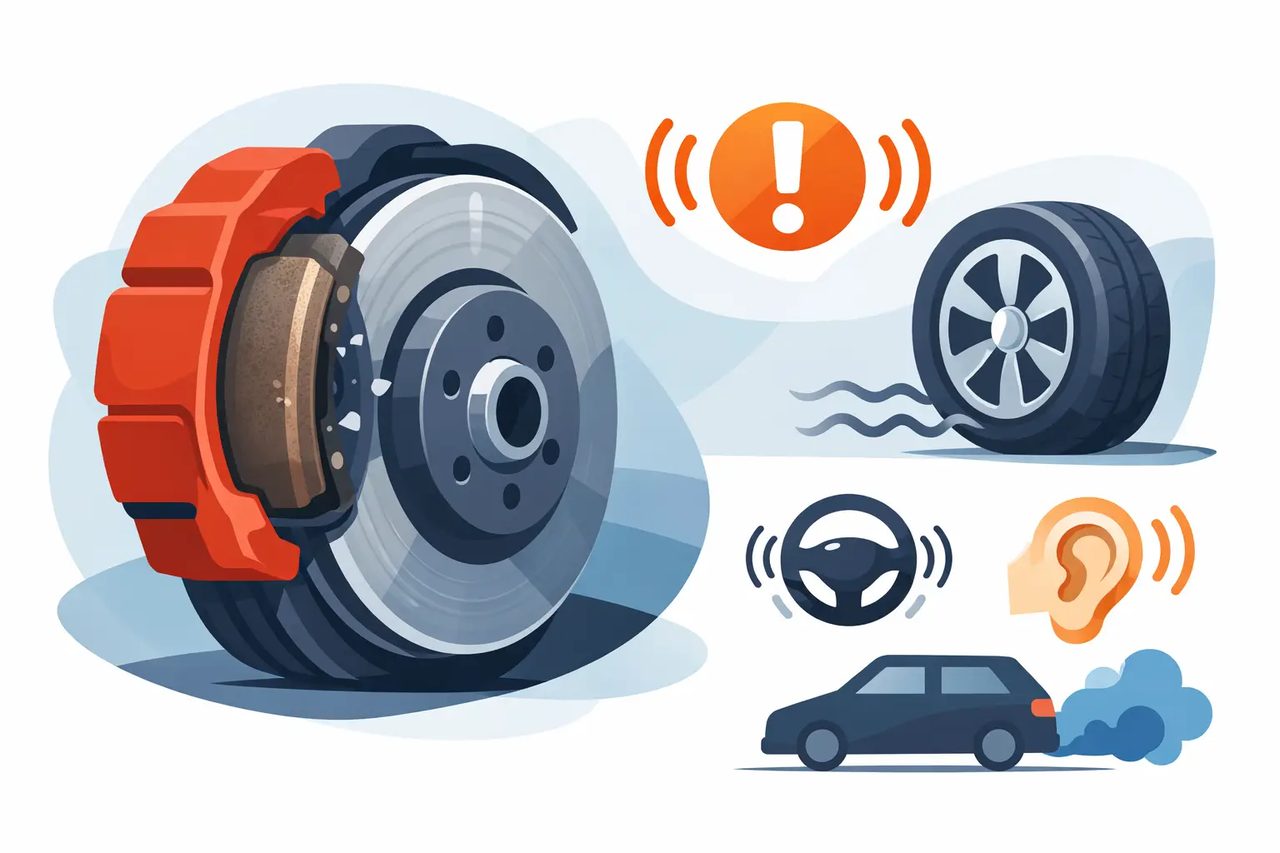
That high-pitched squeal at the first stoplight may be easy to ignore when you are headed to work, school pickup, or across Houston traffic. But brakes rarely fail without giving some warning first. Knowing the signs of worn brake pads can help you schedule service before a small maintenance repair turns into damaged rotors, reduced stopping power, and a bigger bill.
Brake pads are designed to wear down over time. Every stop creates friction between the pads and brake rotors, slowly using up the pad material. How quickly that happens depends on your vehicle, driving habits, traffic conditions, load, and the type of pads installed. Stop-and-go driving, frequent hard braking, towing, and long commutes can all shorten pad life.
Common Signs of Worn Brake Pads
1. Squealing or squeaking when you brake
A sharp squeal when you press the brake pedal is one of the most common early warnings. Many brake pads have a small wear indicator built in. As the pad material gets low, that indicator contacts the rotor and makes noise to let you know it is time for an inspection.
Not every squeak means the pads are worn out. Moisture after rain, overnight rust on the rotors, dust, or certain pad materials can cause temporary noise. If the sound goes away after a few gentle stops, it may not be urgent. If it happens regularly or gets louder, have the brakes checked soon.
2. Grinding or a harsh metal-on-metal sound
Grinding is not a sound to wait on. It can mean the brake pad friction material has worn away and the metal backing plate is rubbing directly against the rotor. At that point, braking may feel rougher, and the rotor can be damaged quickly.
A vehicle that is grinding should be inspected as soon as possible. Continuing to drive can turn a pad replacement into a more involved brake job that includes rotors, hardware, and possibly additional components. If the grinding is severe, stopping distance feels longer, or the vehicle does not feel safe to drive, arrange for it to be towed rather than taking chances on the road.
3. A brake pedal that feels different
Your brake pedal should feel firm and predictable. If you need to press farther than normal before the vehicle slows down, or the pedal feels soft, spongy, or inconsistent, do not assume it is only worn pads.
Low pads can contribute to a changed pedal feel, but so can low brake fluid, air in the brake lines, a fluid leak, or a hydraulic problem. Those issues need prompt diagnosis because they affect your ability to stop. A pedal that sinks toward the floor or suddenly feels much softer than usual is a reason to stop driving and seek professional help.
4. Vibration or pulsing during a stop
If the steering wheel, brake pedal, or vehicle shakes when you apply the brakes, the issue may involve the rotors. Rotors can develop uneven surfaces from heat, wear, or repeated hard braking. Worn pads and damaged rotors often show up together, especially when pad service has been delayed.
Vibration is sometimes mistaken for a tire or alignment issue. The timing is the clue: if the shake mainly occurs while braking, the brake system needs attention. A technician can measure rotor condition and inspect the pads, calipers, and hardware instead of replacing parts based on a guess.
5. Your car pulls to one side when braking
A vehicle should slow down in a straight, controlled line. Pulling left or right under braking can point to uneven pad wear, a sticking caliper, a contaminated pad, a brake hose problem, or suspension and tire concerns.
This symptom is especially worth addressing because it can make an emergency stop harder to control. It may be more noticeable on a dry, open road than during normal city driving, but do not try to test it with hard braking. Schedule a brake inspection and explain exactly when the pull occurs.
6. A brake warning light or low brake fluid
A brake warning light should always be taken seriously. Depending on the vehicle, it may indicate low brake fluid, a parking brake issue, an electronic brake system fault, or another concern. Worn pads can cause the brake fluid level in the master cylinder reservoir to drop as the caliper pistons extend further, but the warning light does not confirm pad wear by itself.
Never simply add brake fluid and assume the problem is solved. The fluid level and the entire brake system should be checked for worn pads, leaks, and proper operation. If the red brake warning light appears along with a soft pedal, poor braking, or a pulling condition, do not continue driving.
7. Thin pads visible through the wheel
On some vehicles, you can see the outer brake pad through the openings in the wheel. The pad is the friction material pressed against the shiny brake rotor. If it looks very thin, roughly one-eighth inch or less, it is time to arrange an inspection.
A visual check can be useful, but it has limits. The inside pad may wear differently from the outside pad, and wheel design can hide the brake components. Uneven wear may also be a sign that a caliper or slide pin is sticking. A complete inspection looks at both pads, rotors, calipers, brake fluid, and hardware.
Why Waiting Can Cost More
Brake pads are a normal wear item, and replacing them at the right time is usually straightforward. Waiting until the pads grind against the rotors can increase the repair because rotors may need replacement instead of being reused. A seized caliper, overheated rotor, or brake fluid issue can add even more cost.
There is also the safety side. Brakes do not need to completely fail to create a dangerous situation. Extra stopping distance, a vehicle that pulls, or a pedal that does not respond consistently can matter in Houston traffic, during sudden slowdowns, or when wet roads reduce traction.
The best time to handle brake service is when you first notice a change, not when the noise becomes impossible to ignore. An inspection can identify whether you need pads now, whether the rotors are still within specification, and whether another issue is causing the symptom.
What a Proper Brake Inspection Should Include
A useful brake inspection is more than a quick look through the wheel. The technician should check pad thickness and wear patterns, rotor condition, caliper operation, brake hoses, fluid level, hardware, and signs of leaks. On many vehicles, the front and rear pads do not wear at the same rate, so all four corners matter.
The repair recommendation should match what the vehicle actually needs. Some brake jobs require pads and rotors. Others may only need pads, depending on rotor thickness, surface condition, and manufacturer specifications. There is no one-size-fits-all answer, which is why clear measurements and an honest explanation are valuable.
At Sam Auto Repair & Collision, drivers can bring in domestic, import, European, and high-end vehicles for brake diagnostics and repair without having to visit multiple shops. The goal is simple: identify the actual cause of the noise, vibration, warning light, or braking change, then explain the repair options clearly.
When to Schedule Brake Service
Make an appointment soon if you hear ongoing squealing, feel pulsing during stops, notice thinner pads, or see a brake-related warning light. Treat grinding, a soft or sinking pedal, a strong pull while braking, smoke, or a burning smell near a wheel as more urgent concerns.
Do not wait for a mileage number alone. Brake pad life can range widely based on vehicle weight, pad type, city driving, highway driving, and how often you carry passengers or cargo. Regular maintenance inspections give you a better picture of remaining pad life than guessing based on time or miles.
A quiet, firm, responsive brake system gives you confidence every time traffic suddenly slows. If something about your brakes feels or sounds different, get it checked while the repair is still on your terms.