Guide · September 2026
Vehicle Diagnostics That Find the Real Problem
A check engine light comes on during the morning commute. Your A/C starts blowing warm air in Houston traffic. The steering wheel shakes at highway speed, or the transmission hesitates before shifting. These problems may seem straightforward, but vehicle diagnostics are what separate a correct repair from expensive guesswork.
A warning light or strange noise tells you something needs attention. It does not always tell you which part caused it. A capable repair shop takes the time to test the system, confirm the source of the problem, and explain what the results mean before recommending repairs. That approach protects your budget and gets your vehicle safely back on the road.
What Vehicle Diagnostics Actually Involve
Modern vehicles rely on computers, sensors, wiring, mechanical components, fluids, and control modules that must work together. When one part begins to fail, the symptom can appear somewhere else. For example, an engine misfire may feel like a transmission issue. A weak battery can trigger several unrelated-looking warning lights. Uneven tire wear may point to an alignment problem, worn suspension parts, or a damaged wheel after a pothole impact.
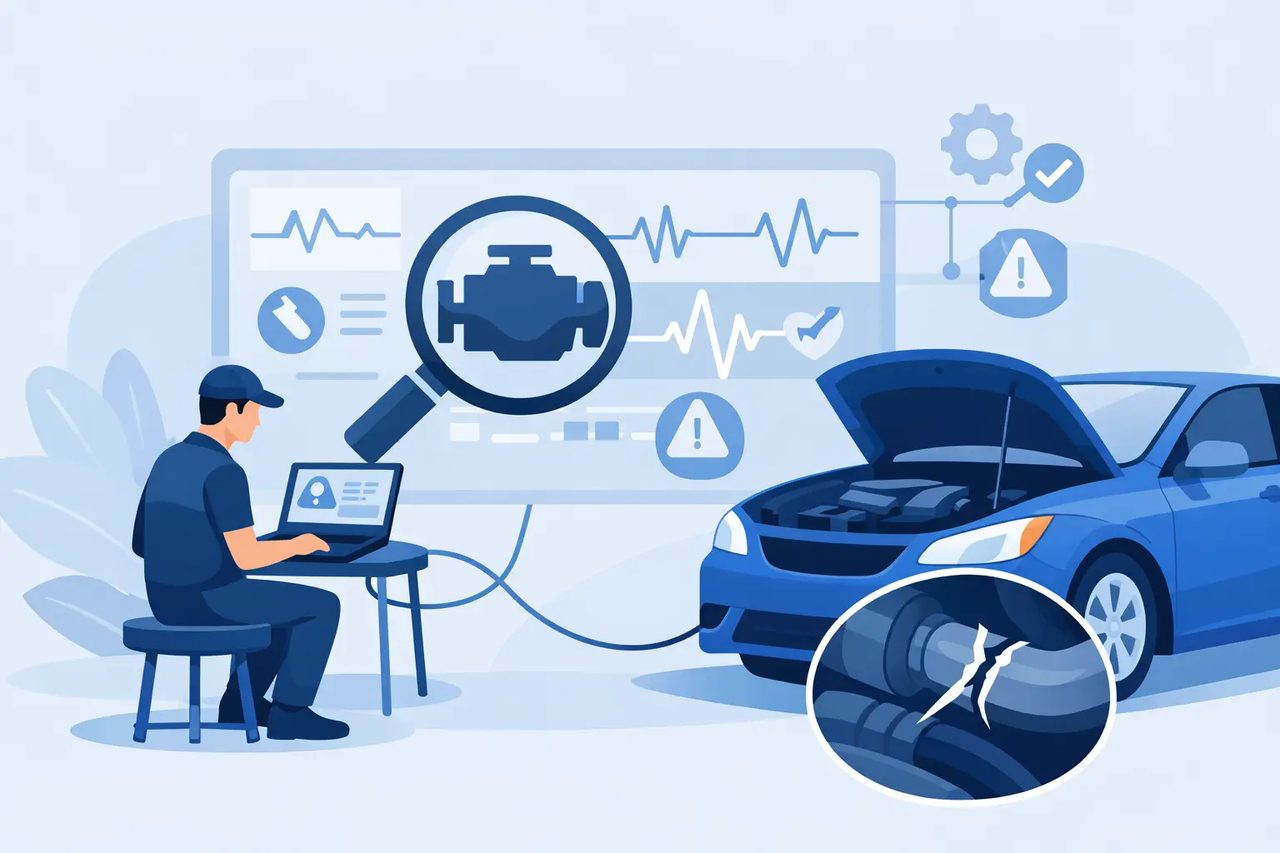
Vehicle diagnostics combine professional scan tools with hands-on testing and technician experience. Reading trouble codes is usually an early step, not a final answer. A code identifies a system that reported an abnormal condition. It does not automatically mean the named sensor or component is bad.
A proper diagnosis may include checking live computer data, testing electrical circuits, inspecting hoses and belts, checking fluid condition, measuring pressure, road testing the vehicle, and looking for leaks, worn parts, or collision-related damage. The right process depends on the symptom and the vehicle. A no-start condition calls for different testing than an A/C problem or a vibration during braking.
Why Trouble Codes Are Not a Repair Order
Many drivers have a parts-store code scan and are told they have a code for an oxygen sensor, ignition coil, catalytic converter, or EVAP system. That information can be useful, but replacing the part mentioned in a code without further testing can waste money.
Consider a code related to an oxygen sensor. The sensor may be failing, but it could also be reporting a condition caused by an exhaust leak, vacuum leak, wiring issue, fuel delivery problem, or engine misfire. Installing a new sensor without finding the underlying cause may leave the check engine light on and the original problem unresolved.
The same is true for transmission and ABS codes. A code can indicate that the vehicle detected an issue, but the technician still needs to determine whether the cause is mechanical, electrical, hydraulic, or software-related. Good diagnostics prevent the common cycle of replacing parts until the symptom finally goes away.
Common Signs Your Vehicle Needs Testing
You do not have to wait for a dashboard light to schedule an inspection. Pay attention when your vehicle changes the way it starts, drives, stops, turns, or sounds. A problem that seems minor today can become a breakdown, safety concern, or larger repair later.
Bring your vehicle in when you notice warning lights, hard starting, rough idling, loss of power, poor fuel economy, burning smells, fluid spots under the car, or smoke from the exhaust. Squealing brakes, grinding noises, a soft brake pedal, pulling while braking, and steering vibration also deserve prompt attention.
Houston heat puts extra stress on batteries, cooling systems, tires, and air conditioning components. If the A/C is weak, the temperature gauge rises, or the vehicle overheats in traffic, do not assume it only needs refrigerant or coolant. Leaks, fans, sensors, compressors, thermostats, electrical connections, and other components may need to be tested first.
After a collision, diagnostics can be just as important as visible body repair. A bumper may look like the main concern, while a sensor, mounting point, radiator support, wheel, suspension component, or alignment angle has also been affected. Identifying hidden damage helps restore not only the vehicle’s appearance but also its handling and safety.
The Difference Between a Quick Check and a Complete Diagnosis
There is a place for a quick scan. It can confirm that a warning light is active and provide a useful starting point. But a complete diagnosis takes more time because it is based on evidence, not assumptions.
A technician may first ask when the problem occurs. Does the vehicle shake only at idle, only when the engine is cold, or only at higher speeds? Did the issue begin after a repair, a pothole, a collision, or a dead battery? Does the warning light flash or stay on? These details help narrow the search and can save diagnostic time.
From there, the technician checks the vehicle’s reported codes and live readings, inspects likely problem areas, and performs targeted tests. The goal is to reproduce the concern when possible and verify the failed component or condition. On some repairs, further disassembly is necessary before the full cause and cost can be confirmed. A trustworthy shop should explain that possibility upfront rather than promise a diagnosis before the evidence is there.
How Accurate Diagnostics Protect Your Budget
No driver wants to hear that a vehicle needs repair, especially when several systems seem involved. But accurate testing gives you better information for deciding what to do next. It helps avoid replacing good parts, identifies safety-related repairs, and can reveal when a smaller repair will prevent a more expensive failure.
It also allows the shop to prioritize. A flashing check engine light, overheating condition, brake concern, or major fluid leak should usually be addressed quickly because continued driving may cause damage or create a safety risk. A minor sensor issue or small oil seep may allow more flexibility, depending on the vehicle and the exact cause.
Ask for a clear explanation of what was found, why the recommended repair addresses the problem, and whether additional work is urgent or can be planned. You should understand the difference between a confirmed failure, a maintenance need, and a condition that should be monitored. Straight answers make it easier to choose repairs that fit both your vehicle’s needs and your budget.
Getting Better Results From Your Diagnostic Visit
Before dropping off your vehicle, make a few notes about the problem. Share when it happens, how often it occurs, any warning lights you have seen, and whether there was recent service or damage. Mention if the issue changes with speed, braking, turns, rain, temperature, or A/C use.
Avoid clearing trouble codes right before your appointment if you can. Clearing codes may erase helpful freeze-frame data that records operating conditions when the fault occurred. If the check engine light is flashing, the engine is overheating, the brakes feel unsafe, or the vehicle has severe steering or transmission trouble, do not keep driving simply to see if it improves. Arrange prompt service instead.
For intermittent issues, a short video of the dashboard message, noise, or symptom can be helpful. A rattle that appears only while turning or an instrument panel light that comes and goes may not show up during a brief inspection. The more clearly the concern can be reproduced, the more efficiently it can be diagnosed.
A Repair Shop Should Explain the Why
Technical equipment matters, but communication matters too. You should not leave feeling pressured into a repair you do not understand. A good technician or service advisor explains the problem in plain language, discusses the repair options, and lets you know what can happen if the issue is delayed.
At Sam Auto Repair & Collision, the focus is on finding the actual cause of mechanical, electrical, A/C, brake, suspension, and post-collision concerns, then giving Houston-area drivers a practical path forward. Whether you drive a domestic truck, family SUV, European sedan, import, or high-end vehicle, the goal is the same: dependable repairs based on a clear diagnosis.
When your vehicle starts sending signals, do not rely on a dashboard code alone or wait for a small symptom to become a roadside problem. Bring it in while the concern is still manageable, ask questions, and make your next repair decision with the confidence that comes from knowing what is really wrong.