
Guide · September 2026
What Causes Rough Engine Idling? Common Answers
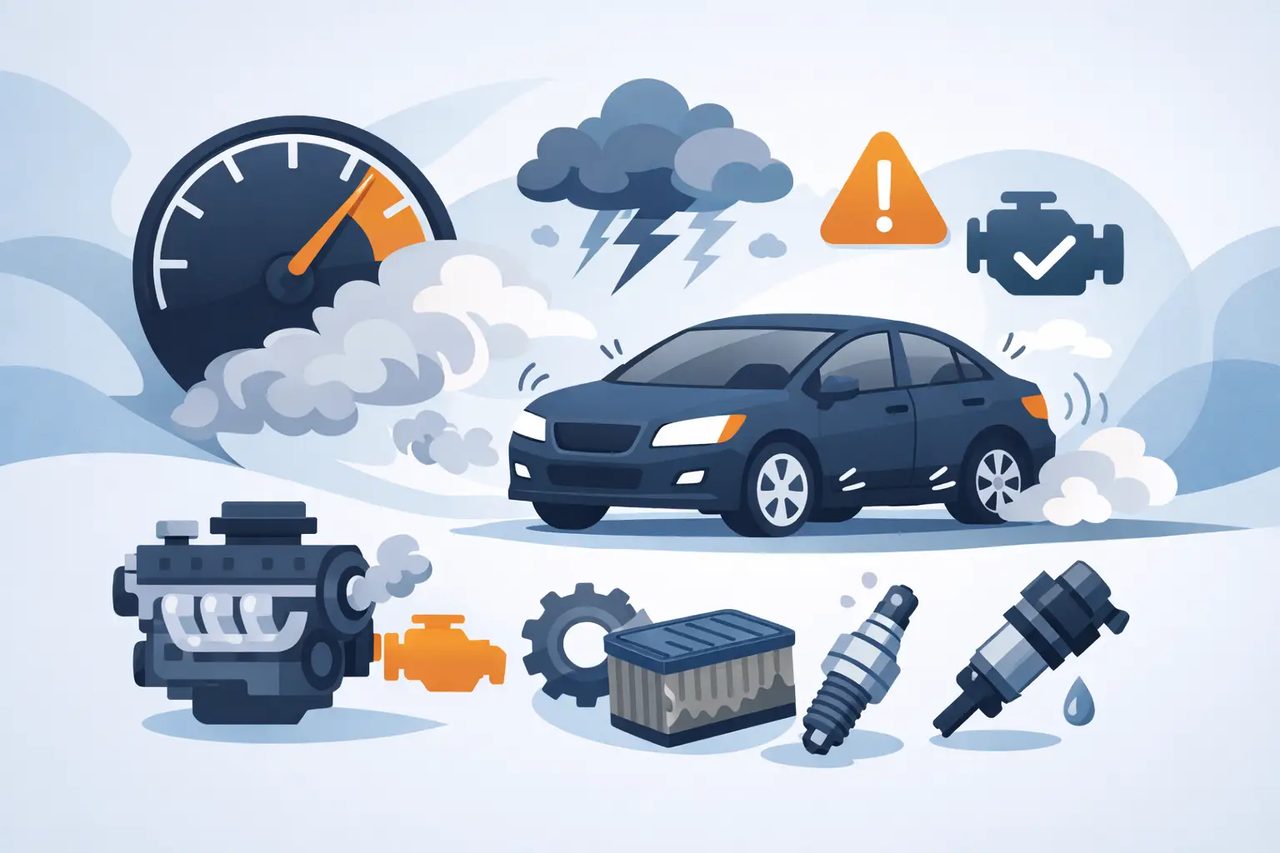
A rough idle is more than an annoying vibration at a red light. If your vehicle shakes, sputters, surges, sounds uneven, or feels like it may stall while parked, something is keeping the engine from running smoothly. Understanding what causes rough engine idling can help Houston drivers act before a small drivability issue turns into a breakdown, poor fuel mileage, or costly engine damage.
Your engine needs the right mix of air, fuel, spark, and timing to maintain a steady idle. A problem in any of those areas can make the engine run rough. The exact cause depends on the vehicle, its mileage, maintenance history, warning lights, and whether the issue happens only when cold, after warming up, or with the A/C running.
What Causes Rough Engine Idling in Most Vehicles?
A rough idle usually means one or more cylinders are not contributing as they should. Modern vehicles use sensors and computer controls to constantly adjust engine operation, but worn parts, deposits, vacuum leaks, and fuel delivery problems can push those adjustments beyond what the system can correct.
The most common causes involve ignition components, airflow problems, fuel system issues, and engine mechanical wear. A proper diagnosis matters because several different problems can create similar symptoms. Replacing parts based on a guess may not solve the problem and can add unnecessary cost.
Worn Spark Plugs or Failing Ignition Coils
Spark plugs ignite the air-fuel mixture inside each cylinder. When plugs are worn, fouled, damaged, or installed with the wrong gap, combustion can become weak or inconsistent. The engine may shake at idle, hesitate when accelerating, or use more fuel than usual.
Ignition coils can cause the same symptoms. A weak coil may misfire only under certain conditions, such as at idle, during acceleration, or after the engine reaches operating temperature. On many newer vehicles, each cylinder has its own coil, so a failure in one coil can create a noticeable misfire.
If the check engine light is flashing, avoid continued driving whenever possible. A flashing light can indicate an active misfire that may overheat and damage the catalytic converter.
Dirty Throttle Body or Idle Air Control System
The throttle body controls how much air enters the engine. Over time, carbon deposits can build up around the throttle plate, restricting airflow at low engine speeds. That can lead to an unstable idle, especially when first starting the vehicle or when coming to a stop.
Some vehicles use an idle air control valve to manage airflow while idling. If it sticks or becomes clogged, the engine may idle too low, too high, or rise and fall repeatedly. Electronic throttle systems do not always have a separate idle air valve, but they can still develop carbon buildup or require a relearn procedure after cleaning or battery replacement.
Cleaning the throttle body can help in the right situation, but it is not a cure-all. If a sensor, vacuum leak, or ignition problem is the real issue, cleaning alone will not restore a smooth idle.
Vacuum Leaks and Air Intake Problems
Your engine computer calculates fuel delivery based partly on the amount of air entering the engine. A cracked vacuum hose, loose intake tube, damaged intake gasket, or leaking PCV system can allow unmetered air into the engine. This is often called a vacuum leak.
Because that extra air is not being measured correctly, the engine can run too lean. Common signs include rough idling, a high idle speed, stalling, hesitation, and a check engine light. A vacuum leak may be more noticeable at idle than at highway speed because small leaks have a bigger effect when the engine is using less air overall.
The mass airflow sensor can also cause trouble. If it is dirty or failing, it may send inaccurate airflow readings to the engine computer. The result can be rough running, reduced power, hard starting, or inconsistent fuel economy.
Fuel Injector, Fuel Pressure, or Fuel Quality Issues
Fuel injectors deliver a precise amount of fuel to each cylinder. Deposits inside an injector can disrupt its spray pattern, while an electrical failure can prevent it from opening correctly. Either condition can cause a cylinder to misfire or run weakly at idle.
Low fuel pressure is another possibility. A restricted fuel filter on applicable vehicles, weak fuel pump, pressure regulator issue, or wiring concern can keep the engine from getting enough fuel. On the other hand, an injector that leaks or sticks open can deliver too much fuel and create a rich-running condition.
Bad or contaminated fuel can also cause rough running, though it is less common than normal wear-related problems. If the issue started immediately after a fill-up, tell the technician where and when you purchased fuel. That detail can make diagnosis faster.
Engine Sensors Can Create a Rough Idle
Modern engines rely on sensor data to adjust fuel mixture, ignition timing, and idle speed. A failed sensor does not always stop the vehicle from running, but it can make it run poorly.
A faulty oxygen sensor may cause poor fuel control after the engine warms up. A coolant temperature sensor can make the engine act as if it is colder or hotter than it really is, affecting fuel delivery. Crankshaft and camshaft position sensors can create misfires, stalling, long cranking, or intermittent roughness.
The check engine light may provide a useful starting point, but a code does not automatically identify the failed part. For example, a misfire code tells a technician which cylinder is affected, not necessarily why it is misfiring. Testing ignition, compression, injector operation, vacuum integrity, and sensor readings is how the actual cause is confirmed.
Mechanical Problems That Should Not Be Ignored
Not every rough idle is caused by a tune-up item. Higher-mileage engines can develop mechanical conditions that affect compression and combustion. These problems require careful testing before repairs are recommended.
Low compression from worn piston rings, damaged valves, a blown head gasket, or timing-related problems can make one or more cylinders run weakly. A stretched timing chain or worn timing components can affect engine timing and cause rough idle, rattling, poor performance, or difficult starting.
Engine mounts are another consideration. Bad mounts do not usually cause the engine itself to run rough, but they allow normal engine vibration to transfer into the cabin. If the RPM stays steady and the engine sounds normal but the steering wheel, seat, or dashboard shakes, worn mounts may be part of the concern.
Why Rough Idling May Get Worse With the A/C On
Turning on the air conditioner adds load to the engine. A healthy engine management system raises or stabilizes idle speed to handle that load. If the engine is already struggling with weak spark, dirty airflow components, a vacuum leak, or fuel delivery trouble, the added A/C load can make shaking or stalling more obvious.
The A/C compressor and its related components can also create their own issues. A compressor that drags excessively, a failing clutch, or a belt problem can place unusual strain on the engine. This is why it helps to note whether the rough idle changes when the A/C is switched on and off.
When to Schedule a Diagnostic Visit
A slight change in idle on a cold start may be normal for some vehicles. Constant shaking, repeated stalling, a strong fuel smell, reduced power, or any flashing check engine light is not something to put off. You should also schedule service if rough idling is paired with hard starts, poor mileage, knocking sounds, exhaust smoke, or a recent loss of acceleration.
For a clear diagnosis, share as many details as you can: when the problem began, whether it happens hot or cold, whether it occurs in Park, Drive, or both, and whether recent repairs or fueling happened beforehand. Those details help narrow the testing process and reduce time spent chasing the wrong issue.
At Sam Auto Repair & Collision, technicians can inspect the ignition, fuel, intake, sensor, and mechanical systems that affect idle quality, then explain what the vehicle needs before work begins. Whether you drive a family SUV, work truck, commuter sedan, import, or luxury vehicle, the goal is the same: fix the actual problem and get you back on the road with confidence.
A rough idle rarely improves on its own. Addressing it early can protect your engine, help preserve fuel economy, and keep a minor repair from becoming the reason your vehicle will not start on a busy Houston morning.