
Guide · July 2026
7 Signs You Need Wheel Alignment After a Pothole
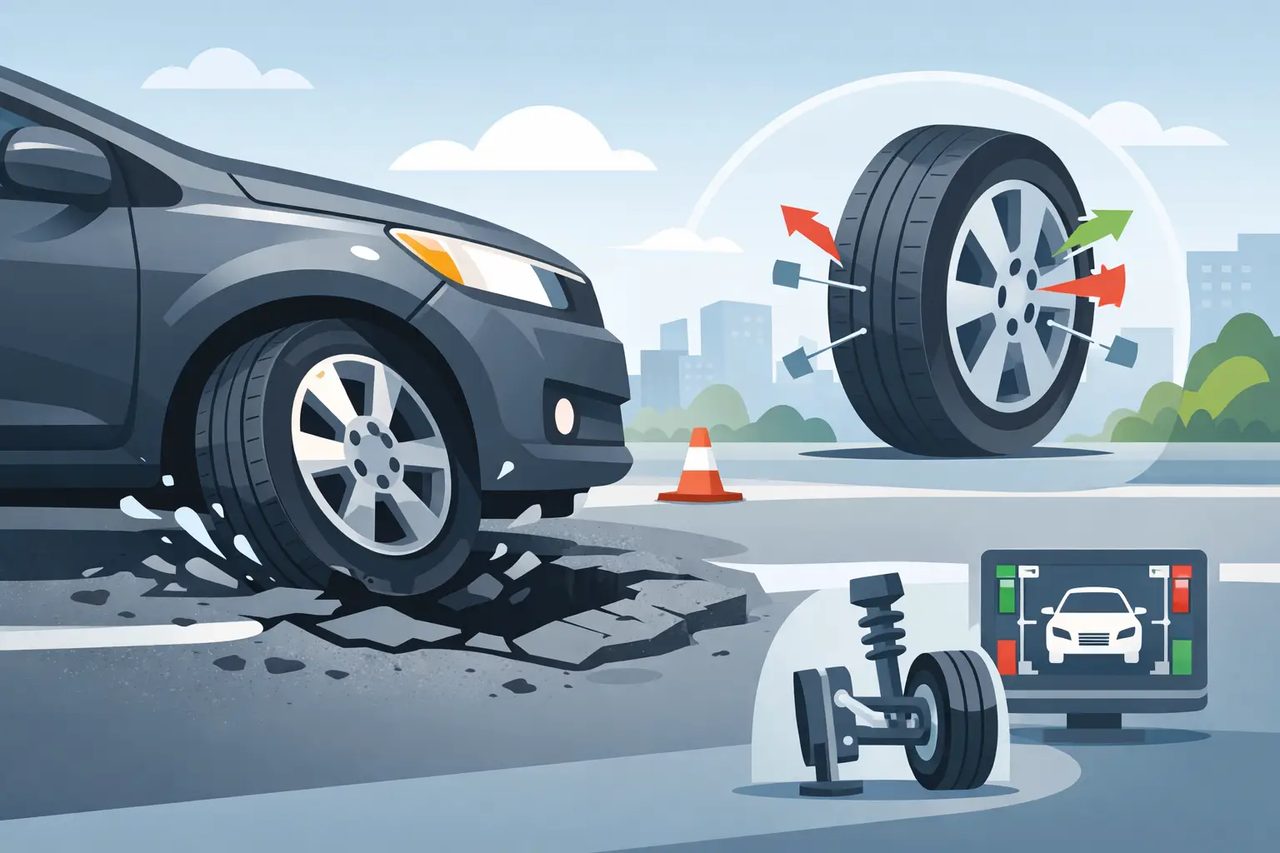
That hard pothole hit may last only a second, but the damage can show up on every mile afterward. Scheduling wheel alignment after pothole damage is one of the smartest ways to protect your tires, steering, suspension, and safety. Houston-area roads can be rough on a vehicle, especially for commuters, families, rideshare drivers, and anyone who spends long hours on the road.
A pothole does not always cause an alignment problem. A slow, shallow hit may leave everything in good shape. But a deep pothole, a sharp-edged road break, or a hit taken at normal driving speed can shift suspension angles, bend a wheel, damage a tire, or loosen a steering component. The sooner you recognize the warning signs, the better chance you have of avoiding premature tire replacement or a larger suspension repair.
What a Pothole Can Do to Your Alignment
Wheel alignment is the adjustment of your vehicle’s suspension angles so the tires meet the road correctly and the vehicle tracks straight. It is not simply a matter of pointing the front tires forward. Technicians measure angles such as camber, caster, and toe, then adjust them to the manufacturer’s specifications when the vehicle allows for adjustment.
When a tire drops into a pothole, the force travels through the wheel, tire, steering linkage, strut or shock, control arm, and other suspension parts. That impact can knock an adjustment out of range. On some vehicles, the alignment itself may be fine, but a bent wheel, damaged tire, worn ball joint, or bent suspension component creates similar driving symptoms.
That is why a proper inspection matters. Aligning a vehicle with damaged or loose suspension parts can be a short-term fix at best. The underlying problem needs to be identified before the final alignment is performed.
7 Signs You Need Wheel Alignment After a Pothole
1. Your vehicle pulls to one side
If your car drifts left or right on a level road when you briefly relax your grip on the steering wheel, it may be out of alignment. Road crown, wind, and tire pressure can also affect tracking, so a slight drift is not always a major concern. A consistent pull after a pothole strike deserves attention.
2. The steering wheel is no longer centered
Driving straight with the steering wheel tilted to one side is one of the clearest alignment warnings. Your vehicle may still feel manageable, but the tires may not be pointed in the direction the vehicle is traveling. This can lead to uneven tire wear over time.
3. You feel new vibration in the steering wheel
A pothole can bend a wheel, damage a tire belt, or throw off wheel balance. Those issues often create vibration, especially at highway speed. Alignment alone does not normally cause a strong steering-wheel shake, but a pothole inspection can determine whether you need an alignment, tire service, wheel repair, or a combination of services.
4. Your tires are wearing unevenly
Take a close look at the tread on all four tires. Wear concentrated on the inner edge, outer edge, or in uneven patches can point to an alignment or suspension issue. Tire wear can also happen gradually, which is why many drivers do not notice it until a tire inspection or oil change.
A vehicle that is only slightly out of alignment can still shorten tire life. With the cost of quality tires, checking the alignment early is often the more budget-conscious choice.
5. The vehicle feels loose or unstable
A car that feels unsettled after hitting a pothole may have more than an alignment concern. You may notice wandering, delayed steering response, clunking over bumps, or a feeling that the vehicle does not hold its lane as confidently as before. These symptoms can involve steering and suspension components that should be inspected promptly.
6. You hear a clunk, knock, or scraping sound
A single loud thump at the moment of impact is expected. Ongoing noises are not. Clunking when turning, rattling over uneven pavement, or scraping from the wheel area may indicate a damaged component, loose shield, bent wheel, or suspension concern. Do not assume an alignment will solve a noise without a full diagnosis.
7. The tire has a bulge, cut, or low-pressure warning
Potholes can damage the inside structure of a tire even when the outside looks mostly normal. A sidewall bulge, cut, sudden pressure loss, or recurring tire-pressure warning needs immediate attention. A damaged tire can fail without warning, particularly at highway speeds. Replace unsafe tires before worrying about alignment adjustments.
Can You Keep Driving With Bad Alignment?
It depends on the symptoms. If the vehicle has a severe pull, strong vibration, a damaged tire, steering looseness, or a new warning light, it is best to have it checked as soon as possible. Continuing to drive can make the problem worse and may create a real safety risk.
If the only symptom is a slightly off-center steering wheel and the vehicle otherwise drives normally, you may be able to drive it carefully to a repair shop. Still, waiting for weeks or months is rarely a good value. Misaligned tires can wear down faster, and a small issue may hide a damaged suspension part.
Do not try to judge a bent wheel or tire damage by appearance alone. A wheel can be slightly bent on the inside lip where it is difficult to see, and internal tire damage may not be visible from the outside.
What Happens During a Pothole Alignment Inspection?
A quality inspection starts before the alignment rack. A technician checks tire pressure and tire condition, then looks for bent wheels, leaks, damaged struts, worn steering parts, loose ball joints, control-arm damage, and other problems that could affect handling.
If the suspension and steering components are safe and serviceable, the vehicle is placed on alignment equipment. The technician measures the existing angles, compares them with manufacturer specifications, and makes the available adjustments. A final road test may be used to confirm the steering wheel is centered and the vehicle tracks properly.
Some vehicles need additional repair before they can be aligned correctly. For example, a bent tie rod, damaged control arm, worn ball joint, or shifted subframe can prevent the alignment from staying in specification. An honest shop should explain what is causing the problem, what needs attention now, and what can reasonably wait.
Alignment, Balancing, and Tire Repair Are Different Services
These services are often confused because all three can become necessary after a pothole strike. An alignment adjusts suspension angles. Wheel balancing corrects weight distribution around the tire and wheel assembly to reduce vibration. Tire repair or replacement addresses punctures, sidewall damage, tread damage, or internal tire failure.
A pothole can affect one of these areas or several at once. For example, you might need a replacement tire and wheel balance but have an alignment that checks out perfectly. Or you may have no vibration at all but need an alignment because the vehicle pulls and the steering wheel is crooked. Accurate diagnosis prevents paying for work that does not address the real issue.
How to Reduce Pothole Damage
You cannot avoid every pothole, especially after heavy rain or on unfamiliar roads. You can reduce the risk by keeping tires inflated to the pressure listed on the driver’s door-jamb sticker, not the maximum pressure printed on the tire sidewall. Underinflated tires are more vulnerable to pothole damage, while overinflated tires can make impacts feel harsher.
When you spot a pothole safely, slow down before reaching it rather than braking hard while your tire is inside it. Leave enough following distance to see road hazards, avoid swerving into other lanes, and inspect the vehicle after a significant impact. If you hear a new noise or feel a handling change, trust that signal.
Get Your Vehicle Checked Before Tire Wear Gets Worse
A pothole hit does not automatically mean your car needs an alignment, but new pulling, vibration, noise, tire damage, or an off-center steering wheel should not be ignored. At Sam Auto Repair & Collision, our team can inspect the tires, wheels, steering, suspension, and alignment to identify what your vehicle actually needs.
Bring your vehicle in for a clear explanation and practical repair options. Catching a pothole problem early can help keep your ride smooth, your tires lasting longer, and your next trip across Houston a little less stressful.