
Guide · September 2026
Wheel Balancing Versus Alignment Explained
A steering wheel that shakes at highway speed can make a Houston commute feel a lot longer. A vehicle that pulls toward one lane can make every trip feel like a constant correction. Wheel balancing versus alignment is often confused because both services involve your tires and can affect how your vehicle drives, but they correct two very different problems.
Knowing the difference can help you describe the symptom clearly, avoid unnecessary tire damage, and get the right repair the first time. Whether you drive a family SUV, a work truck, a luxury import, or a rideshare vehicle, balanced wheels and proper alignment play a real role in safety, tire life, and day-to-day comfort.
Wheel Balancing Versus Alignment: The Basic Difference
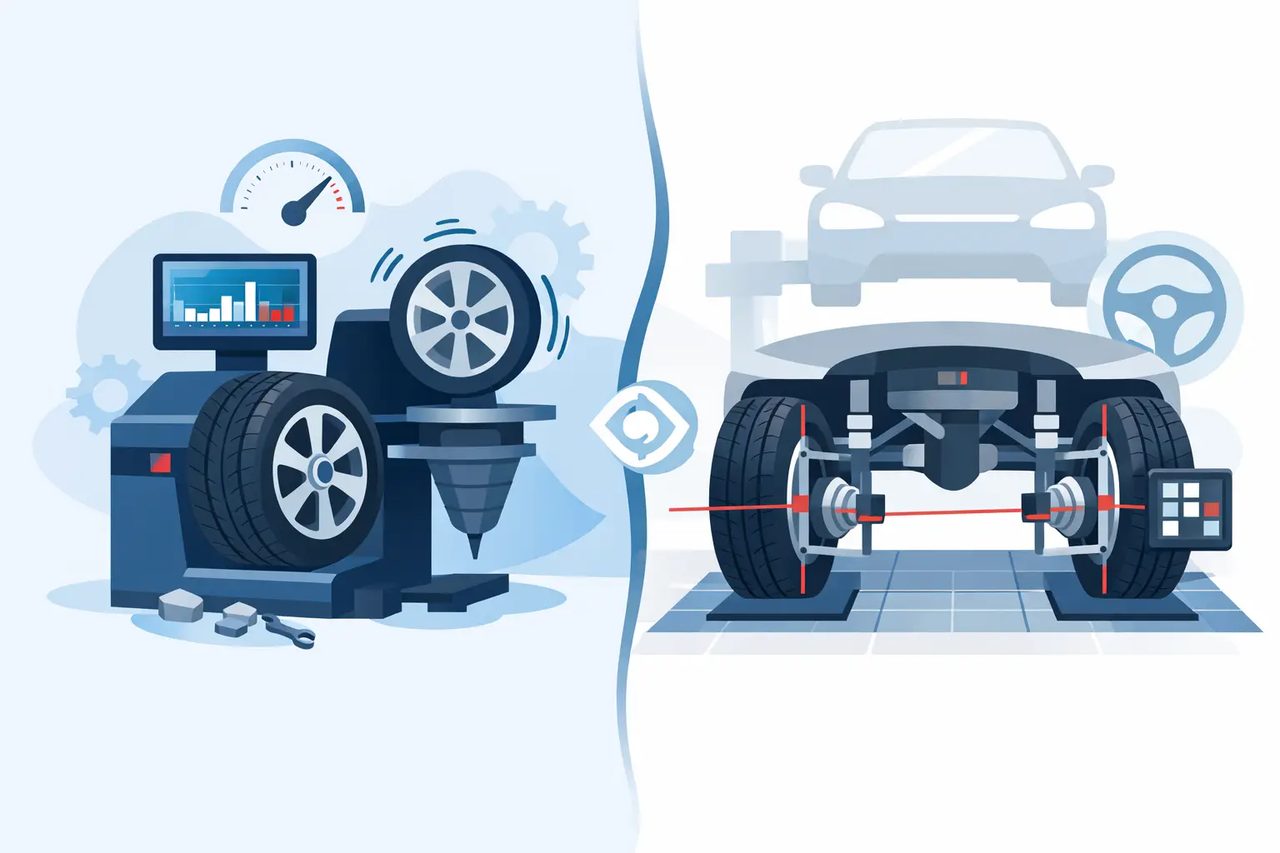
Wheel balancing corrects uneven weight distribution in the tire-and-wheel assembly. Even a new tire can have slight differences in weight around its circumference. A technician uses a balancing machine to identify where tiny wheel weights need to be placed so the wheel rotates smoothly.
Wheel alignment, sometimes called a front-end alignment, adjusts the angles of the wheels so they point and meet the road as the vehicle manufacturer intended. Alignment involves settings such as toe, camber, and caster. Those terms can sound technical, but the result is straightforward: your vehicle should track straight, steer predictably, and wear its tires evenly.
Balancing is about smooth rotation. Alignment is about wheel direction and tire contact with the road. One service does not replace the other, and a vehicle can need either service or both at the same visit.
Signs Your Wheels May Need Balancing
The most common sign of an out-of-balance wheel is vibration that becomes noticeable as speed increases. Many drivers feel it through the steering wheel at highway speeds, often between 50 and 70 mph. If the vibration seems to come more from the seat or floor than the steering wheel, a rear wheel may be the source.
A vibration does not automatically mean your wheels need balancing. A bent wheel, damaged tire, worn suspension part, brake concern, or driveline issue can create a similar feeling. That is why an inspection matters before replacing parts or assuming a quick balance will solve the problem.
You may need wheel balancing after installing new tires, repairing a tire, replacing a wheel, or striking a hard pothole. Houston-area roads, construction zones, curbs, and everyday road debris can all contribute to wheel or tire problems. Over time, wheel weights can also fall off, leaving the assembly unbalanced.
Ignoring vibration can make a small issue more expensive. Unbalanced wheels can cause irregular tire wear and put added stress on suspension components. More immediately, the shaking can reduce comfort and confidence when you are merging, braking, or driving at freeway speed.
Signs Your Vehicle May Need an Alignment
Alignment problems usually show up in the way your vehicle tracks, steers, and wears tires. A vehicle that drifts or pulls to one side on a reasonably level road is a common warning sign. You may also notice that the steering wheel is off-center when you are driving straight.
Uneven tire wear is another major clue. If the inside or outside edge of a tire is wearing faster than the rest of the tread, alignment angles may be off. This type of wear can shorten tire life quickly, especially on vehicles driven daily across Houston for work, school, and errands.
Pay attention if your vehicle has recently hit a pothole, curb, parking block, or road hazard. An alignment can also be needed after suspension repairs, steering repairs, collision damage, or replacing components such as tie rods, control arms, struts, or ball joints. Even a low-speed impact can shift a component enough to affect wheel angles.
A pull is not always an alignment issue. Low tire pressure, uneven tire pressures, a damaged tire, tire conicity, or a sticking brake caliper can also make a vehicle drift. A thorough shop will check for these possibilities instead of selling an alignment based on one symptom alone.
How Tire Wear Tells the Story
Your tires often provide the best evidence of what is happening underneath your vehicle. A balanced wheel does not necessarily guarantee even tire wear, and a properly aligned vehicle can still suffer from a tire that is out of balance. Looking at the wear pattern helps narrow down the cause.
Cupping, scalloped dips, or patchy worn areas around the tire can point to balance problems, worn shocks or struts, or other suspension concerns. Excessive wear along one inner or outer shoulder often suggests an alignment issue. Feathered tread, where one edge of each tread block feels sharper than the other, can be associated with incorrect toe settings.
Tire wear is not always caused by one issue. For example, a vehicle with worn suspension components may not hold alignment properly, while an unbalanced tire can make existing wear worse. That is why a complete inspection is more valuable than a guess based only on appearance.
What Happens During Each Service
During wheel balancing, the technician removes the wheel and places it on a computerized balancing machine. The machine measures where weight needs to be added or adjusted. Small weights are applied to the wheel so it spins evenly. The process is generally quick when the tire and wheel are in good condition.
During an alignment, the vehicle is placed on alignment equipment that measures current wheel angles against manufacturer specifications. The technician inspects steering and suspension components first because worn or loose parts can prevent a lasting alignment. If the components are sound, adjustments are made to bring the angles back within specification where the vehicle allows adjustment.
Some vehicles have alignment adjustments mainly at the front, while others can require four-wheel alignment service. Modern SUVs, all-wheel-drive vehicles, and many imports often need all four wheel angles checked. The right procedure depends on the vehicle design, its condition, and the concern you are experiencing.
Can You Need Both Services at Once?
Yes. It is common to need balancing and alignment together when installing new tires, especially if the old tires show uneven wear or the vehicle has been driven with a pull or vibration. New tires should be balanced during installation. An alignment may be recommended if the old tires wore unevenly, the steering wheel is off-center, or an inspection finds signs of an alignment concern.
Still, not every tire replacement requires an alignment. If the vehicle tracks straight, the steering wheel is centered, tire wear is even, and the suspension is in good condition, balancing the new tires may be all that is needed. Honest service means recommending the work your vehicle actually needs, not adding services automatically.
How Often Should You Schedule These Services?
Wheel balancing is normally performed whenever new tires are installed or a tire is repaired. If you notice new vibration at speed, have the tires and wheels inspected promptly instead of waiting for your next oil change.
There is no single alignment schedule that fits every driver. Many vehicles benefit from an alignment check about once a year, but driving conditions matter. Frequent potholes, rough roads, curb strikes, heavy loads, and long daily commutes can make checks more worthwhile. You should also request an inspection whenever you notice a pull, an off-center steering wheel, unusual tire wear, or changes after a collision or suspension repair.
Checking tire pressure monthly and rotating tires at the recommended interval will also help you catch issues early. Proper inflation will not fix alignment or balancing problems, but it prevents a separate cause of poor handling and uneven wear from clouding the diagnosis.
Get the Right Answer Before Tires Wear Out
Vibration, pulling, and uneven tire wear are not problems to ignore, but they do not always have the same cause. Sam Auto Repair & Collision can inspect your tires, wheels, steering, and suspension to determine whether wheel balancing, alignment, tire repair, or another service is the right next step.
A smooth ride and straight tracking are more than comfort features. They help protect your tires, support predictable handling, and keep your vehicle ready for the roads you rely on every day. If something feels different behind the wheel, have it checked before a manageable repair turns into a set of prematurely worn tires.