
Guide · August 2026
When to Replace Shocks: Signs You Shouldn’t Ignore
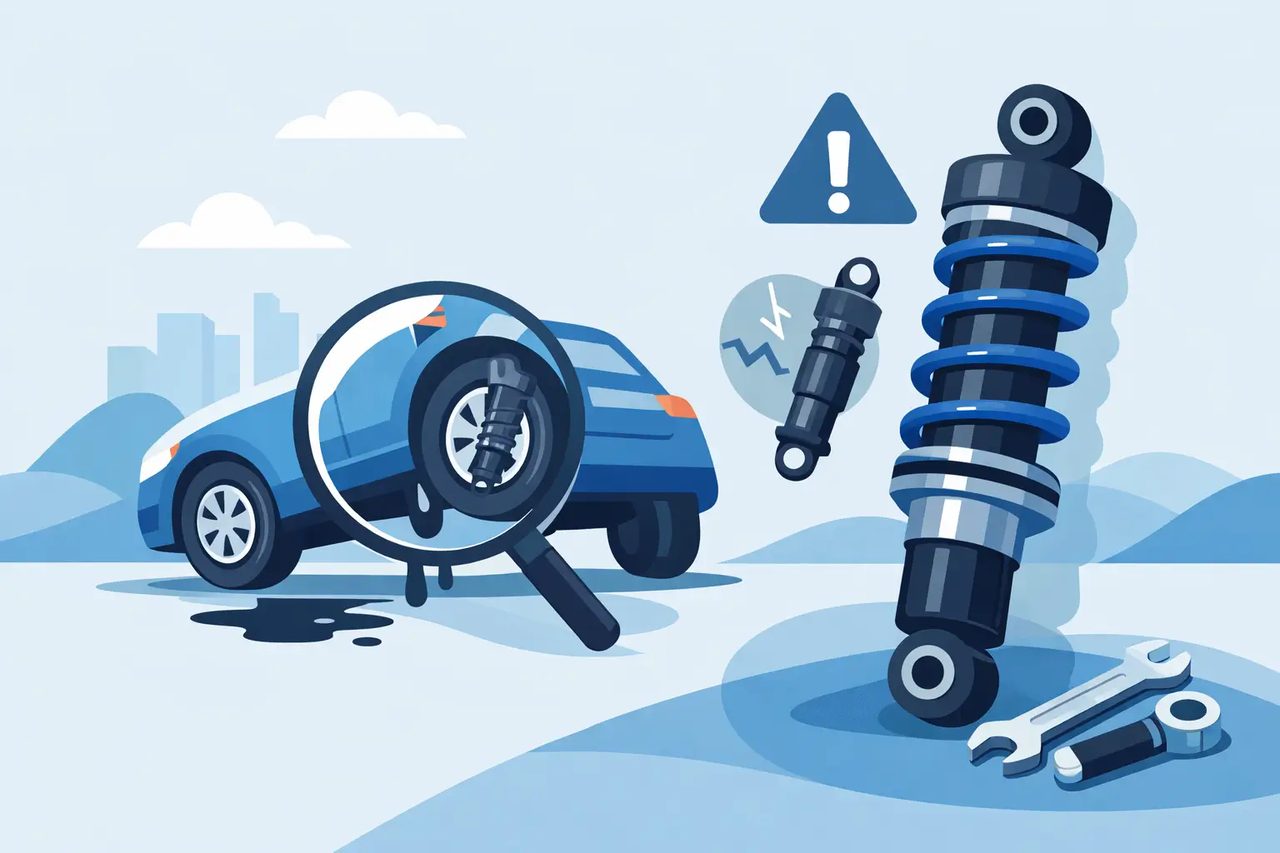
A rough stretch of Houston road should not make your vehicle bounce like a boat or pull you out of your lane. If you are asking when to replace shocks, the answer is usually found in how your vehicle rides, brakes, and handles – not just the number on the odometer. Worn shocks can turn an ordinary commute into a safety concern, especially during sudden stops, heavy rain, or highway driving.
Shocks and struts are often overlooked because they do not always fail all at once. They gradually lose their ability to control the movement of your suspension. That makes it easy to get used to a rougher ride until the symptoms become serious.
When to Replace Shocks Based on Symptoms
The clearest sign that shocks may need replacement is excessive bouncing. Push down firmly on one corner of a parked vehicle and release it. A healthy suspension should settle quickly. If that corner continues bouncing more than once or twice, worn shocks or struts may be part of the problem.
Pay close attention while driving, too. Your vehicle may need a suspension inspection if it dips sharply forward when braking, squats in the rear when accelerating, or leans heavily through turns. A vehicle that feels unstable over bumps, bridge joints, or uneven pavement is not just uncomfortable. It can be harder to control when you need to react quickly.
Other warning signs can include a steering wheel that vibrates on rough roads, a drifting or wandering feeling at highway speed, and a clunking noise when traveling over potholes or speed bumps. These symptoms do not always mean the shocks are the only issue. Ball joints, control arms, sway bar links, bushings, tires, and alignment problems can create similar concerns. A proper inspection matters because replacing parts without diagnosing the real cause wastes money.
Mileage Matters, but It Is Not the Whole Story
Many shocks and struts begin losing performance somewhere around 50,000 miles, although there is no single replacement interval that fits every vehicle. Some last longer, while others wear out sooner because of road conditions, vehicle weight, driving habits, or frequent towing.
Houston-area drivers often deal with potholes, construction zones, uneven neighborhood streets, stop-and-go traffic, and long highway commutes. Those conditions put steady stress on suspension components. A rideshare vehicle, work truck, family SUV, or vehicle regularly loaded with passengers may need attention sooner than a lightly driven car.
Rather than waiting for a specific mileage number, include the suspension in your regular maintenance inspections. If the vehicle has more than 50,000 miles and still has its original shocks or struts, it is reasonable to have them checked – particularly if the ride feels different than it did a year ago.
Shocks, Struts, and Why the Difference Matters
People often use the terms shocks and struts interchangeably, but they are not always the same part. A shock absorber controls spring movement. A strut is a larger suspension assembly that may also support the vehicle’s weight and affect wheel alignment.
That distinction affects the repair. Some vehicles need shock replacement, while others require complete strut assemblies. On many vehicles, replacing struts can also require a wheel alignment afterward. An experienced technician can identify the setup on your specific make and model and explain what is needed before work begins.
How Worn Shocks Affect Braking and Tires
Bad shocks do more than make a vehicle ride rough. They can increase stopping distance because the tires do not stay planted as consistently on the road. During hard braking, a worn suspension allows more weight transfer and wheel movement. That can reduce traction when every foot of stopping distance counts.
Wet roads make the problem worse. When a vehicle is bouncing or unsettled, its tires have a harder time maintaining reliable contact with the pavement. This can affect confidence during lane changes, turns, and emergency maneuvers.
Tires also pay the price. Weak shocks can contribute to cupping, which creates uneven high and low spots around the tire tread. Cupped tires may make a humming or thumping sound that gets louder with speed. Even after new shocks are installed, severely damaged tires may still need replacement, so addressing suspension trouble early can help protect your tire investment.
Should You Replace Shocks in Pairs?
In most cases, yes. Shocks and struts should generally be replaced in pairs on the same axle. Replacing only one side can leave the vehicle with uneven damping from left to right, which may affect handling and ride quality.
There are exceptions when a nearly new component was damaged in an accident or has a specific defect. Still, for normal wear, replacing both front struts or both rear shocks is the practical choice. If the vehicle has worn components on both axles, a technician can help you prioritize the repair based on safety, condition, and budget.
This is also a good time to inspect related parts. Depending on the vehicle, mounts, boots, bump stops, springs, sway bar links, and control arm bushings may need attention. Not every related part needs replacement, and an honest inspection should separate what is worn out now from what can be monitored later.
Do Not Ignore Fluid Leaks or Uneven Tire Wear
A visible fluid leak on the outside of a shock or strut is a strong reason to schedule service. These components use internal fluid to control suspension movement. Once a seal leaks, performance can drop quickly.
Uneven tire wear deserves attention as well. Feathering, cupping, or unusually fast wear on one edge of the tire can point to a suspension or alignment concern. Tires may be the symptom rather than the cause. Installing new tires without correcting worn shocks, struts, or alignment angles can lead to the same expensive wear pattern all over again.
A thorough inspection should look beyond the shocks themselves. The goal is to find out why the vehicle is riding poorly or wearing tires unevenly, then recommend the repair that actually addresses the problem.
What to Expect From a Suspension Inspection
A professional suspension inspection starts with your description of the problem. Mention when the noise occurs, whether the vehicle pulls, how it behaves while braking, and whether you have noticed tire wear. Details such as “it clunks only over speed bumps” or “it feels floaty above 60 mph” help narrow down the diagnosis.
The technician should inspect the shocks or struts for leaks and damage, check mounting hardware and surrounding suspension parts, evaluate tire condition, and road-test the vehicle when appropriate. If replacement is recommended, you should receive a clear explanation of what is worn, why it matters, and whether an alignment is needed.
At Sam Auto Repair & Collision, our team helps Houston drivers make informed suspension repair decisions without confusing technical talk or unnecessary pressure. Whether you drive a domestic pickup, family SUV, European sedan, or import vehicle, the focus is simple: restore a stable ride and keep you safely on the road.
If your vehicle bounces, dives, leans, clunks, or wears tires unevenly, do not wait for the next pothole to make the decision for you. Schedule a suspension inspection and get a clear answer before a small ride-quality issue becomes a larger safety or tire expense.