
Guide · August 2026
Why Engine Stalls While Driving and What to Do
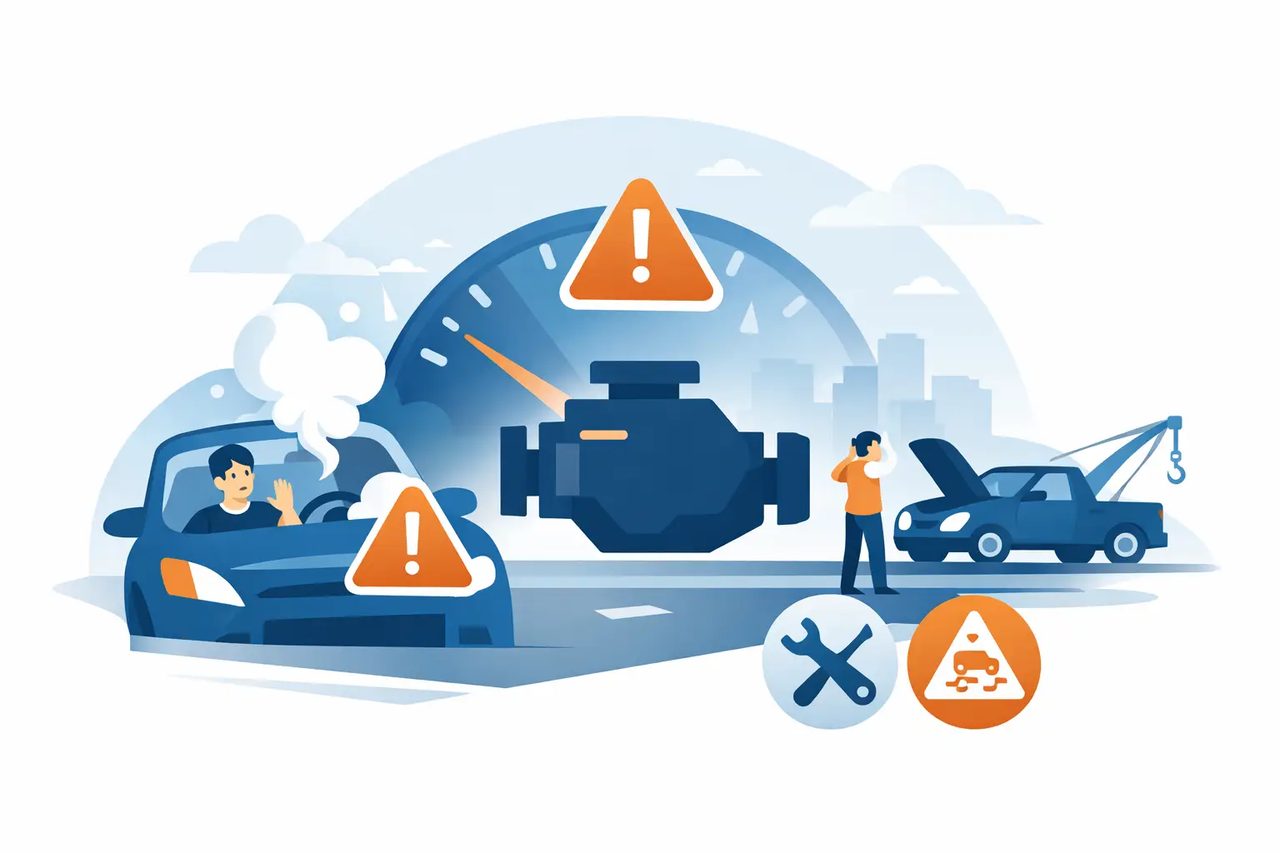
A stall at a Houston intersection is more than an inconvenience. When you are trying to merge onto I-45, pick up the kids, or finish a rideshare shift, a sudden loss of engine power can put you in an unsafe position. Understanding why engine stalls can help you respond safely, but the real answer usually requires proper diagnosis. Many different systems must work together to keep an engine running, and similar symptoms can come from very different problems.
If your vehicle stalls once and then starts right back up, do not assume the issue is gone. Intermittent stalling often gets worse over time, especially in stop-and-go traffic, summer heat, or when the A/C is running. A timely inspection can prevent a breakdown and help avoid replacing parts that were never the real problem.
Why Engine Stalls at Idle or While Driving
Your engine needs the correct mix of air, fuel, spark, and compression, delivered at the right time. It also relies on computer-controlled sensors to make adjustments as you accelerate, brake, turn on the A/C, or come to a stop. When one of those inputs fails or falls outside its normal range, the engine may stumble, lose RPMs, and shut off.
The details around the stall matter. An engine that dies only at a stoplight points technicians in a different direction than one that shuts down at highway speed. Whether the check engine light comes on, the engine cranks normally afterward, or the vehicle loses power before stalling all provide useful clues.
Fuel delivery problems
A gasoline engine cannot keep running without steady fuel pressure. A weak fuel pump, restricted fuel filter on vehicles equipped with a serviceable filter, clogged fuel injector, damaged fuel line, or electrical problem at the fuel pump can starve the engine of fuel. The vehicle may hesitate during acceleration, surge, take longer to start, or stall when climbing a hill or carrying a load.
Low fuel can also expose a developing fuel delivery problem. If your vehicle frequently stalls with the gauge near empty but runs normally after refueling, do not ignore it. The fuel level sensor may be inaccurate, or the pump may be struggling to pull fuel consistently from the tank.
Dirty throttle body or idle air control issue
When you take your foot off the gas, the engine still needs a controlled amount of air to maintain idle speed. Carbon buildup around the throttle body can restrict that airflow. On some vehicles, an idle air control valve handles this job and can become dirty or fail.
This is a common reason a vehicle runs reasonably well on the road but stalls when you stop at a red light, shift into gear, or turn on the A/C. The RPM may dip sharply before the engine dies. Cleaning or repairing the correct component can help, but the system should be tested first because a vacuum leak, sensor issue, or weak battery can create a similar symptom.
Ignition and spark failures
Spark plugs, ignition coils, wiring, and related components ignite the air-fuel mixture inside the engine. Worn spark plugs or a failing coil can cause misfires that feel like shaking, bucking, reduced power, or a rough idle. If the misfire becomes severe, the engine can stall.
A flashing check engine light is especially urgent. It often indicates an active misfire that can damage the catalytic converter. Reduce driving, avoid hard acceleration, and have the vehicle inspected as soon as practical. Continuing to drive may turn a smaller ignition repair into a much more expensive exhaust repair.
Sensor, computer, or wiring trouble
Modern vehicles rely on sensors to tell the engine computer how much air is entering the engine, where the crankshaft is rotating, how warm the engine is, and whether the throttle is opening. A failing crankshaft position sensor, camshaft position sensor, mass airflow sensor, throttle position sensor, or engine coolant temperature sensor can lead to stalling.
For example, a failing crankshaft sensor may cause the engine to shut off suddenly as though the key were turned off, then restart after it cools down. A contaminated mass airflow sensor may cause rough idle and hesitation. Loose connections, corroded battery terminals, damaged wiring, or a poor ground can also interrupt important signals. Pulling a trouble code is a useful starting point, but it does not automatically identify the failed part. The code must be confirmed with testing.
Vacuum leaks and air intake issues
Air entering the engine through a cracked hose, failed intake gasket, or loose duct can upset the air-fuel mixture. This is called a vacuum leak. It may cause a high or uneven idle, hissing sounds, hesitation, and stalling when the engine is cold or when you come to a stop.
Air intake concerns are not always obvious from the driver’s seat. A damaged intake tube can open only when the engine moves under acceleration, while a loose hose clamp may cause trouble only after certain repairs. A careful visual inspection and smoke test can locate leaks without guesswork.
Charging system or battery problems
A battery starts the vehicle, but the alternator helps power its electrical systems once the engine is running. If the alternator is weak or the battery connections are loose, system voltage can drop. Modern engines depend heavily on stable voltage for fuel injection, ignition, sensors, and computer operation.
Warning signs include a battery light, dim or flickering headlights, slow cranking, electrical accessories acting strangely, or a vehicle that stalls and then will not restart. This problem is not always a bad battery. A charging-system test can determine whether the alternator, battery, cables, or connections need attention.
Mechanical or transmission-related concerns
Less commonly, an engine stall can involve a mechanical issue such as low compression, timing chain or timing belt trouble, or internal engine wear. These problems may come with hard starting, unusual noises, smoke, poor power, or a persistent rough-running condition.
An automatic transmission can also make a vehicle feel as if the engine has stalled. If the torque converter fails to release properly as you stop, the engine may die much like a manual-transmission vehicle that stops without the clutch being pressed. A technician needs to separate an engine performance fault from a transmission concern before recommending repairs.
What to Do When Your Engine Stalls
If the engine stalls while you are driving, stay calm and focus on getting out of traffic safely. Turn on your hazard lights, steer toward a safe shoulder or parking area, and brake with extra care. Power steering and power brakes may still work, but they can require more effort after the engine shuts off.
Once you are safely stopped, try restarting the vehicle only if it is safe to do so. Take note of what happened immediately before the stall. Did it occur at idle, while accelerating, after turning on the A/C, during rain, or with a warning light on? Those details can shorten the diagnostic process.
Do not keep driving a vehicle that stalls repeatedly, loses power in traffic, has a flashing check engine light, smells like fuel, overheats, or shows a battery warning light. In those situations, arranging a tow is often the safer and less costly decision.
How a Professional Diagnosis Saves Money
Stalling is one of those symptoms where replacing the most likely part can become expensive fast. A fuel pump, ignition coil, throttle body, and crankshaft sensor can all be blamed for a no-start or stalling complaint, yet each requires a different repair. Reliable diagnosis starts with the vehicle’s history and a scan for fault codes, then moves to hands-on checks of fuel pressure, ignition performance, charging voltage, airflow, sensor data, and mechanical condition.
At Sam Auto Repair & Collision, technicians can inspect the system causing the stall and explain the findings in plain language before work begins. Whether you drive a domestic truck, a family SUV, a European sedan, or an import vehicle, the goal is the same: identify the actual problem, recommend practical repair options, and get you back on the road safely.
A stall is your vehicle asking for attention before it leaves you stranded somewhere less convenient. Schedule service when the first warning signs appear, and bring along any details you noticed about when the problem occurs. That information, combined with accurate testing, gives your repair team the best path to a dependable fix.