Guide · September 2026
Why Your Car Pulls to One Side While Driving
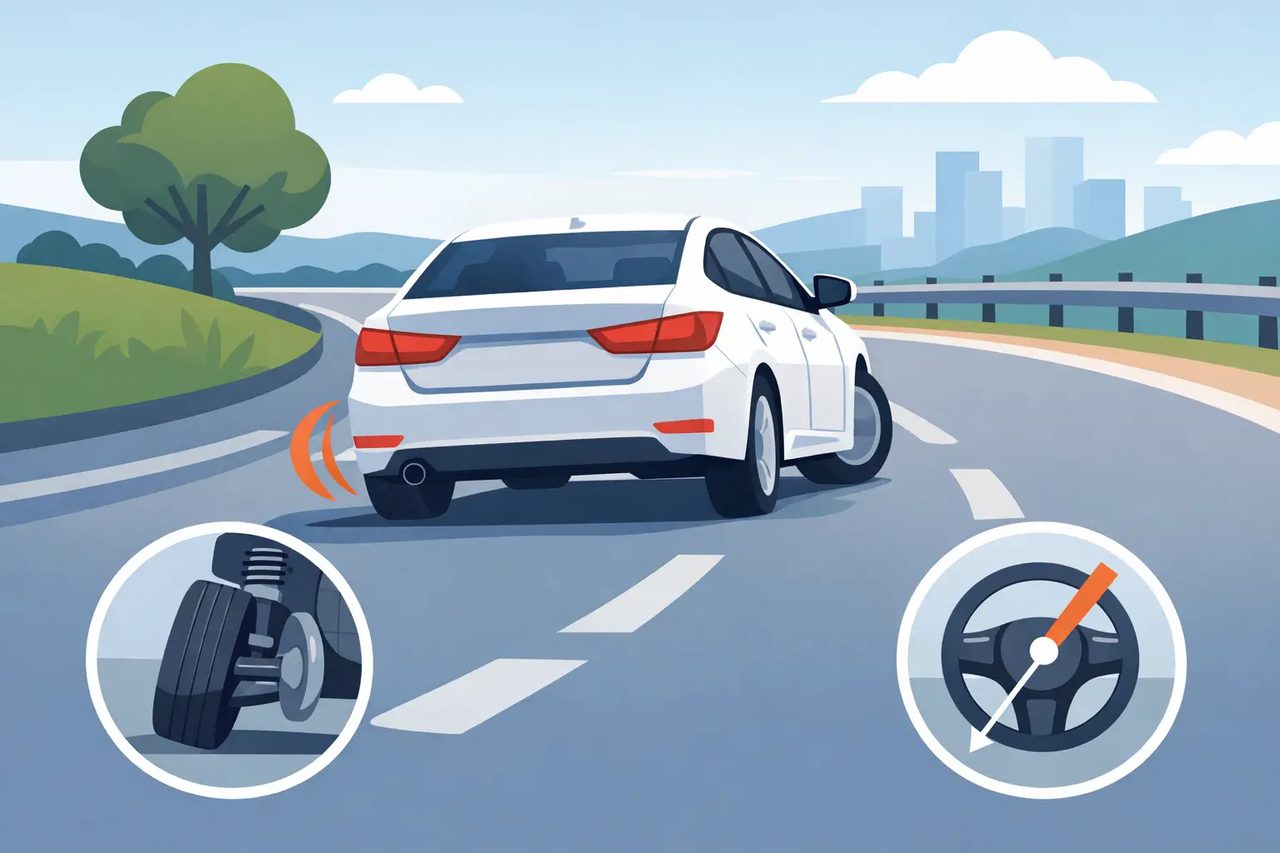
A car that drifts toward the next lane can turn an ordinary Houston commute into a tiring, stressful drive. If you find yourself constantly correcting the steering wheel, you may be asking why car pulls to one side. The cause could be as simple as uneven tire pressure, or it could point to a brake, suspension, or alignment problem that needs prompt attention.
A slight drift can happen on certain roads because pavement is often crowned to help rainwater drain away. Strong wind, road grooves, and rough pavement can also move a vehicle around. But a steady pull that happens on flat roads, gets worse while braking, or appeared after hitting a pothole or curb is not something to ignore.
Why Your Car Pulls to One Side
The direction and timing of the pull provide useful clues. Does the car pull all the time, only when you brake, or only at higher speeds? Did the issue begin after new tires, a collision, or a hard hit from a pothole? A qualified inspection connects those symptoms to the actual failed or worn part instead of guessing.
Uneven tire pressure or tire damage
Tires are the first place to look. A low tire on one side creates more rolling resistance and can make the vehicle move toward that side. Even a modest pressure difference can be noticeable, especially on lighter vehicles or during highway driving.
Check tire pressure when the tires are cold and use the pressure listed on the driver-side door placard, not the maximum pressure printed on the tire sidewall. If one tire repeatedly loses air, there may be a puncture, leaking valve stem, wheel damage, or bead leak.
Tire condition matters too. Uneven tread wear, separated internal belts, a bulge in the sidewall, or mismatched tires can cause a pull or vibration. A damaged tire is a safety concern, not a wait-and-see repair. Do not keep driving on a tire with a bulge, exposed cords, or severe tread damage.
Wheel alignment problems
Alignment is one of the most common reasons a car drifts or pulls. Your wheels are set at precise angles so the vehicle tracks straight, steers predictably, and wears its tires evenly. A pothole, curb strike, road debris, worn suspension component, or minor accident can knock those angles out of specification.
Besides pulling, alignment trouble often causes a crooked steering wheel when driving straight and unusual tire wear. You may see the inside or outside edge of a tire wearing down faster than the rest of the tread. An alignment adjustment can restore proper handling, but it only works if tires, steering parts, and suspension components are in good condition first.
It depends on the vehicle and the damage. Some vehicles need only a front-end adjustment, while others require a four-wheel alignment. Modern cars with advanced driver-assistance systems may also need sensor calibration after certain repairs or collision work.
A sticking brake caliper or brake issue
If the car pulls sharply when you apply the brakes, the braking system deserves immediate attention. A stuck caliper, seized slide pin, collapsed brake hose, contaminated brake pad, or uneven brake wear can cause one wheel to brake harder or drag when it should release.
A dragging brake may produce a burning smell, excess heat near one wheel, reduced fuel economy, or a vehicle that feels sluggish even when you are not pressing the brake pedal. After a short drive, do not touch the wheel or brake components to check for heat. They can be hot enough to burn you. Have the vehicle inspected instead.
A brake pull can increase stopping distance and make emergency braking harder to control. If the pull is severe, the brake warning light is on, or you smell burning after driving, it is best to park the vehicle and arrange service rather than continue your trip.
Worn suspension or steering parts
Your suspension keeps the tires in firm, controlled contact with the road. Parts such as control arms, bushings, ball joints, tie rods, struts, shocks, and wheel bearings gradually wear with mileage. Houston-area potholes, construction zones, and rough roads can speed up that wear.
When a steering or suspension part develops play, the alignment can change as the vehicle moves. The car may wander, pull during acceleration or braking, clunk over bumps, or feel loose through the steering wheel. These symptoms can be subtle at first, but a worn ball joint or tie rod can become a major safety issue if it fails.
An alignment alone will not fix worn components. The damaged part needs to be repaired first, then the vehicle should be aligned so the tires and steering system can perform as intended.
Road impact or collision damage
A pull that starts after a collision, curb impact, or deep pothole needs more than a quick visual check. Damage can affect a wheel, tire, control arm, strut, steering linkage, or the vehicle’s structural mounting points. Some issues are obvious, while others require measuring equipment to identify.
Even if the bumper or body damage appears minor, the force of an impact can change how the vehicle drives. This is one reason post-collision inspections matter. A shop that can handle mechanical diagnostics, alignment concerns, and body repair in one place can help identify the full scope of the damage.
Tire conicity and installation concerns
Sometimes the alignment readings are correct, but the vehicle still pulls because of the tires themselves. Tire conicity is a manufacturing-related condition where a tire rolls slightly like a cone instead of straight. Rotating tires from front to rear or side to side may change the direction of the pull, which helps diagnose the issue.
This can also happen after installing new tires if sizes, tread patterns, or wear levels are not properly matched. All-wheel-drive vehicles are particularly sensitive to major differences in tire circumference. A technician can inspect the tires, verify correct installation, and determine whether a tire replacement or rotation is the right answer.
When a Car Pull Is Urgent
Not every drift means you need a tow, but certain signs call for fast action. Schedule an inspection as soon as possible if the pull is consistent, the steering wheel is off-center, or the tires show uneven wear. Do not delay if the pull becomes sudden or severe.
Treat the issue as urgent when it occurs during braking, follows an accident, comes with shaking or clunking, or is paired with a burning smell, brake warning light, low tire pressure warning, or visible tire damage. These symptoms can affect your ability to stop, steer, or keep control of the vehicle.
Avoid trying to diagnose a pull by taking your hands off the steering wheel. That is unsafe and does not account for road crown, wind, or traffic conditions. Instead, make note of when the pull happens and share those details with the service advisor.
What a Proper Inspection Should Include
A dependable diagnosis starts with a road test when safe, followed by a check of tire pressure, tread condition, wheel damage, brakes, steering, suspension, and alignment angles. The technician should also look for signs of impact damage and compare tire sizes and wear across the vehicle.
Clear communication matters. You should know whether the issue is a straightforward pressure correction, an alignment need, a worn mechanical part, or a brake repair – and why that recommendation is being made. If repairs are needed, ask how the problem affects safety, what should be handled first, and whether an alignment is required afterward.
Sam Auto Repair & Collision helps Houston drivers get clear answers when a vehicle pulls, wanders, brakes unevenly, or shows signs of suspension damage. A thorough inspection can prevent premature tire replacement, reduce the risk of a more serious failure, and make every drive feel more controlled.
A vehicle that tracks straight should not require a constant fight with the steering wheel. If yours does, have it checked before the next long commute, family trip, or rainy-day drive.